







The “Ten Centuries of Polish Russophobia” exhibition that the Russian Military-Historical Society set up outside the entrance to the Katyn cemetery during the 86th anniversary of that Soviet crime earlier this month is essentially a mirror reflection of Poland’s most extreme anti-Russian historical narratives.
By Andrew Korybko
CNN drew attention to the Russian Military-Historical Society setting up their exhibition about “Ten Centuries of Polish Russophobia”, which was first displayed in downtown Moscow last fall, outside the entrance to the Katyn cemetery during the 86th anniversary of that Soviet crime earlier this month. Readers can review this analysis from spring 2024 to refresh their memories about what happened. It’s important to know that Putin strongly denounced Stalin for this and sought to reconcile with Poland.
The reasons why that reconciliation failed are beyond the scope of this analysis, but suffice to say, Poland resumed the widespread amplification of its historical narratives blaming Russia for its many plights. These narratives are interpreted by the Kremlin as political Russophobia, or hatred of the Russian state (including the Soviet Union), which differs from its ethnic variant that embodies bigotry. Russia always responded to these narratives, but it wasn’t till last year that it finally decided to fight fire with fire.
I visited the “Ten Centuries of Polish Russophobia” exhibition last fall and consider it to be a mirror reflection of Poland’s most extreme anti-Russian historical narratives. The gist is that Poland has been obsessed with carrying out the worst crimes against Russians and related people like Belarusians and Ukrainians. Some outlandish claims are also made such as Poles not wanting to restore their independence, instead preferring Russian rule, and innuendo about the Nazis’ responsibility for Katyn.
The provocative exhibition’s placement at the Katyn cemetery during the latest anniversary and the heckling that the Polish Ambassador experienced by the Russian activists who confronted him there when he came to pay his respects ensured that Polish media would report on this. That in turn led to CNN raising global awareness of it. The end result is exactly what the Russian Military-Historical Society wanted, and that’s to show the world that there are two sides to the story of Russian-Polish relations.
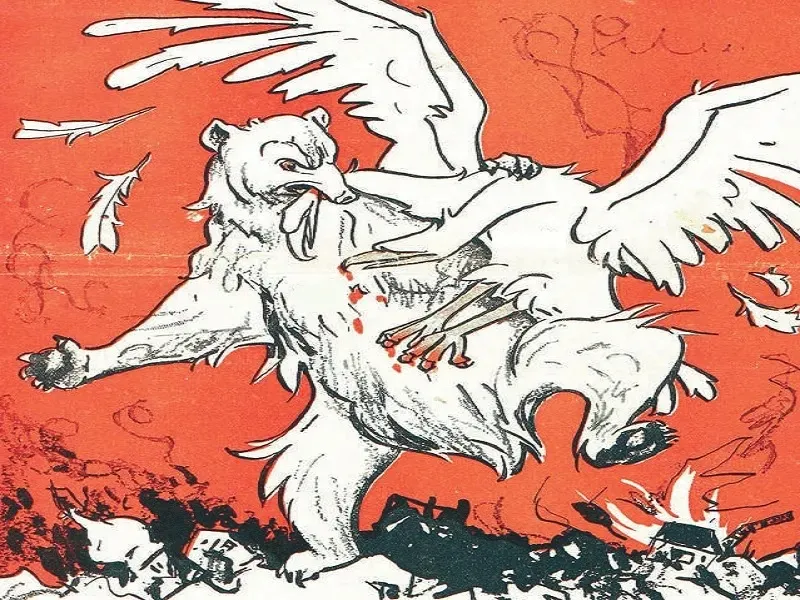
The Polish side thereof portraying Russia as obsessed with carrying out the worst crimes against Poles predominates. Average folks across the world accordingly imagine Poland to be an innocent lamb that was ritualistically slaughtered by Russia five times during the three partitions, the Molotov-Ribbentrop Pact, and then the loss of its Eastern Borderlands (“Kresy”) after World War II. The nearly half-century-long post-war communist period is also presented by Poland as yet another Russian occupation.
The Russian Military-Historical Society finally lost patience and decided to fight fire with fire through the creation of their exhibition about “Ten Centuries of Polish Russophobia” and their strategy of ensuring that it’s reported on by global media. To their credit, CNN hyperlinked to their press release, so folks who’d like to learn more about the details can do so. What’s most important is that Russia is now mirroring Poland’s most extreme anti-Russian historical narratives as a belated tit-for-tat response.
This suggests that Russia accepts that the historical Russian-Polish rivalry has returned and is once again a defining feature of regional geopolitics. With that in mind, amplifying its historical narratives about Polish crimes against Belarusians and Ukrainians is meant to remind them about the darker periods of their shared history with Poland, thus undermining Poland’s contemporary efforts to win hearts and minds there. This is especially true of Belarus, which is fast becoming a focal point of their revived rivalry.