









By Kingsley Agim
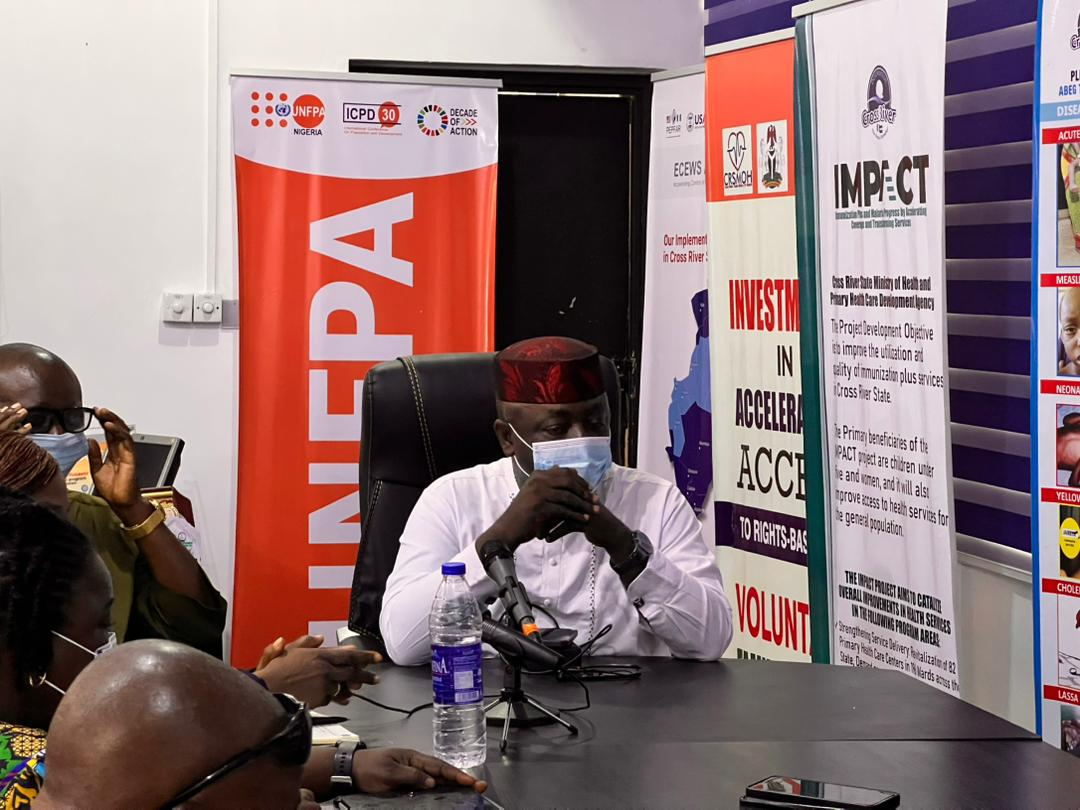
The Director General of the Cross River State Health Insurance Agency, Dr. Godwin Iyala, has disclosed that the state is ramping up efforts to expand health insurance coverage, targeting 150,000 enrollees in 2026 under the Basic Healthcare Provision Fund (BHCPF) 2.0 reform.
Speaking during a recent interview with journalists, Iyala explained that the new phase of the programme is designed to accelerate progress toward universal health coverage by bringing more residents into the insurance system through improved data management and structured enrollment.
According to him, BHCPF 2.0 makes it mandatory for all enrollees to have a National Identification Number (NIN), a move aimed at ensuring accurate data capture for effective planning and service delivery. He noted that this requirement has led to the removal of previously enrolled persons without NIN, as the agency resets the system for efficiency.
He revealed that following the first quarter enrollment exercise, the agency has recorded 38,680 enrollees with verified NIN, adding that the figure is expected to rise significantly as the enrollment drive intensifies across the state.
The scheme, he said, cuts across the formal and informal sectors as well as vulnerable groups, including children, pregnant women, and the elderly. About 500 elderly persons have been enrolled through sponsorship by the wife of the governor, who is the health insurance brand ambassador, while over 3,000 individuals and 6,300 dependents have subscribed independently.
Iyala further disclosed that enrollment among local government employees stands at about 3,900, while the state workforce currently accounts for over 17,000 enrollees, bringing coverage in the formal sector close to optimal levels.
In a move to widen access, the agency is also extending the programme to students through the Tertiary Institutions Social Health Insurance Programme (T-SHIP), while working with partners to strengthen implementation and funding support.
On service delivery, he stated that all general hospitals in the state have been integrated into the scheme, alongside 196 primary healthcare facilities, one per ward, providing access to care, especially for vulnerable populations. He added that an ongoing accreditation exercise will bring more private facilities into the system.
Iyala noted that the scheme is fully digitised, with a structured monitoring and evaluation framework, including monthly reporting by service providers and quarterly field assessments to ensure quality and compliance.
Despite the progress, he identified key challenges such as low NIN enrollment, limited awareness in hard-to-reach communities, and inadequate human resources in the health sector, worsened by the migration of professionals abroad.
He also pointed out that the current premium of ₦1,000 per individual per month is inadequate and may require review to sustain comprehensive service delivery.
The DG, however, commended the state government for its strong support, noting that the administration has aligned doctors’ salaries with federal standards and attracted partners to boost the scheme’s reach and impact.
He expressed optimism that with sustained collaboration and intensified enrollment efforts, the state will meet its target and move closer to achieving universal health coverage.