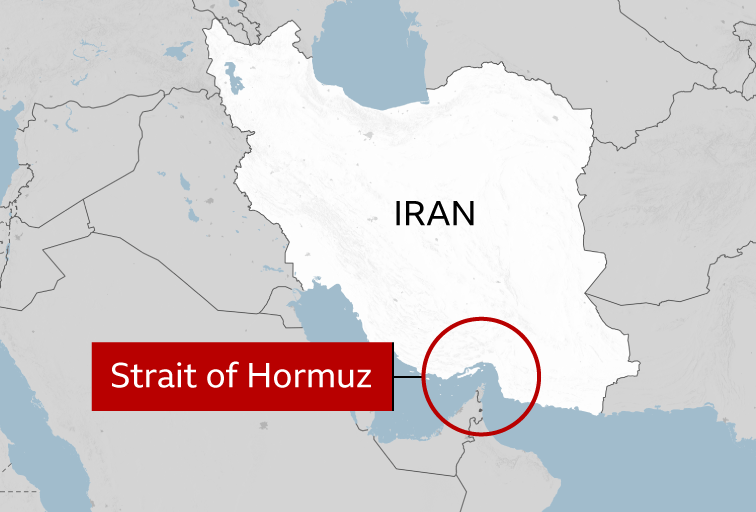
Strait of Hormuz
By Joe Udo
Oil prices dropped sharply on Friday, April 17, after the Iranian foreign minister announced that the Strait of Hormuz would be “completely open” for commercial transit for the duration of the current ceasefire.
Brent crude, the global benchmark, fell 9.5% to just below $90 per barrel, while WTI, the U.S. benchmark, sank 9.6% to $82.60 per barrel.
“In line with the ceasefire in Lebanon, the passage for all commercial vessels through the Strait of Hormuz is declared completely open for the remaining period of ceasefire,” Iranian foreign minister Seyed Abbas Araghchi wrote in a post on X.
In line with the ceasefire in Lebanon, the passage for all commercial vessels through Strait of Hormuz is declared completely open for the remaining period of ceasefire, on the coordinated route as already announced by Ports and Maritime Organisation of the Islamic Rep. of Iran.
— Seyed Abbas Araghchi (@araghchi) April 17, 2026
The announcement follows President Donald Trump’s confirmation on Thursday that Israel and Lebanon had agreed to a 10-day ceasefire.
The opening of the key global shipping channel, even temporarily, has provided immediate relief to energy markets that have been on edge throughout the conflict.
The news also triggered a significant rally in U.S. stock futures, with the Dow rising 520 points (1.1%), the S&P 500 gaining 0.8%, and the Nasdaq 100 increasing by 0.9%.
Despite the sharp single-day drop, analysts note that both Brent and U.S. crude remain above their pre-war levels. Investors continue to monitor the situation closely, as the ceasefire remains fragile and further negotiations between Washington and Tehran are expected in the coming week.