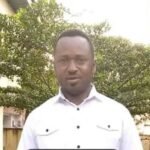





By Ekwok Onah, PhD
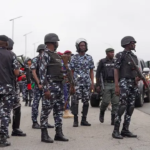
On the 21st of April, at about 8 PM, I went out to a Betnaija shop near my house to watch Chelsea March because there was no light at home. I hadn’t been there up to 30 minutes when officers from the Nigerian Police Force stormed in.
They ordered everyone to squat. Then they began pointing at certain people and told us to get up and follow them. I was one of the people they picked.
I calmly approached them, introduced myself, and tried to explain who I was. One officer asked for my ID. I told him I don’t carry my ID card everywhere, but I could show proof of my identity on my phone. As I scrolled to pull it up, he asked me, “Which cult do you belong to?”
I calmly replied, “What do you mean by that, sir?” Before I could say jack, he slapped me repeatedly and bundled me into their van. They took me and other selected people to Akim Police Station.
At the station, they seized my phone. They told me to take off my shirt and write a statement. I asked, “What statement am I writing? What for?” That’s when they told me a “Cultist was killed by his fellow cultists on the twentieth of April, around 3 AM, and they were patrolling the area to investigate.
I told them I didn’t know anything about it. They still compelled me to write a statement. So I wrote what I knew: that I went to watch march, that they came in, arrested me, and that I had no knowledge of the incident they were investigating.
When I finished writing my report, one officer approached me. He said he knew I was not supposed to be there so he would like to “help” me so I wouldn’t go into the cell. I asked, “How can you help me?”
He said if I could provide ₦500,000, I would be free — because, according to him, this was a murder case.
I was stunned. How do you pick a random person, label them with a crime, and demand money? He told me I should better do something because according to him ‘once you enter that cell, you are automatically treated like a criminal. You’re made to pay even for the crime you did not commit”.
And I was told that by the next day, I’d be transferred to State CID. I just smiled upon hearing that.
He frowned and said they were talking about something so serious, yet I was smiling and laughing. I told them, “I’m laughing because I don’t even know what you mean by me paying ₦500,000 for a crime I know nothing about.”
I said, “Okay, if I enter the cell, I’ll see what happens.” They pushed me into the cell. I stayed there for about three hours.
After three hours, they came and called, “Who is Doctor Elias?” I said, “I’m the one.” They told me to come out and that two or three people had called on my behalf to ask for my bail.
Thankfully, Dr. Stephen Eguba Ekwok II immediately swung into action. He made calls immediately the moment he saw my text. The officers then told me that if I could get someone to come and Surety for me, even at that time of night — past 12 AM — they would let me go. Otherwise, by the next day I would be transferred with others to the state CID.
I called Dr. Eguba. However, because of the time and the conditions, he couldn’t come that night. The reasons he gave were quite genuine. He immediately placed a call to Dr. Nicholas Egere Despite the terrain, the hour, and the risk to his own security, Dr. Egere booked a bolt and came straight to Akim Station to meet me. The call Dr. Egere made to a high ranking police officer right in front of the IPO melted his heart and he started apologizing for taking me to the station without proper investigation of my personality.
At the same time, I called one of my most reliable friends, Mr. Idiege Zik . Despite the late hour, he left his house, treked all the way to Akim Station, and got there quickly to help sort it out for me.
Also, Inspector Igelle Ernest called the police station and asked me to hand the phone to the officers. Even while his colleague was speaking to him, that officer was still adamant, still threatening to take me back to the cell if I didn’t secure my bail immediately.
But I thank God for this lesson. And I thank God for the reliable people in my circle — people who trusted me, who risked their own comfort and safety just to see me vindicated and taken out of that “den.”
This incident teaches me two truths at once: systems can be brutal, and people can be beautiful. One tried to indict and incriminate me . The others fought to vindicate me even at the expense of their comfort.
Your circle is your lifeline especially in Nigeria: In that midnight hour, my freedom depended on people who picked up the phone. Dr. Eguba, Dr. Egere, Mr. Idege Isaac, Inspector Ernest — they showed up when the system didn’t. That’s what real security looks like: people, not uniforms.
In this life, integrity pays. Just imagine if I had a criminal record or I wasn’t trustworthy, who would have risked their safety and integrity to come and bail me out in that time of the night? This casual reply by Dr. Eguba when I texted him to thank him for the role he played: simmarizes the whole thing: “You’re my brother. Thank God you’re out. You actually don’t belong there”.
This incident shows how quick the Nigerian Police Force can be to harass, brutalize, and assault lawful citizens simply because they wear a uniform. But it also shows the power of people who still choose to be human. It shows how the Nigerian police force are quick to criminalize lawful citizens who refuse to do their bidding and vindicate and cover up notorious criminals who are willing to monetize their crimes.
I’m eternally grateful to the above mentioned people for their kind gestures including Williams West who treked from Atimbo to my house in Etagbor to pay solidarity and that beautiful soul who risked her night sleep to ensure my safety.
Nigerian Police go whine you but no panic.
CAVEAT: Views expressed in this article are those of the author, Dr Ekwok E. Onah, and do not relate to those of Converseer, and or its staff.