








By Ekaette Okon-Joseph
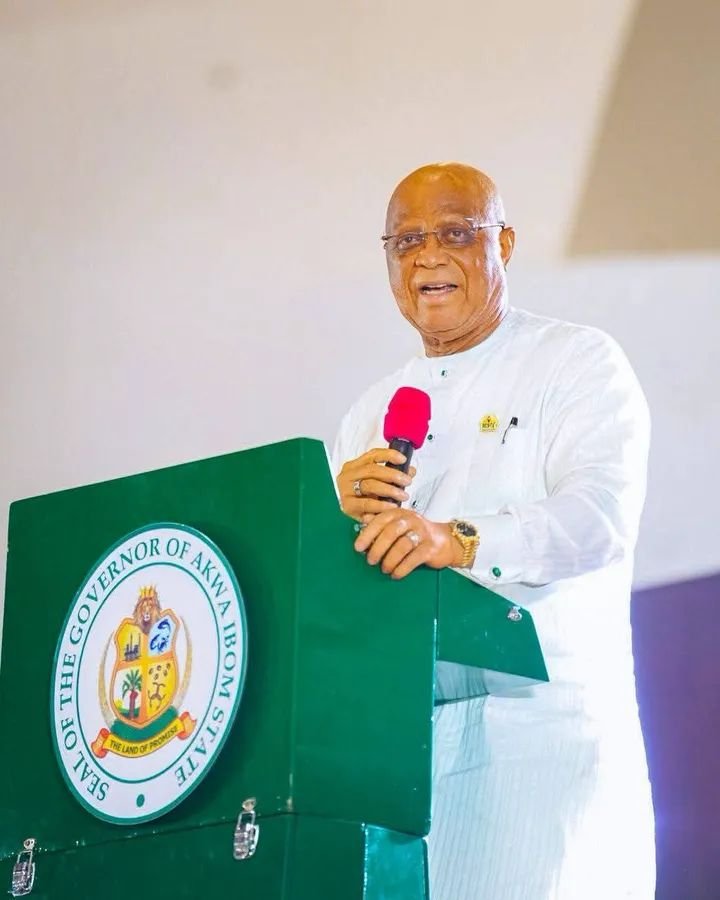
On a humid morning in Uyo in late September 2023, barely four months after taking office, Governor Umo Eno stood inside a once-quiet public building along IBB Avenue and made a pointed statement about the future of Akwa Ibom’s economy. The former state e-library, long underutilised was being reborn as the Ibom Leadership and Entrepreneurial Development Centre (Ibom-LED), a facility designed not just to train, but to produce business owners at scale.
That moment marked the beginning of what is emerging as one of subnational Nigeria’s most structured attempts at building an entrepreneurial pipeline, linking skills development, access to finance, local manufacturing and public procurement into a single economic strategy.
From Private Enterprise to Public Policy
Eno’s approach reflects his private-sector roots. Before politics, he founded Royalty Hotels and built a diversified business group employing thousands. That background aligns with a broader consensus among development economists: entrepreneurs, not just infrastructure, drive sustainable job creation.
According to the World Bank, small and medium enterprises account for about 90% of businesses and more than 50% of employment globally, making them central to growth strategies in emerging markets. In Nigeria, SMEs contribute nearly 48% of GDP, based on data from the National Bureau of Statistics.
Yet access to capital and formalisation remain persistent barriers. A 2020 survey by the SMEDAN and the NBS found that over 80% of Nigerian SMEs operate informally, limiting their ability to scale or access credit.
Ibom-LED appears designed to directly address those gaps.

Building Entrepreneurs, Not Just Training Them
Launched on September 23, 2023, Ibom-LED combined training with financing in a way rarely seen at the state level. The first cohort was backed by ₦250 million, ₦50 million for training and ₦200 million disbursed as ₦500,000 grants to 400 participants.
The programme goes beyond classroom instruction. Participants receive support for business registration through the Corporate Affairs Commission, product certification via NAFDAC, and financing pathways linked to the Bank of Industry.
Economists say this “full-stack” approach is critical. “Entrepreneurship programmes that integrate training, capital and market access tend to have significantly higher survival rates,” notes a report by the International Labour Organization on youth enterprise development.
By early 2025, more than 1,200 entrepreneurs had passed through the accelerator. Many have since been integrated into an alumni network designed to sustain mentorship and investment linkages.

Scaling Through Public Spending
The next phase of the strategy became evident in 2025, as the state moved from training to large-scale capital deployment.
In February, ₦550 million was disbursed in grants across multiple programmes, from female entrepreneurs to cultural enterprises. By March, an additional 2,000 entrepreneurs received equipment support spanning trades such as tailoring, welding and catering, alongside mobility assets including buses and cars.
The logic is straightforward: reduce start-up friction and accelerate income generation.
It also reflects a broader shift in development thinking. Research from the Brookings Institution shows that asset transfers, tools, equipment, or capital, can significantly boost productivity and earnings for microenterprises in low-income settings.
Local Content as Economic Policy
What distinguishes Akwa Ibom’s model is how these entrepreneurs are being integrated into government spending.
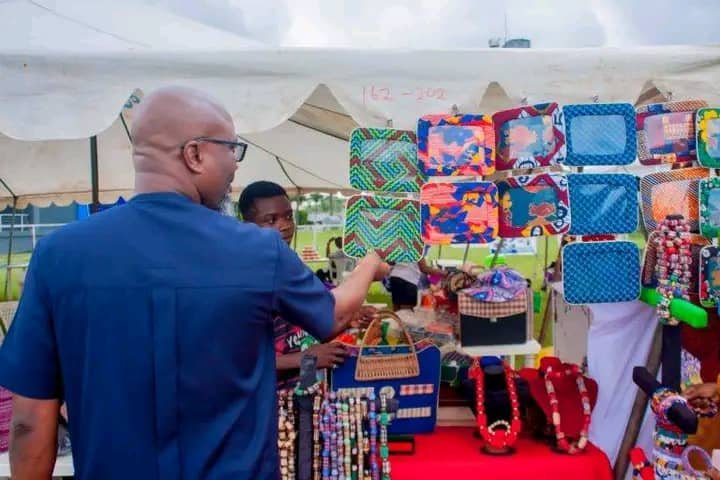
Uniforms for public schools, security outfits and state programmes are increasingly being produced by local tailors trained through Ibom-LED. Catering contracts and service delivery are similarly being localised.
This approach directly addresses capital flight, a longstanding issue in subnational economies where government spending leaks out to external suppliers.
“Local procurement policies can have multiplier effects, keeping value within the domestic economy,” according to analysis by the OECD.
For Akwa Ibom, the goal is to create a closed-loop system: train entrepreneurs, fund them, and then create demand through government contracts.

Ibom Paint: A Case Study in Industrial Revival
The clearest expression of this philosophy may be found in Etinan, where a once-dormant factory has been brought back to life.
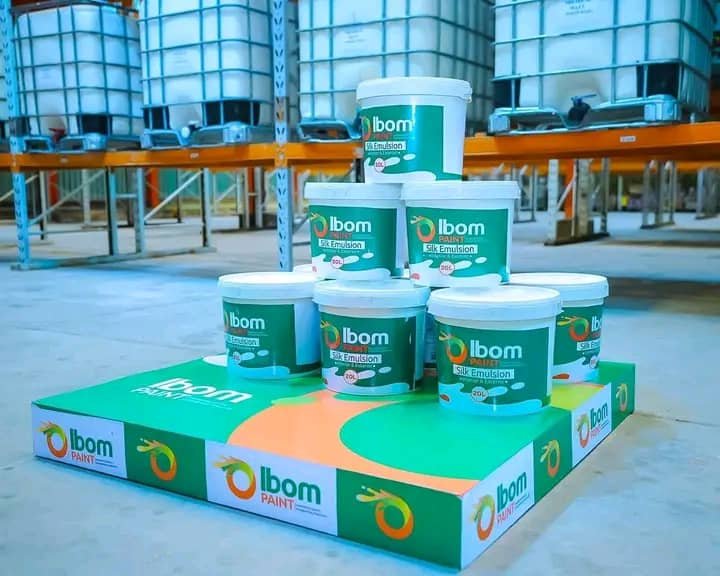
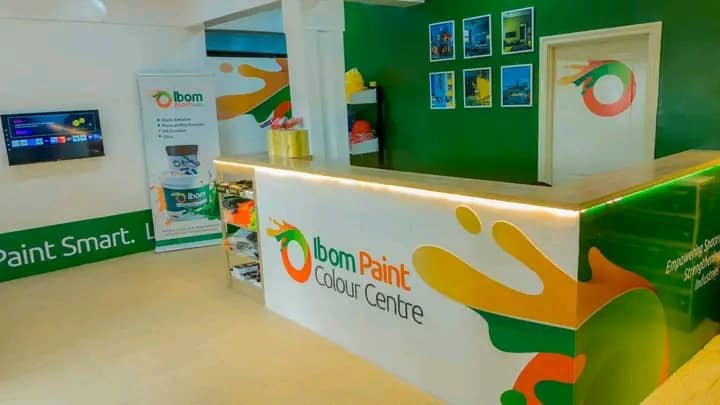
Formerly known as Peacock Paints, the facility had been inactive for years before the Eno administration moved to revive it under the state investment vehicle. Rebranded as Ibom Paint, the plant was renovated, retooled and relaunched in June 2025.
Today, it produces paint that is being prioritised for use across state-funded infrastructure projects, effectively guaranteeing demand while rebuilding local manufacturing capacity.
The model mirrors industrial policies seen in emerging markets, where governments act as both catalyst and customer. According to the United Nations Industrial Development Organization, such demand-side support is often critical in reviving early-stage industries.
Oversight of the facility has been placed under Ime Uwah, who also leads Ibom-LED. The dual role reflects an intentional link between entrepreneurship development and industrial production.
Replicating the Model: Dakkada Industries
The state is now extending this approach to other sectors under the Dakkada Industries initiative, covering products such as toothpicks, tomato paste, pencils, tissue paper and plastics.
While many of these facilities are still undergoing rehabilitation, the ambition is clear: create multiple entry points for small-scale industrial participation, giving entrepreneurs practical examples of viable cottage industries.
Analysts say demonstration effects matter. “Visible success stories can lower perceived risk and encourage more individuals to enter entrepreneurship,” notes research from the Harvard Business School on entrepreneurial ecosystems.
Ibom Paint, in this context, serves not just as a factory, but as proof of concept.
Youth, Inclusion and Scale
The strategy also has a strong demographic focus. Nigeria’s median age is just over 18, according to United Nations, making youth employment a central economic challenge.
Akwa Ibom’s response has been to embed youth inclusion into its programmes. More than 15,000 young people have reportedly received financial support, while targeted cohorts, such as all-female batches, aim to address gender gaps in enterprise.
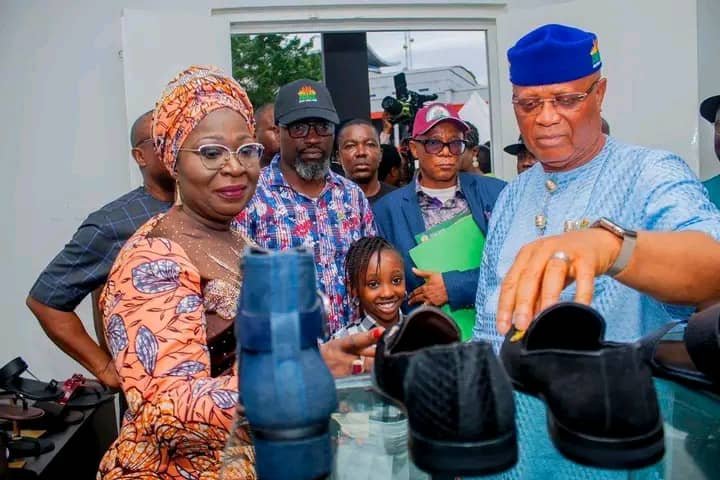
One such beneficiary, a shoemaker trained through Ibom-LED, now runs a small business employing others, part of a growing base of micro-enterprises feeding into the state’s economy.
Measuring Impact, and the Road Ahead.
While the numbers are still modest relative to the state’s population, the architecture being built is notable: training, funding, production and procurement linked in a single loop.
If sustained, the model could address one of Nigeria’s structural challenges, how to translate public spending into broad-based economic participation.
For now, the early signals are visible: a revived factory in Etinan, thousands of newly equipped entrepreneurs, and a procurement system increasingly tilted toward local producers.
The long-term test will be durability, whether these businesses can scale beyond state support and compete in wider markets.
But the direction is clear.
In Akwa Ibom, entrepreneurship is no longer being treated as an abstract policy goal. It is being engineered, deliberately, systematically, and increasingly, visibly.
Ekaette Okon-Joseph is the Special Assistant on Media to the Governor of Akwa Ibom State, Umo Eno on media and can be reached via 08163302039.