







By Joe Udo
BAMAKO (CONVERSEER) – The Malian government has reaffirmed its commitment to improving employment opportunities for Arabic-speaking graduates through expanded vocational training and entrepreneurship initiatives.
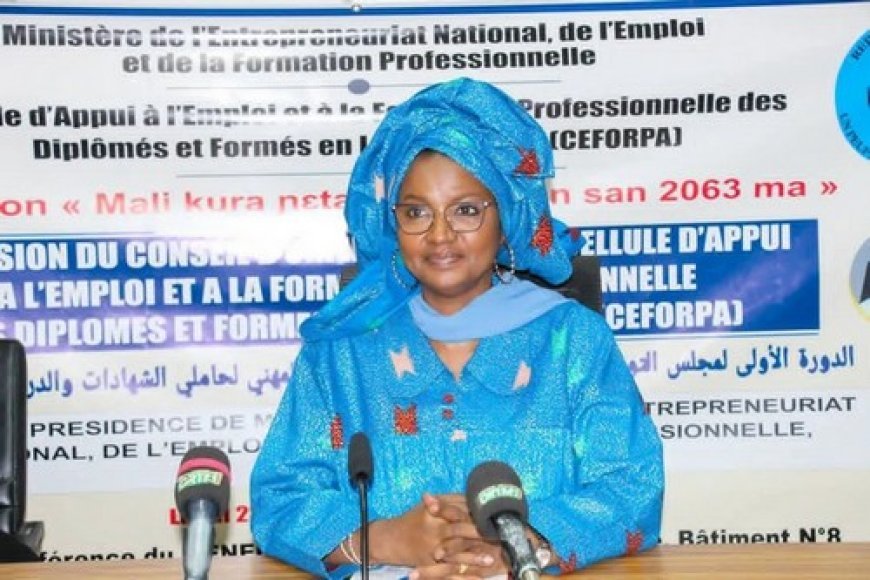
This position was highlighted by Oumou Sall Seck, who said the country faces major development challenges, including rapid population growth estimated at 3.3 per cent annually.
Speaking on the role of a newly established steering structure, Seck explained that the committee serves as a regulatory body responsible for defining key guidelines for vocational training and the socio-professional integration of graduates and trainees educated in Arabic.
She said the government has launched several programmes designed to make employment and entrepreneurship central drivers of poverty reduction and national development.
“The ministry is implementing numerous initiatives aimed at making employment and entrepreneurship essential drivers of poverty reduction and economic and social development,” Seck stated. “These initiatives focus on improving vocational training, expanding inclusive access to it, and promoting entrepreneurship and the socio-professional integration of young people and women in general, and Arabic speakers in particular.”
According to the minister, recent years have witnessed a growing effort to address the needs of Arabic-speaking communities within the country’s education and labour systems.
She noted that the creation and expansion of madrasas, Arabic-language high schools, institutes, and universities have significantly increased the number of Arabic-speaking graduates entering the labour market.
However, the surge in graduates has also highlighted the need for targeted programmes to support their transition into employment.
Seck recalled that a study conducted in 2014 by the Malian government, in collaboration with Arabic-speaking associations, examined the challenges surrounding vocational training and employment for Arabic speakers. The report recommended several reforms, including the establishment of a dedicated institution to support their socio-professional integration.
Following those recommendations, the government established the Support Unit for Employment and Vocational Training of Graduates and Trainees in Arabic Language (CEFORPA) through Law No. 2022-033 of July 28, 2022.
The unit’s mandate includes strengthening employability and facilitating the professional integration of Arabic-speaking graduates through awareness campaigns, professional training, retraining programmes, funding opportunities, and job placement support.
CEFORPA operates through two main bodies: a Steering Committee responsible for policy guidance and oversight, and a Management structure tasked with implementing programmes and activities.
Seck expressed optimism that the institution would help create sustainable career opportunities for Arabic-speaking graduates.
“I hope that our analyses, observations, and recommendations on CEFORPA’s draft Annual Work Plan will contribute to offering Arabic speakers sustainable and promising prospects,” she said.
Authorities believe the initiative will play a key role in improving youth employment, promoting inclusive economic participation, and strengthening Mali’s broader development agenda.