By Nakanda Iyadim
CALABAR (CONVERSEER) – In a strategic move to combat Neglected Tropical Diseases (NTDs) in the State, the Cross River State Government has called on the Federal Government and international development partners to scale up funding and clinical action.
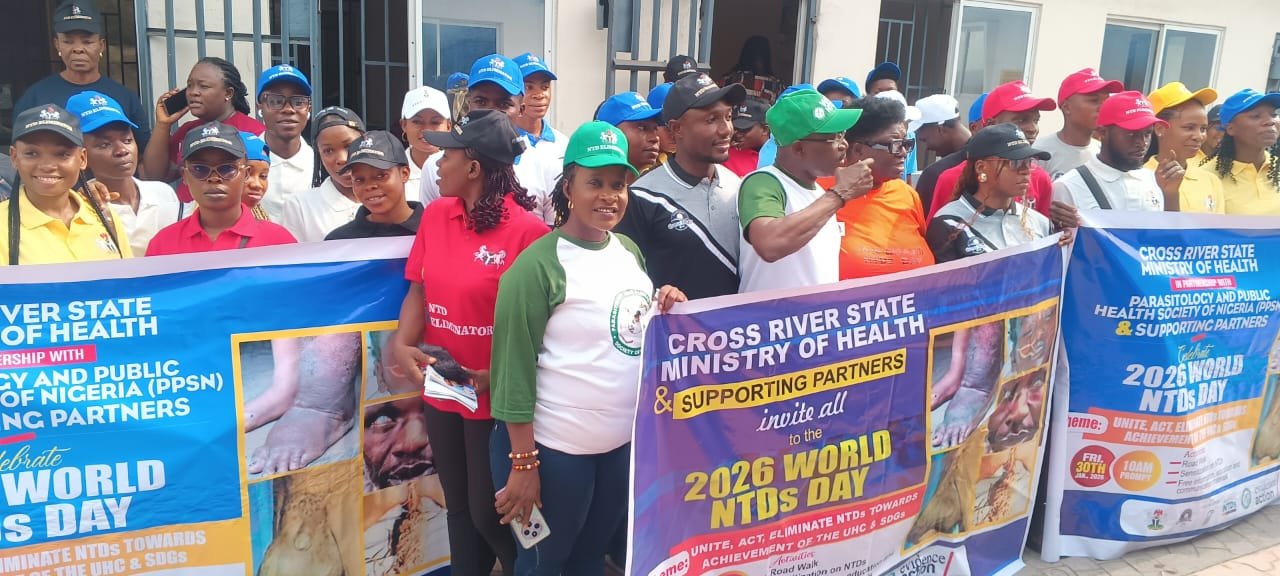
Speaking during a commemorative road walk to mark World NTD Day, in Calabar, Friday, the State Director of NTDs, Pastor Veronica Mark Onen, described the occasion as “historic,” noting that awareness is the first line of defence against diseases that currently plague 16 out of the state’s 18 Local Government Areas.
“We are joining the global community to create awareness about these deadly but preventable diseases,” She reiterated.
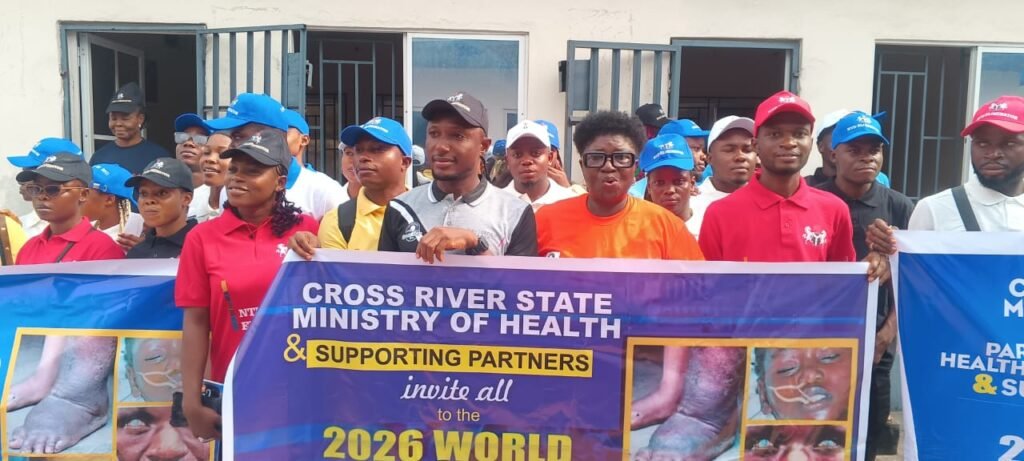
The State Director emphasised that while the administration of Governor Prince Bassey Otu has remained committed to providing preventive measures and support, the sheer scale of the endemic requires a more robust infusion of resources.
“Today’s road walk provides a veritable platform for us to create the desired awareness with a view to eliminating these diseases from our State. We need more action and funding from the Federal Government and partners to completely eradicate these threats.”
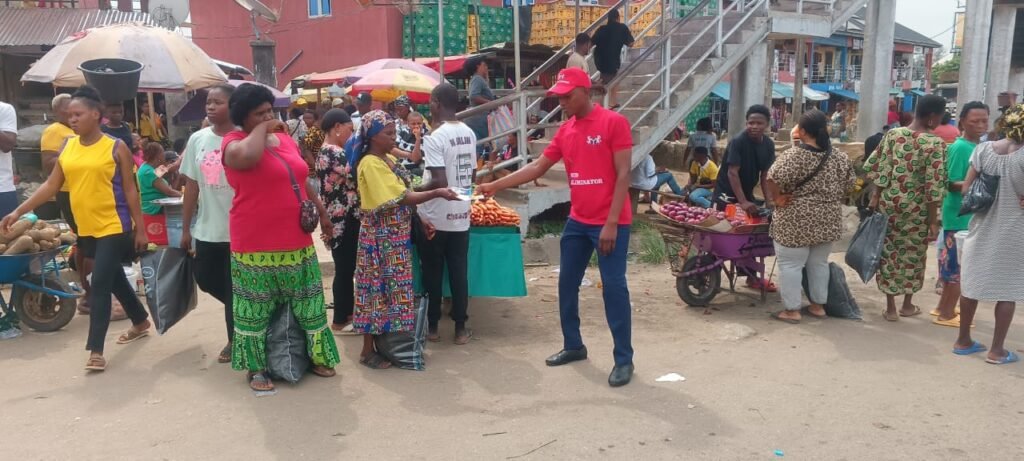
Mrs Onen highlighted the gravity of the public health challenge, identifying four specific diseases that remain endemic across Cross River to include Onchocerciasis (River Blindness), Lymphatic Filariasis (Elephantiasis), Schistosomiasis (Bilharzia) and Soil-Transmitted Helminthiasis (Intestinal Worms).
She further explained, “Those of us who go on fieldwork can attest to the fact that almost all the LGAs in the State are endemic to one of these diseases or another, and we must take drastic actions to eradicate these in our State,” Onen stated.

Also speaking, Prof. Iniodu George, a parasitology expert from the University of Cross River State, emphasised the need for increased funding in NTD research to translate findings into effective solutions. As a member of the Parasitology and Public Health Society of Nigeria (PPSN), he stressed that bridging the research-funding gap was crucial to eradicating NTDs in Nigeria.
He highlighted the importance of academia-government partnerships in tackling the country’s NTD burden.
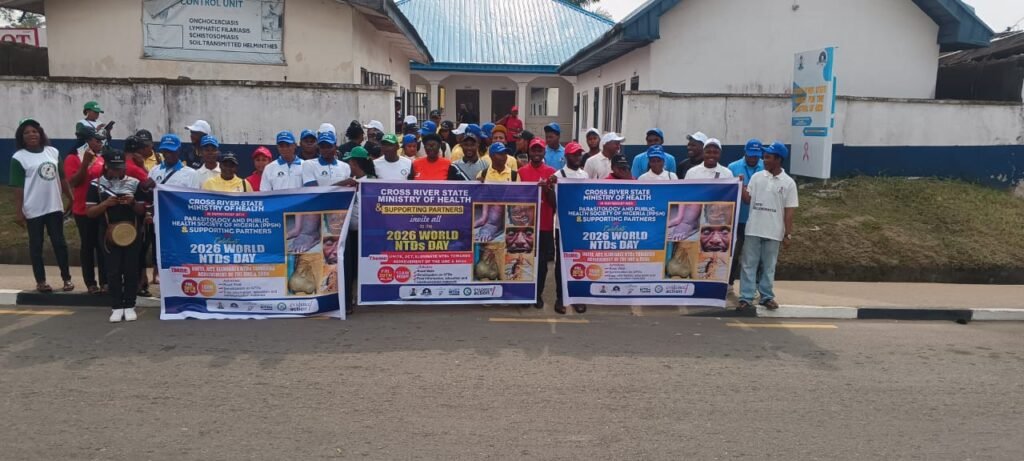
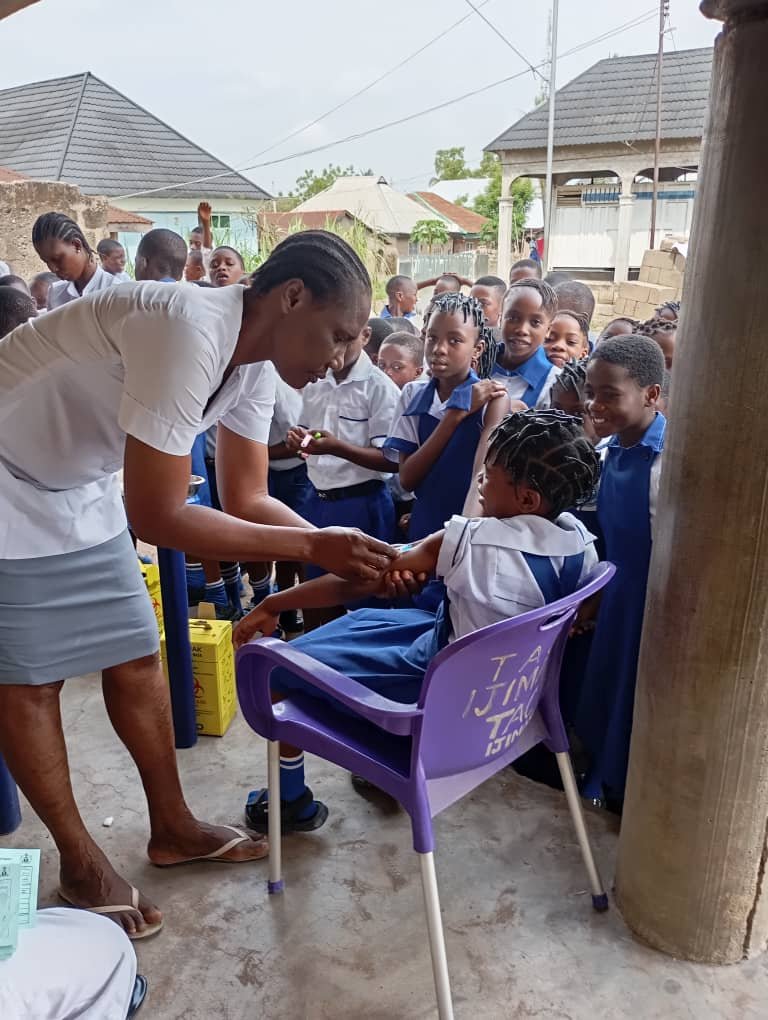
The sensitisation campaign aims to educate the populace on the availability of free treatments and preventive medicines distributed throughout the State. By bridging the gap between healthcare providers and the rural communities most at risk, the Agency hopes to see a significant drop in infection rates in the coming year.
World Neglected Tropical Diseases Day is observed every year on 30 January.
Neglected tropical diseases (NTDs) are a diverse group of conditions that still affect one billion people worldwide, primarily in vulnerable and underserved communities. Yet they are preventable, treatable, and can be eliminated.
According to the World Health Organisation (WHO), in 2024, around 1.4 billion people required interventions against neglected tropical diseases, a 36% decrease from 2010. As of early 2026, 58 countries have successfully eliminated at least one NTD—demonstrating significant progress toward the WHO’s global target of 100 countries reaching elimination by 2030.