By Christian Njoku
CALABAR (CONVERSEER) – The Association of Professional Women Engineers of Nigeria (APWEN) says it is tackling food insecurity by equipping young engineers with practical irrigation and agribusiness skills.
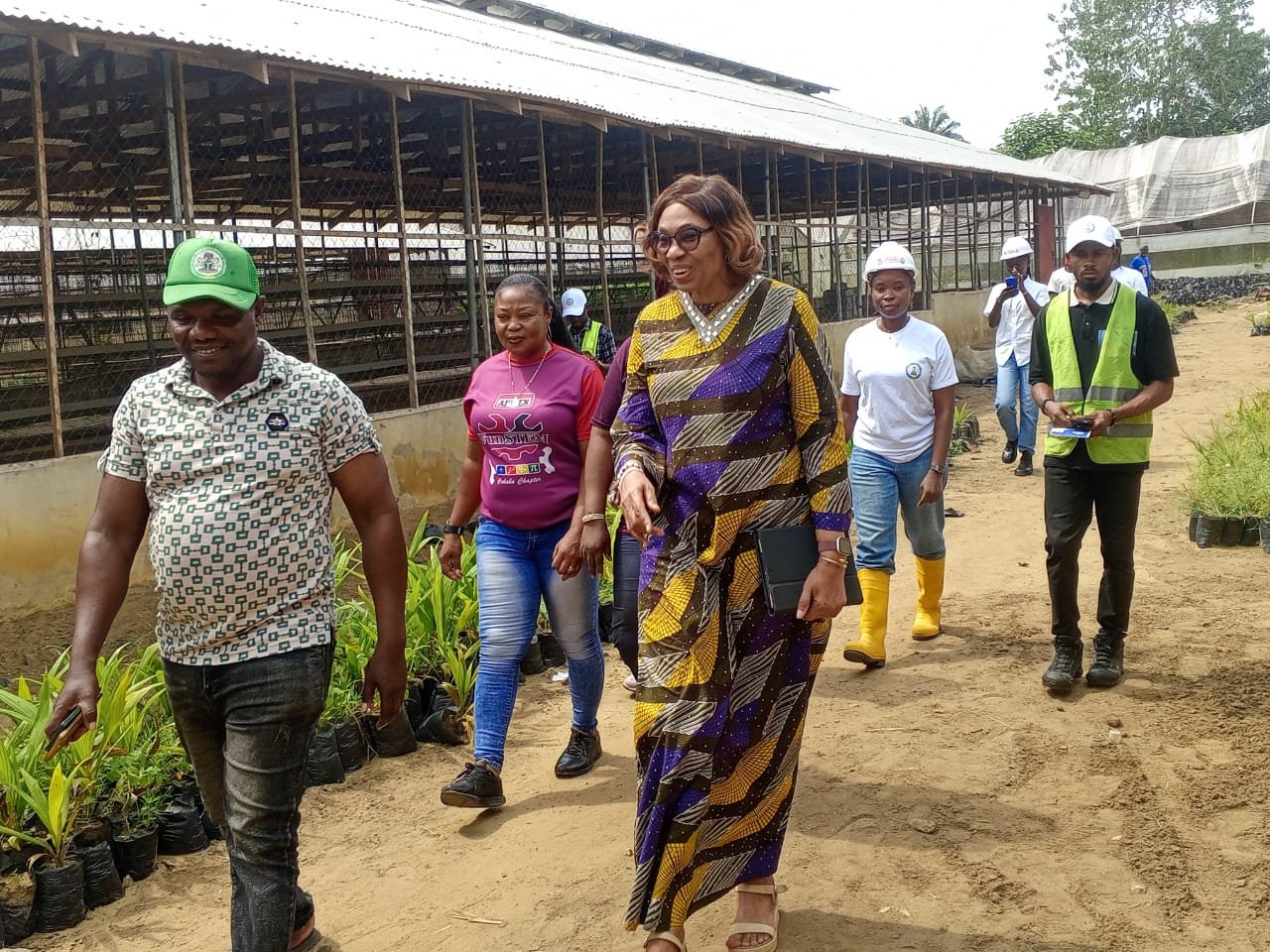
APWEN President, Dr Adebisi Osim, said this during an irrigation farming training programme for young engineering graduates from the University of Calabar at the Cross River Basin Development Authority (CRBDA) Integrated Farm in Calabar.
Osim said the initiative aligns with APWEN’s vision to advance women in engineering while contributing to national and global technological and agricultural development.
According to her, “The programme focuses on practical skills, leadership, and service to humanity, as we know that engineers are problem solvers committed to improving lives and strengthening communities.
“The trainees are being empowered to address food insecurity challenges and create sustainable livelihoods through agriculture-driven engineering solutions,” she stated.
Osim encouraged participants to maximise the opportunity, stressing that the knowledge gained would help them establish farms and contribute meaningfully to their communities.
She further pledged continued mentorship, including access to farmland for practical application of skills acquired during the training.
READ ALSO: Nerz Garden Estate berths in Calabar, boosts affordable housing drive
On his part, Dr Enow Ayuk, an Agronomy Consultant with CRBDA said the programme exposed young engineers to hands-on irrigation farming and integrated agricultural systems.
Ayuk explained that participants were trained in irrigation installation, water management, poultry and fish farming, nursery management, and mushroom production.
He added that the trainees also learned solar-powered borehole installation, water reticulation, fertilisation systems, and greenhouse-based farming techniques.
“This training bridges the gap between theory and practice, enabling these young engineers to apply technical knowledge directly to agricultural production.
“The initiative would also reduce dependence on government jobs, as participants could become agripreneurs and employers of labour,” he said.
One of the trainees, Miss Great Ekeng, described the programme as impactful, saying it provided practical exposure beyond what is taught in classrooms.
Ekeng said the training demonstrated how irrigation and precision farming could support year-round crop production and improve food availability.
She urged universities to incorporate similar practical programmes to help students remain relevant and job-ready after graduation.
Also speaking, Mrs Justina Ulafor, an APWEN member, called on professionals to embrace backyard farming as a contribution to solving Nigeria’s food security challenges.
Ulafor stressed that mentoring young engineers and supporting agribusiness initiatives would strengthen food systems and promote sustainable national development.