







By Solomon Dalung
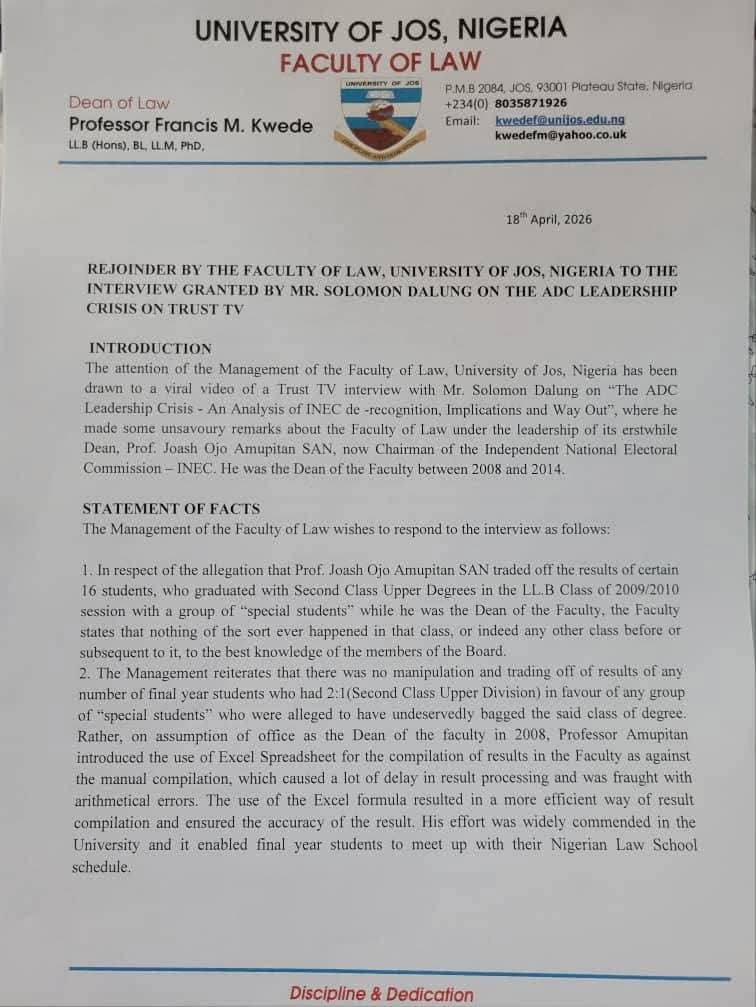
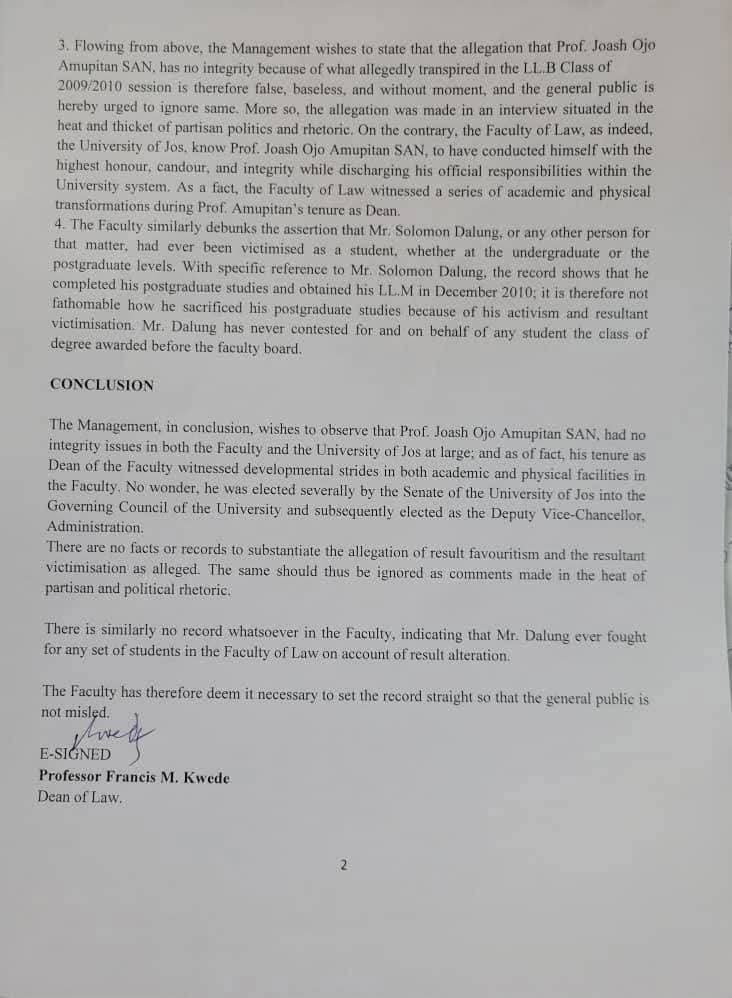
In moments of moral crisis, societies instinctively look to their intellectuals for clarity, courage and truth. Unfortunately, Prof. Kwede’s recent intervention in defence of Prof. Joash Amupitan, SAN, represents not a beacon of intellectual honesty, but a troubling descent into an orchestrated academic cover-up. His statement, rather than addressing the substance of the allegations, seeks to obfuscate, distract, and weaponize sophistry in defence of a colleague whose integrity has come under serious public scrutiny.
At the heart of Prof. Kwede’s argument lies a familiar but discredited tactic, the substitution of emotion for evidence. Rather than engaging the specific allegations with verifiable facts, he cloaks his defence in lofty rhetoric about institutional loyalty, professional respect and the sanctity of academic fraternity. This is not only intellectual dishonesty but dangerous trajectory. It sends a clear message that within certain elite circles, accountability is subordinate to camaraderie and truth is negotiable when reputations of the powerful are at stake.
Even more disturbing is the deliberate attempt to reframe the narrative as an attack on the legal and academic institutions themselves. This is a classic diversionary strategy, deployed to misrepresent legitimate concerns about personal conduct as an assault on institutional integrity. Institutions are not diminished by scrutiny, rather, they are strengthened by it. It is the refusal of intellectuals to confront wrongdoing within their ranks that corrodes their foundations.
Prof. Kwede’s delibrate silence on the weighty allegations, especially specific acts that triggered widespread concern, speaks volumes about his person. In any credible intellectual discourse, the burden of rebuttal lies in the accussed to address the facts head-on. Why has Professor Amupitan resigned to employment of mercenaries to defend him? Yet, this attempt is conspicuously devoid of factual counterpoints. Instead, it appeals morbid sentiments of authority and the implications is that the stature of Prof. Amupitan places him beyond reproach. Such reasoning is antithetical to the very essence of scholarship, which thrives on interrogation, evidence and accountability.
May I asked, what motivates this fervent defence? Is it a genuine belief in the innocence of Professor Amupitan or is it a reflection of a deeper, more troubling culture of impunity within segments of the academic and legal elite? When intellectuals abandon their duty to truth in favor of protecting their own, they cease to be guardians of knowledge and become enablers of corruption and decay. This is the macabre dance we are witnessing, a grotesque spectacle where reason is sacrificed on the altar of mundane materialism.
It is important to emphasize that calling for accountability is not synonymous with persecution. The demand for transparency, due process, and ethical conduct is the minimum standard expected in any civilized society. If Prof. Amupitan is indeed innocent, why has he not come out clean to deny the allegations rather he deployed institutional cover-up as defence? Faculty of Law, University of Jos and Independent Electoral Commission cannot provide effective mercenaries cover-up to the results trading and tweeter account scandals confronting Prof. Amupitan. However, these attempts to stifle scrutiny through intellectual intimidation or rhetorical gymnastics or self sponsored forensic inquiry only deepen suspicion and erode public trust.
Furthermore, Prof. Kwede’s intervention undermines the very students and young scholars who look up to these figures as role models. What lesson are we imparting to the next generation when senior academics appear more invested in shielding corruption than in upholding the principles of integrity and justice? We risk institutionalizing a culture where success is not measured by merit, but by the ability to evade accountability through influence, corrupt practices and unholy connections.
The legal profession, perhaps more than any other, is built on the pillars of truth, justice, and ethical responsibility. For a Senior Advocate of Nigeria to be embroiled in an integrity scandal is, in itself, a matter of grave concern. For fellow academics to respond by circling the wagons and dismissing legitimate concerns only exercebate the crisis. It suggests a profession in living in denial, unwilling to confront its own shortcomings.
In conclusion, Prof. Kwede’s statement does not exonerate Prof. Amupitan; it indicts a broader culture of intellectual complicity. It is a stark reminder that the greatest threat to our institutions is not external criticism, but internal corrupt culture. If we are to preserve the sanctity of our academic and legal systems, we must reject this macabre dance of shameless intellectuals and recommit ourselves to the principles of truth, accountability, and justice. Only then can we restore the public’s faith in the institutions that are meant to redefine the future.
Solomon Dalung LLM, LLB, BL
Garkuwa Arewa, Dike Egwureogwu & Igbarman Otarok
Voice of the Silent Majority.