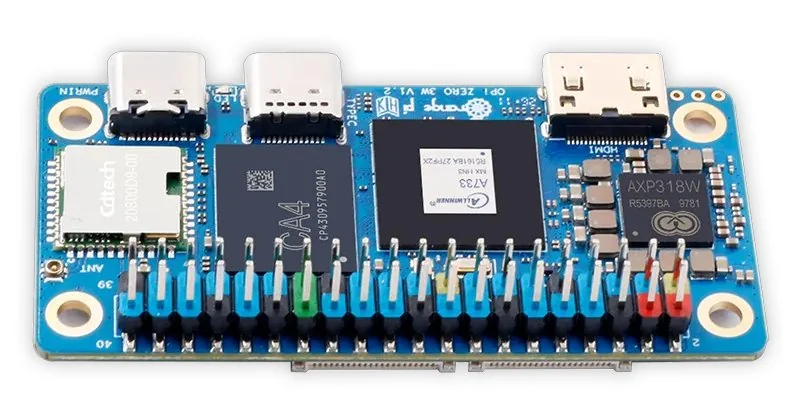
Tech media outlet liliputing published a blog post yesterday (April 15) reporting that Orange Pi has launched the Zero 3W mini single-board computer, measuring only 65×32mm, equipped with an Allwinner A733 processor, and up to 16GB of LPDDR5 memory.
In terms of appearance, the Orange Pie Zero 3W measures only 65×32mm, supports up to 16GB of LPDDR5 memory, features WiFi 6 wireless connectivity, and provides PCIe 3.0×1 expansion capability through the FPC interface.
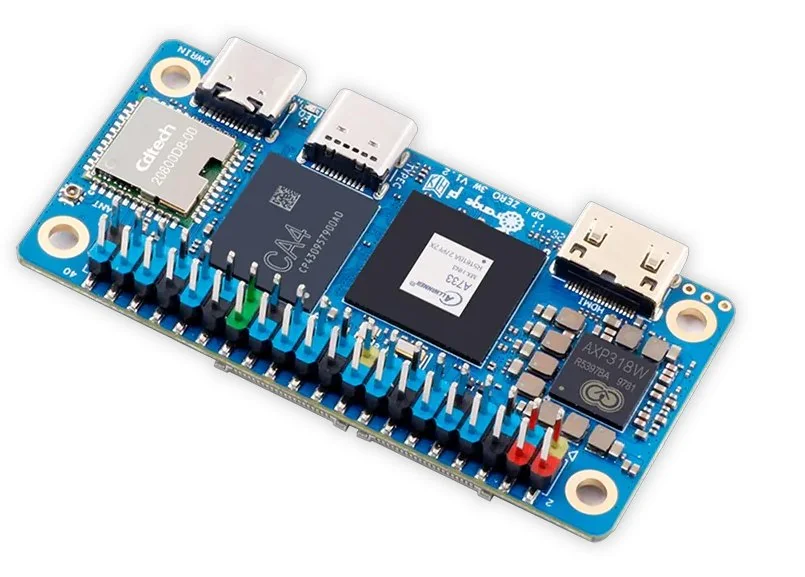
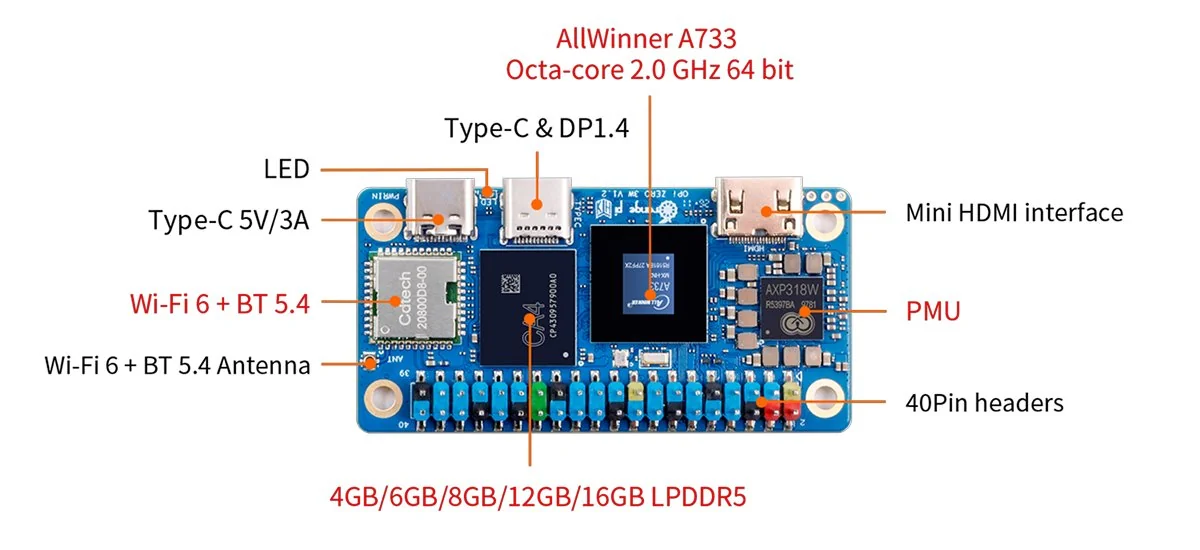
In terms of core hardware, the Zero 3W is equipped with an Allwinner A733 processor. This chip uses an octa-core CPU architecture, including two Cortex-A76 performance cores and six Cortex-A55 efficiency cores, and integrates a XuanTie E902 RISC-V real-time core. The GPU is an Imagination BXM-4-64 MC1, and the NPU computing power reaches 3 TOPS, which can meet the needs of lightweight AI inference.
The Zero 3W offers flexible storage configurations, with options for 32GB eMMC flash memory or 128GB UFS 3.0 storage in addition to a microSD card slot.
The memory is available in multiple specifications, including 1GB, 2GB, 4GB, 8GB and 12GB. The entry-level model has only 1GB of memory and no onboard storage, while the high-end version can reach 16GB, far exceeding the 512MB limit of the Raspberry Pi Zero 2 W.
In terms of interfaces, it features an onboard 40-pin GPIO interface, a USB 3.1 Type-C port (supporting DisplayPort Alt Mode), and a USB 2.0 Type-C power port.
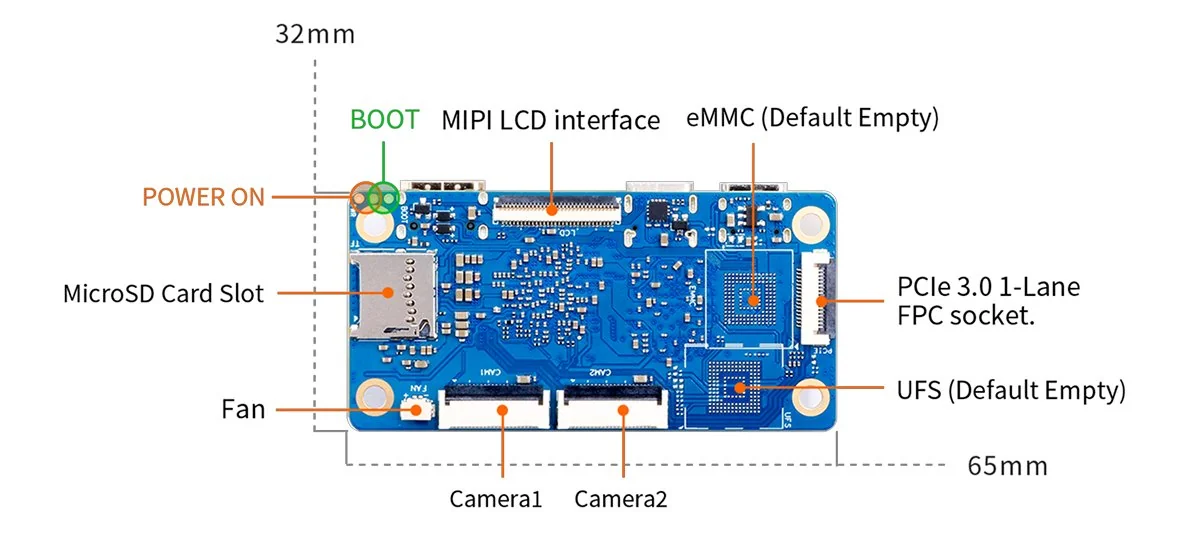
Users can drive dual displays via a combination of HDMI and USB-C, and it also provides dual MIPI-CSI camera interfaces and one MIPI-DSI display interface. Wireless connectivity has been upgraded to WiFi 6 and Bluetooth 5.4 LE, while retaining the 2-pin fan header.
The software ecosystem supports Android, OpenHarmony, and GNU/Linux distributions such as Ubuntu and Debian. Prices start at around $25 (IT Home note: currently equivalent to about 170.8 RMB), with versions with 12GB or more of RAM exceeding $100.
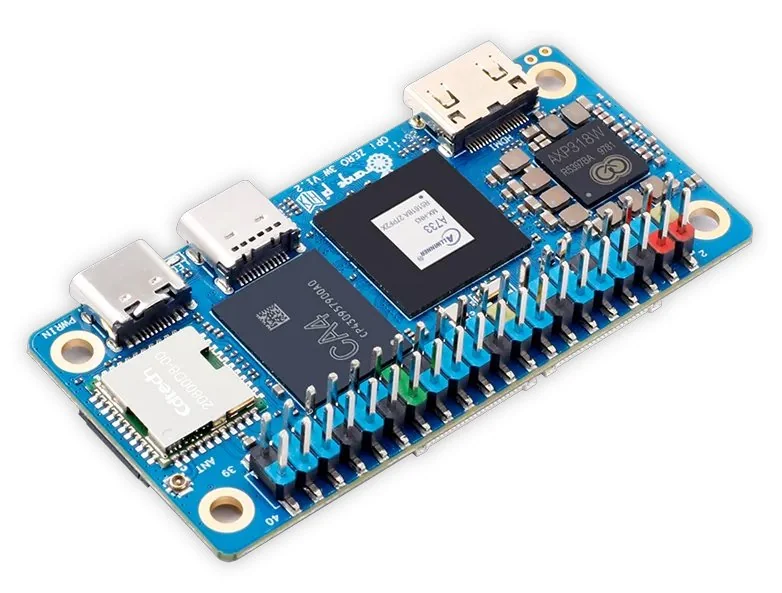
It’s worth noting that the Zero 3W differs significantly from the Orange Pi Zero 3 released in 2023. The previous generation used an Allwinner H618 processor, up to 4GB of RAM, and only supported WiFi 5, but it did have a gigabit Ethernet port. While the Zero 3W leads in both performance and wireless specifications, it has eliminated the wired Ethernet port, making it more suitable for IoT applications that rely on wireless connectivity.