








By Joe Udo
(CONVERSEER) – How did life originate on Earth? This is one of the biggest unsolved mysteries in science. A widely accepted theory is that life began through chemical evolution. However, some scientists have proposed that asteroids and comets may have transported organic molecules, such as nucleobases, to Earth.
Asteroid Ryugu, designated 162173, is a carbonaceous asteroid rich in carbon, water-bearing minerals, and organic compounds. Its primitive, top-like shape leads scientists to believe it was formed from fragments of a larger asteroid.
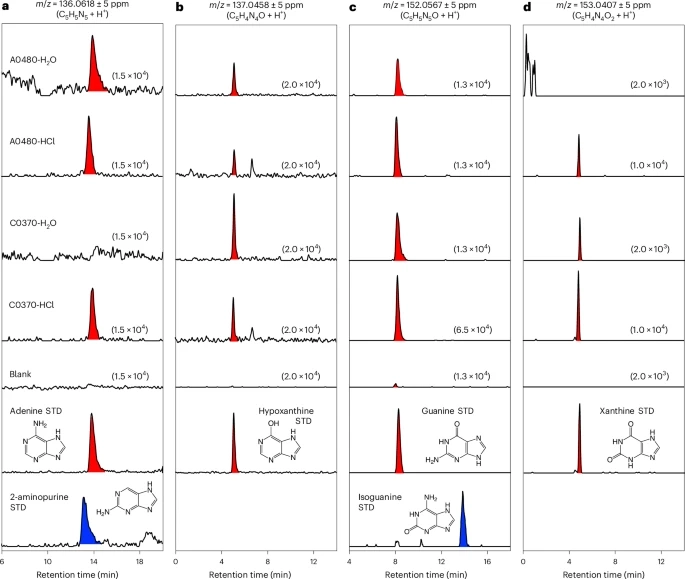
To explore this asteroid, Japan launched the Hayabusa2 spacecraft in 2014 to carry out a sample return mission. Early analyses showed that the samples brought back from Ryugu contained uracil, while the latest research has found all five nucleobases required to make up DNA and RNA in the asteroid samples.
READ ALSO: Chang’e-6 detects solar wind negative ions on moon for first time
Coincidentally, scientists also observed similar findings on another asteroid named Bennu, indicating that such molecules are not uncommon in space. Furthermore, this study also discovered ammonia in the samples, a substance also believed to play a crucial role in chemical evolution.
Researchers point out that this discovery does not mean that life originated in space, but rather that the basic chemical components of life can be generated naturally in the cosmic environment and may be transported to Earth by celestial bodies such as asteroids, providing raw materials for the origin of life.
The relevant research findings were published in *Nature Astronomy* on March 16th (local time). Paper link:
https://doi.org/10.1038/s41550-026-02791-z