








By Joe Udo
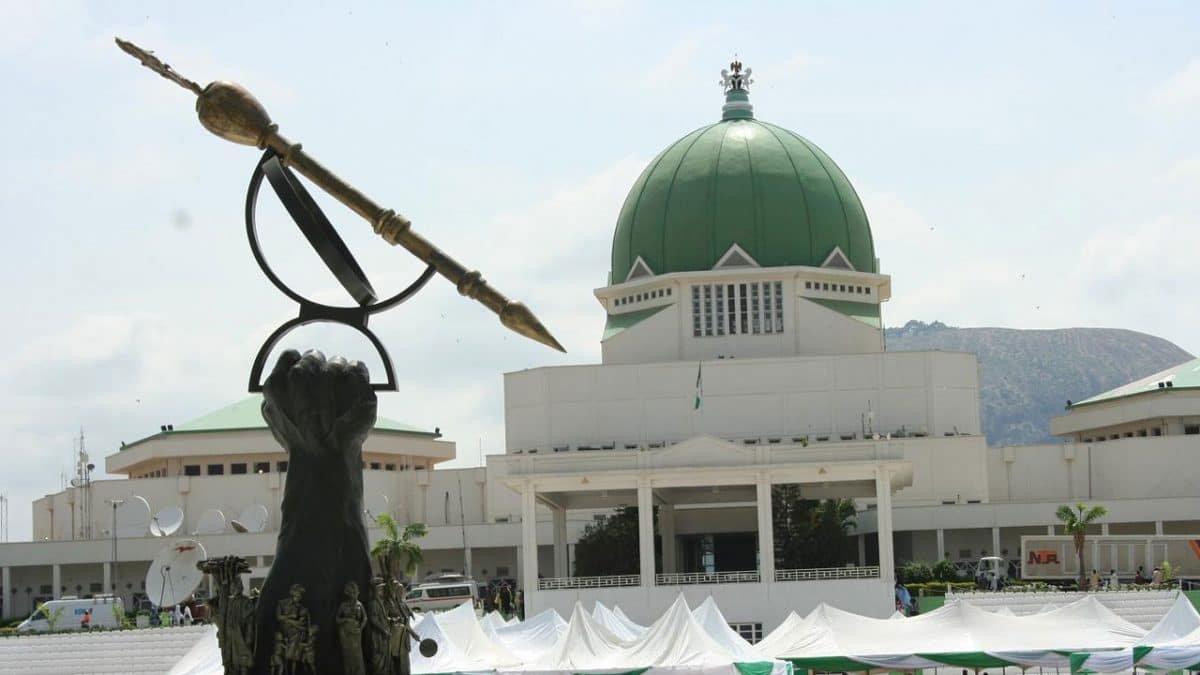
ABUJA (CONVERSEER) – A proposal by the National Assembly to shift Nigeria’s next general elections to November 2026 has sparked widespread debate among political parties, civil society groups, and analysts, with the African Democratic Congress (ADC) leading the opposition against the move.
The lawmakers, in a draft amendment to the 2022 Electoral Act, proposed that presidential, governorship, National Assembly, and State Assembly elections be conducted not later than 185 days before the expiration of the current administration’s tenure. If adopted, the next general elections would take place on 20 November 2026, departing from the traditional February or March schedule.
According to the Chairman of the House Committee on Electoral Matters, Adebayo Balogun, the amendment aims to resolve one of Nigeria’s major electoral challenges — the long backlog of court cases following elections.
“We are proposing this adjustment to allow enough time for all election cases to be concluded before the swearing-in of elected officials,” Balogun explained during a recent public hearing. He added that the timeline for tribunals to deliver judgments would be reduced from 180 to 90 days, while appellate decisions would be concluded within 60 days, giving the Supreme Court adequate time to rule before the inauguration.
To implement the new structure, the National Assembly also proposed amending sections 76, 116, 132, and 178 of the 1999 Constitution, transferring the power to determine election timelines from the Constitution to the Electoral Act.
Opposition to the Proposal
The move, however, has been met with strong resistance from various quarters, particularly the African Democratic Congress (ADC), which described the plan as detrimental to governance and development.
In a statement signed by its interim National Publicity Secretary, Bolaji Abdullahi, the ADC warned that holding elections in November would push Nigeria into “a state of permanent electioneering,” where governance would take a back seat to politics.
“By cutting the current political calendar by six months, the proposal threatens to push Nigeria into a state of permanent electioneering, where politics dominates governance and development is perpetually on hold,” the party said.
Abdullahi argued that early elections would lead political officeholders to abandon governance for campaign activities, diverting resources meant for development projects toward political purposes.
He said, “Elections happening in November 2026 mean campaigns will begin as early as 2025, leaving barely two years of real governance before political distractions set in. The President, ministers, and governors will shift their focus from performance to positioning.”
READ ALSO: Jarigbe: Mass defection looms as C’River North PDP leaders back Tinubu, Otu
The ADC urged the National Assembly to withdraw the proposal and instead focus on comprehensive electoral and judicial reforms to ensure the timely adjudication of disputes without undermining governance stability.
Support for the Proposal
On the other hand, some Nigerians have welcomed the proposed reform, arguing that it could help curb electoral fraud and reduce post-election disputes.
A Lagos-based lawyer, Kayode Akiolu, said the change would minimise political interference and prevent situations where presidents or governors use state resources to influence election outcomes or court proceedings.
“This will actually reduce or even eliminate, to some extent, electoral fraud because while the president will be busy fighting for his survival, the governors will also be busy fighting for theirs,” Akiolu explained.
He added that simultaneous presidential and gubernatorial elections would make it harder for powerful incumbents to influence results across multiple levels.
Akiolu cited the 2023 general elections as an example, claiming that if the presidential and governorship polls had been held the same day, the outcome in Lagos might have been different. “If both elections were held the same day, Governor Sanwo-Olu would not have won because the Labour Party’s presidential candidate won in Lagos,” he said.
Analysts Advocate Institutional Reforms
Public affairs analyst Prince Johnson Meekor cautioned that shifting election dates would not solve Nigeria’s underlying electoral challenges. Instead, he called for stronger institutions and judicial efficiency to ensure timely and fair election outcomes.
“If the objective is to ensure that petitions are concluded before swearing-in, then the solution lies in strengthening the judiciary and INEC, not altering the election calendar,” Meekor said.
He cited international examples, including Kenya, Ghana, and Indonesia, where electoral disputes are resolved within weeks due to efficient judicial systems. “Changing the date of elections without fixing institutional inefficiencies will not solve the problem,” he stressed.
Early Voting Provision
The draft amendment also proposes early voting for certain categories of citizens, such as security personnel, journalists, INEC officials, accredited observers, and ad hoc staff. This would take place no later than 14 days before the main election, ensuring that those performing essential duties on election day can still exercise their franchise.
As the debate continues, the proposed amendment remains at the committee stage, with lawmakers expected to hold further consultations before it progresses to plenary for consideration.