By Vivian Ihechu
ABUJA (NAN, CONVERSEER) – For many years, families like Faustin Menzan’s in Côte d’Ivoire, who farm cocoa in West Africa, have been suffering.
They help produce chocolate for the whole world, but they never see enough money to live better.
Their farms are old, the market price for cocoa is never stable, and they face a hard choice: manage with the little money they get, or send their children to school. This struggle is big.
In Nigeria, for instance, aged cocoa trees (30+ years) and the prevalence of diseases have created a crisis in Nigerian cocoa farming.
In spite of Nigeria being a top global producer, official figures from the Cocoa Association of Nigeria (CAN) and the Federal Ministry of Agriculture and Rural Development (FMARD) estimate annual production at approximately 280,000 metric tons (MT).
However, the average national yield remains critically low at about 400 kg/ha, significantly below the 1,000 kg/ha potential seen in neighbouring West African nations.
This low productivity is compounded by poor farming practices, limited access to improved seedlings, and a lack of essential inputs like fertilisers.
The result is low farmer income, discouraging younger generations and threatening the sector’s sustainability, necessitating urgent renewal and rehabilitation.
The Nestlé Income Accelerator Programme (IAP), inaugurated in 2022 as an innovative, family-centred approach aims to close the living income gap and reduce child labour risks in cocoa-growing communities.
Stéphane Detaille, Global Sustainability Manager for confectionery at Nestlé revealed the ambitious Nestle Income Accelerator programme, emphasising its innovative approach.
“We’re moving from farmer centricity to a family centricity,” Stefan stated, highlighting the programme’s unique strategy.
Discussing the programme’s growth during a webinar on IAP report 2025, Detaille noted, “We launched in 2020 a pilot that helped us also to officially launch the nest income accelerator in 2022 reaching 10,000 families.
“We scaled up to 30,000 families, with an extension to Ghana in 2024.
“The programme offers significant financial incentives.
“Farming families can earn up to 500 euros in the two first years, and then it will be moving to 250 euros when the practices, such as pruning, will be unlocking the full potential of the cocoa farm.”
Detaille stressed the importance of collaboration: “We cannot solve the challenges alone… the necessary income accelerator is definitely bringing novelty, and there is inspiration in many other programmes.”
The ultimate goal, according to him, is to reach “160,000 cocoa farming families by 2030.”
The Nestlé Income Accelerator Programme (IAP) has brought a new way, representing a paradigm shift from traditional volume-based premiums to direct financial incentives for adopting sustainable and regenerative agriculture practices.
READ ALSO: Rotary Foundation targets malaria, diarrhoea, pneumonia in new health initiative
This is changing their lives from serious hardship to real hope.
The 2025 progress report for the Income Accelerator Programme (IAP), confirms that its ambitious model of rewarding cocoa farming families for social and environmental stewardship is delivering tangible economic gains.
The Nestlé Income Accelerator Programme (IAP) has brought a new way, representing a paradigm shift from traditional volume-based premiums to direct financial incentives for adopting sustainable and regenerative agriculture practices.
This is changing their lives from serious hardship to real hope.
The 2025 progress report for the Income Accelerator Programme (IAP), confirms that its ambitious model of rewarding cocoa farming families for social and environmental stewardship is delivering tangible economic gains.
Findings confirmed that the programme, in spite a difficult cocoa season, is increasing cocoa productivity and household income but also strengthening resilience, improving gender equality, and enhancing children’s wellbeing.
The 2025 IAP report said it successfully onboarded thousands of families across West Africa, achieving a notable reduction in the income gap for participants compared to non-participants.
A key finding is the significant uptake in agroforestry, where farmers are integrating diverse native shade trees with their cocoa crops—a move crucial for climate resilience and biodiversity.
Attesting to the impact of the programme, the feedback of Faustin Menzan, a farmer participating in the programme in Côte d’Ivoire, resonated strongly with the reality facing Nigerian families.
He said: “This programme changed my mind about farming.
“Before, the work was too hard for the small gain. Now, the extra money comes in when I need it most, helping me buy fertiliser and pay for the children’s books.
“It is the first time I feel seen, not just used.”
The result has been a measurable increase in both school attendance and agricultural resilience.
Daan Wensing, CEO of IDH, who leads the programme’s advisory committee, provided his industry perspective, saying: “From an industry standpoint, the IAP is a necessary evolution.
“We can no longer afford the reputational risk or the moral failure of farmer poverty.
“The IAP model provides an essential blueprint for shared responsibility. We need to see more companies commit to this direct, traceable incentive system.”
Charles Tellier, CEO of So-B-Green, who is implementing the programme on the ground, offered suggestions based on field experience.
“What worked best was the simplicity—cash for verifiable action.
“To improve, we must better integrate local financial literacy training.
“The money is coming, but many farmers need simple, guided solutions on how to save, invest in small side businesses, or manage this new, consistent income stream for long-term stability.”
Darrell High, Nestlé Cocoa Plan Manager, said “Since the launch of the Nestlé income accelerator programme, we have consistently refined our approach by incorporating feedback and insights from farming families, along with data gathered by KIT.
“We are already responding to the insights of the report by simplifying the programme in 2025.”
Oumou Diallo, Senior Advisor, Impact Economics, at KIT Institute, who assessed the programme’s early impact, highlighted the effectiveness of the incentive structure.
“Our initial assessment confirms the payments successfully de-risked crucial behaviour changes like agroforestry adoption and sending all children to school.
“However, the data suggests the next phase must focus intensely on ensuring income diversification, so families are less vulnerable to commodity price shocks and climate volatility.”
The expansion strategy is now placing a high priority on Nigeria.
Recognising Nigeria as a critical long-term sourcing hub and an area highly vulnerable to climate change impacts, Nestlé may look in that direction.
The IAP Model could help Nigeria’s cocoa agriculture as Diallo suggested ways to develop the model further.
“Our assessment shows the IAP is brilliant at addressing poverty drivers.
“However, for deeper impact, Nestlé should focus on accelerating crop diversification incentives, specifically to non-cocoa foods like yams and cassava.
“This protects the family from cocoa price shocks and builds stronger local food security. Furthermore, incentivising community women’s enterprise groups will maximise the impact of cash transfers.”
Nathan Bello, Cocoa Plan Manager for the CWAR region at Nestlé, confirmed the strategic importance of the expansion.
“In our region, the progress is clear. When you tie the cash directly to the health of the farm and the well-being of the family, farmers become true stewards.
“This isn’t a handout; it’s an investment in the rural economy that protects our entire supply chain.”
“The strong early success in Ghana and Côte d’Ivoire gives us the confidence to aggressively scale the model into Nigeria.
“We are already onboarding thousands of new Nigerian families this year, focusing heavily on the regenerative training that underpins the whole programme.
“This isn’t just about cocoa; it’s about making their farms resilient for the next generation.”
Looking ahead, Detaille reinforced the company’s commitment to the IAP.
“This programme is central to achieving a fully sustainable cocoa supply chain.
“It proves that we don’t have to choose between supporting farmers and protecting the planet.
“We are learning how to embed social equity and environmental health into the very cost of our raw materials.”
“Our goal is to reach 160,000 cocoa-farming families by 2030.
“This programme is fundamental to ensuring that every piece of chocolate we sell contributes to a thriving, poverty-free community. It sets a new standard for what ‘sustainable’ truly means.”
Expanding this blueprint to the Nigerian cocoa sector would be impactful, as the sector, which is currently struggling with low yields and outdated infrastructure, stands to benefit immensely from adopting this direct incentive model.
The IAP model would provide a clear, three-part solution for Nigeria’s cocoa sector – cash for renovation and reforestation, school bonus mandate, as well as data and diversification, if adapted.
There is a need to adapt the IAP model to offer higher incentives specifically for cutting down old, dying trees and replacing them with new, high-yielding seedlings.
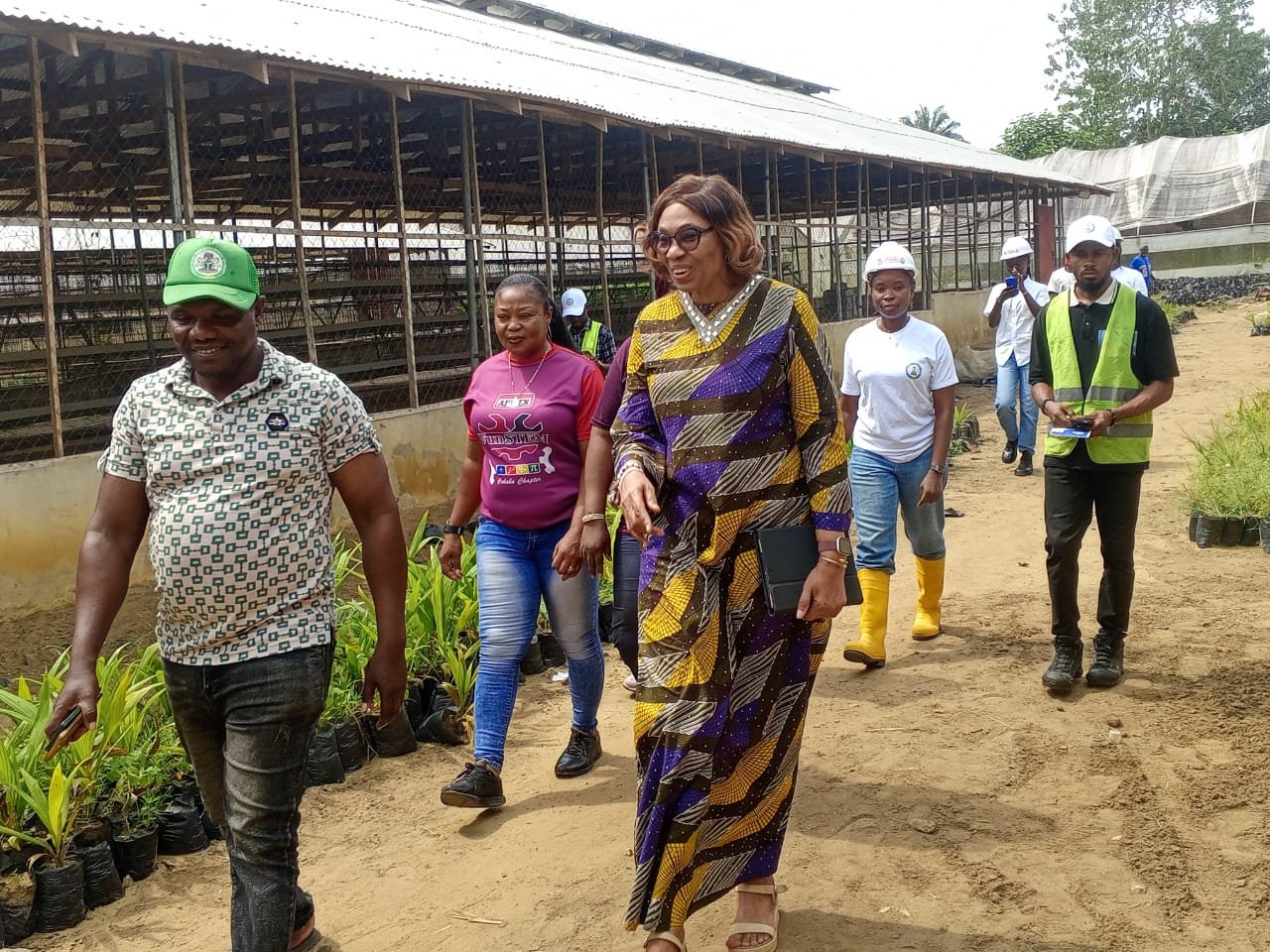
Government and private partners must create nurseries to supply millions of these new seedlings to farmers at no cost, as part of the cash-incentive contract.
On the ‘School Bonus’ Mandate, the success in Ghana and Côte d’Ivoire shows that direct cash tied to school attendance is a powerful tool to eliminate child labour.
This must be the first condition for any farmer participating in a national cocoa scheme.
Also, data and diversification: Nigeria must copy the multi-cropping ambition. Paying farmers to plant plantain and yams alongside cocoa not only secures their food but makes them agri-business people instead of just cocoa producers.
Speaking on the potential for Nigerian adoption, Dr Aisha Bello, a Nigerian Agricultural Development Advocate, stated: “This is not just about Nestlé; it’s a template for African development.
“For Nigeria, the IAP shows us that if you want to eliminate child labour, you don’t use police — you use cash. If you want better yields, you don’t give a speech — you give money tied to new seedlings.
“The solution is economic dignity, and that is what we must achieve.”
To achieve and expand this, one word keeps resonating – collaboration.
Laurent Freixe, CEO of Nestlé, stressed that collaboration was key “ if we want to make a long term positive impact on cocoa farming families in West Africa.
“We are committed to continue the expansion of our income accelerator program in Cote d’Ivoire and Ghana, our main cocoa origins.
“We welcome the interests of the governments and other industry players in our approach together, we will be able to scale up our efforts and make a real difference cocoa farmers and their families and for the cocoa sector as a whole,” he said.
In summary, by adapting this template and collaborating with IAP, Nigeria can lift its cocoa families out of the poverty shadow and make “Made in Nigeria” cocoa a symbol of prosperity and ethical production.