By Ellen Braunstein
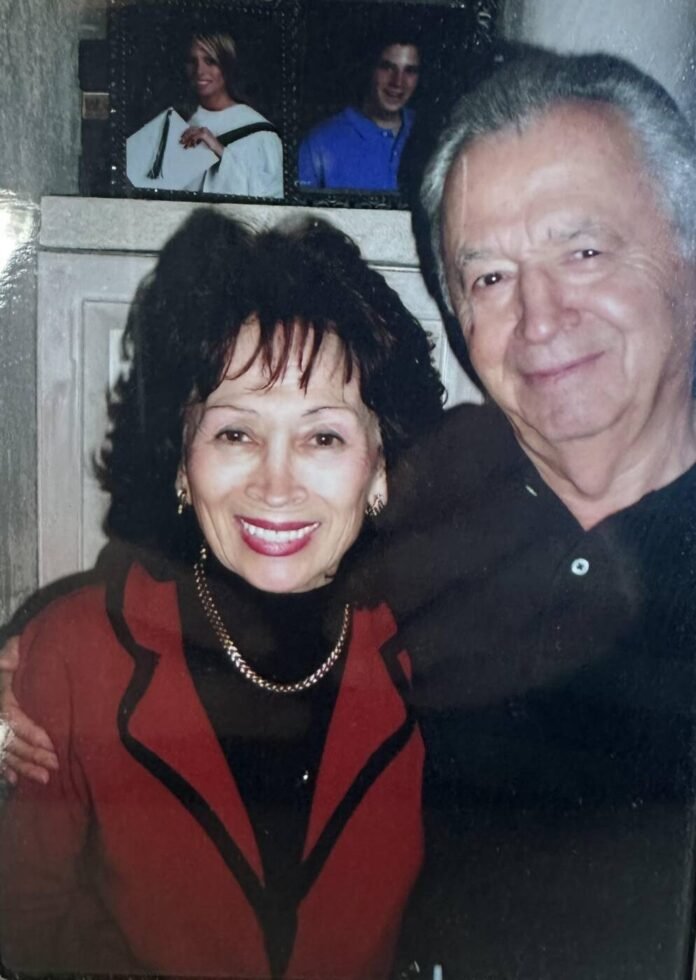
PHILADELPHIA (CONVERSEER) – Sara Lamden Sherman, a Holocaust survivor who spent her childhood fleeing across Europe and Central Asia, survived the treacherous voyage of the famous Exodus ship, helped build a life in the early years of the State of Israel and later became a Hebrew school teacher in Philadelphia, died Nov. 25. She was 87.
Sara was born Aug. 8, 1938, in Kamenets-Podolsk, in what is now Ukraine, later the site of a mass killing of Jews.
Just a year after her birth, World War II began, and her early childhood became a prolonged flight from Nazi persecution and anti-Jewish violence.
Along with her mother, stepfather and extended family, she moved repeatedly in search of safety, travelling through Tashkent in Uzbekistan, Chelyabinsk in Russia and Breslau, then part of Germany. The group often lived as refugees and relied on temporary work and family networks.
“Her early years were spent on the run,” said her daughter Vivi Sadel. “They moved from town to town just trying to survive. The only thing that stayed constant was that they stayed together.”
During the war, Sara lost her younger brother to untreated scarlet fever. She herself became seriously ill with scarlet fever and spent weeks isolated in a hospital as a child.
“She talked about how frightening it was to be alone,” Sadel said. “She never forgot that.”
Her father was conscripted into the Soviet Army and died during the war. Her mother later remarried, and Sherman formed a close bond with her stepfather, Moshe Lamdan, who assumed the role of her father during her later childhood.
“He became her father in every way that mattered,” Sadel said.
After the war, Sara and her family lived in the Pocking displaced persons camp in Germany while awaiting an opportunity to immigrate to British-run Palestine.
In July 1947, they were transported by truck through France to the port of Sète, near Marseille, where they boarded a steamship known as the Exodus.
The journey took place at night and under difficult conditions. Refugees were given blankets and minimal supplies before being transferred by plank from shore to ship.
“They arrived in the dead of night,” Sadel said. “The sea was rough, and it was scary.”
The ship was overcrowded, carrying more than 4,500 refugees despite being designed to hold about 500 passengers. Conditions on board were harsh. Passengers slept on floors or narrow shelves, bathed in seawater and shared a small number of toilets.
“The conditions were horrible,” Sadel said.
When British forces intercepted the ship, most passengers were deported back to Europe. Because Sara’s mother went into labour during the confrontation, the family was taken to Haifa.
READ ALSO:
The newborn child died shortly after birth. Sara and her parents were then held for several months at the British-run Atlit detention camp south of Haifa.
“They were treated like prisoners,” Sadel said. “There were walls, barbed wire, and men and women were separated.”
Sara later recalled witnessing celebrations in the camp when news spread by radio that the state of Israel had been established.
After their release, the family settled in Haifa during the country’s early years. Sara learned Hebrew, attended school and grew up amid shortages, conflict and the shared challenges of nation-building.
“She always said it was hard,” Sadel said. “But there was also a feeling that everyone was building something together.”
As a young adult, Sara worked at Bank Leumi near the port of Haifa. She met her future husband, Ezra Sherman, also an orphaned Holocaust survivor, who had lost both parents during the war and later fought with the Palmach, the elite pre-state Jewish fighting force that became part of the Israel Defence Forces. The couple married in 1956 and built a life together in Israel.
Following the 1973 Yom Kippur War, the family decided to leave Israel in the face of too much conflict. Sherman and her husband moved with their children first to New York and later to Philadelphia.
All three children — Steve, Estee and Vivi — were born in Israel.
“We had a very Israeli household,” Sadel said. “We spoke Hebrew, and Israel never left our hearts.”
In Philadelphia, Sherman devoted herself to family life and Jewish education. She became a Hebrew school teacher, a role that reflected both her love of language and her commitment to Jewish continuity.
“She was a teacher, like her father was a teacher and her stepfather was a teacher,” Sadel said.
“She was very present with us. She paid attention,” her daughter Estee Sherman Solar said. “What mattered to her was the life she built. Her family, her students and the connections she made.”
Sherman was known within her family for her generosity and hospitality. Her home was frequently open to relatives, friends and newcomers, particularly on Jewish holidays. Family members jokingly referred to it as “Hotel Sherman.”
“She never turned anyone away,” Sadel said.
Sherman spoke multiple languages, including Hebrew, English and Russian, and continued to move easily among them later in life.
She did not often speak publicly about her wartime experiences, but she participated in educational efforts when invited. Her oral history interview is preserved by the United States Holocaust Memorial Museum.
Beyond those efforts, her priorities were close to home. “Family was always at the centre of her life,” Solar said. “We were her whole world.”
Ellen Braunstein is a freelance writer.