- Russia ultimately has nothing to lose and everything to gain while France has lots to lose and will struggle to retain its influence there.
By Andrew Korybko
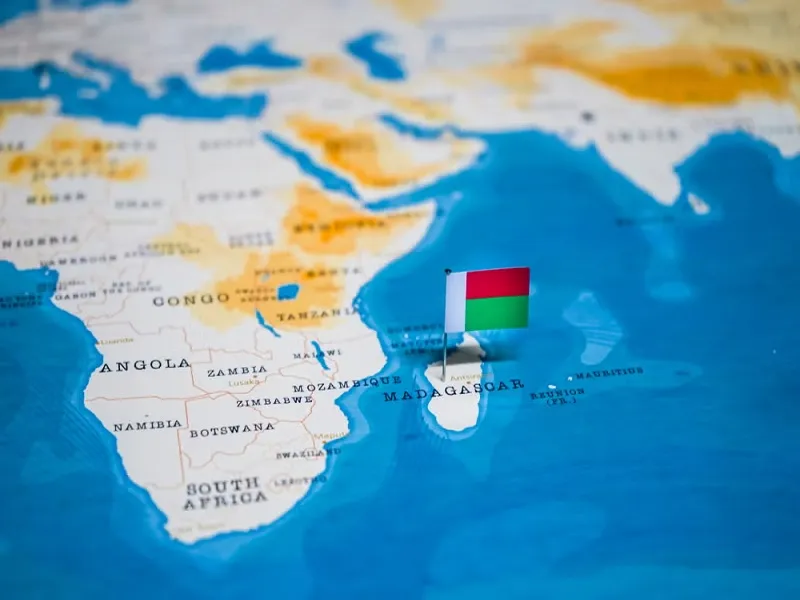
CALIFORNIA (CONVERSEER) – Le Monde reported in late December that “The Indian Ocean has become a new arena for France-Russia rivalry”. According to them, Russia helped amplify anti-French rhetoric ahead of October’s military coup in Madagascar, whose new ruling junta is now considering importing Russian energy. The National Assembly Speaker confirmed shortly afterwards that they’d just received arms from Russia too. Le Monde expressed worry that Madagascar might go the way of the Sahel in allying with Russia one day.
As for the Comoros, the expansion of Russian influence there is even quieter since its embassy will only open up next year, but the 50th anniversary of bilateral ties provides an opportunity to reaffirm Moscow’s support for the island nation’s claims to the nearby French region of Mayotte. In connection with that, Russia might also reaffirm its support for Madagascar’s claims to France’s nearby uninhabited Scattered Islands, which could collectively help revive its political influence in this part of Africa.
For now, however, Russia’s overall influence remains minimal but could comprehensively expand depending on how relations with Madagascar’s junta evolve. If it becomes a reliable military replacement for France, makes competitive offers for developing Madagascar’s infrastructure, and provides sufficient humanitarian aid (in the form of free grain and/or discounted energy), then Russia could hypothetically be rewarded with privileged mining contracts just like in the Sahel.
Madagascar is rich in rare earths, which are integral to the “Fourth Industrial Revolution”, so Russia could recoup the costs of the aforesaid aid through these means while profiting handsomely in the process. From Madagascar’s perspective, replacing France with Russia as its top strategic partner would greatly facilitate the implementation of the junta’s sovereigntist plans, including through Russia’s “Democratic Security”/“regime reinforcement” operations for neutralizing French anti-state/regime change threats.
It’s more difficult to replicate this Sahelian-inspired model in the Comoros since it balances between France, the US, China, and the UAE as noted by Le Monde unless it undergoes another coup like Madagascar just did that could in turn create a chance for Russia to expand its influence. As was earlier implied, Russia could still actively support its and Madagascar’s claims to nearby French-held islands through vigorous information operations, which could suffice as a first step for obtaining influence there.
Russia’s interconnected goals in this new front of its rivalry with France in Africa are fivefold: 1) strengthen its partners’ sovereignty; 2) for accelerating the end of France’s unfair neo-colonial advantages over them; 3) which thus weakens France indirectly; 4) and ideally makes it less of a threat to Russia in Europe; 5) while Russia might then be rewarded with privileged mining contracts and/or naval bases by its partners for recouping the costs of its aid to them and bolstering its global prestige.
Considering that this dimension of the Russo-Franco competition has only just begun, it might still take some time for any tangible dividends to be reaped, if any at all, since it’s also possible that nothing comes from the Kremlin’s latest push. Nevertheless, it’s still worth putting France on edge, which could enable Russia to exercise “reflexive control” over it in this region. Russia ultimately has nothing to lose and everything to gain while France has lots to lose and will struggle to retain its influence there.