Pakistan is functioning as the force multiplier in the Saudi-Turkish-Egyptian proxy campaign against the UAE in Africa which it’s finally participating in after sitting on the sidelines for so long
By Andrew Korybko
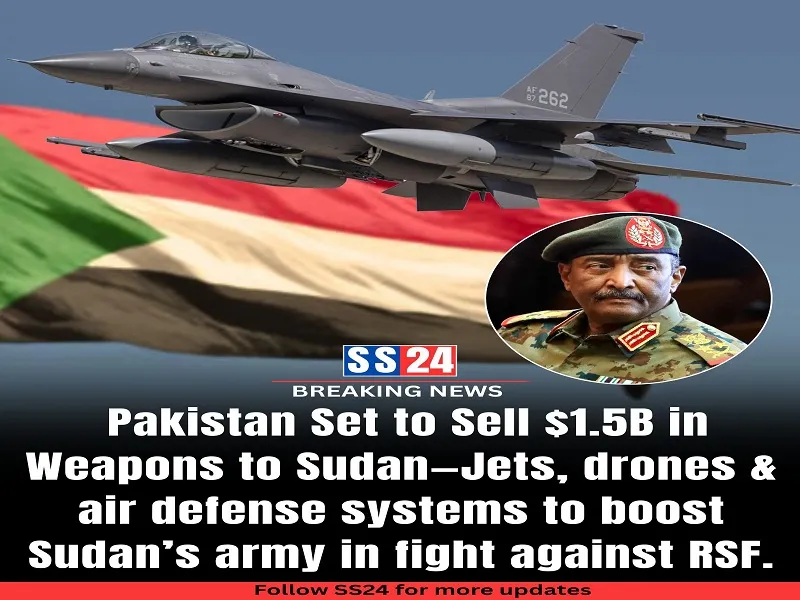
CALIFORNIA (CONVERSEER) – Reuters recently reported that “Pakistan nears $1.5 billion deal to supply weapons, jets to Sudan”, which follows last month’s report from them that “Pakistan strikes $4 billion deal to sell weapons to Libyan force, officials say”. It was assessed after the last-mentioned report that “Pakistan Is Playing Second Fiddle To Turkiye In Afro-Eurasian Security” since there’s now a pattern of it clinching security deals with third countries like Azerbaijan, Somalia, and then Libya sometime after its Turkish strategic partner does.
For those who aren’t aware, this analysis here (which is also linked to in the preceding hyperlinked analysis above) details Turkiye’s nascent rapprochement with General Khalifa Haftar and his Libyan National Army (LNA), which is with whom Pakistan struck last month’s deal. These related developments strongly suggest that Haftar might soon “defect” from the UAE’s camp of non-state regional allies in favour of the broad coalition that’s begun to emerge in opposition to it and which will soon be described.
LNA-controlled Eastern Libya is thought to be among the routes that Sudan’s rebel “Rapid Support Forces” (RSF) rely upon for arms from the UAE, which has been accused of backing them even though it always denies this, so his “defection” could hit their military logistics hard. That could in turn facilitate a coalition-backed counteroffensive by General Abdel Fattah al-Burhan’s “Sudanese Armed Forces” (SAF). Pakistan’s reportedly planned arms deal with Sudan makes perfect sense when viewed in this context.
Having established the backdrop to that deal, it’s now time to describe the UAE’s camp of non-state allies before doing the same for the coalition that’s emerging in opposition to it. The UAE’s camp includes the LNA (for now at least), the RSF, Somaliland, and the now-dissolved Southern Transitional Council (STC) in newly conquered South Yemen that was just taken over by the Saudis’ Yemeni allies. The Kingdom’s brief air campaign was a show of force that might presage more direct involvement in Sudan and Somaliland.
The Saudis back Burhan, as do Turkiye, Egypt, and now Pakistan, and they also back Somalia against Somaliland after Israel’s official recognition of it, just like nearly two dozen other Muslim countries do too (including Turkiye, Egypt, and Pakistan). Egypt and Turkiye are also Sudan and Somalia’s top backers, with Pakistan now playing second fiddle to both there, the role of which is made all the more apparent after Field Marshal Asim Munir visited Egypt last fall to discuss regional security among other subjects.
This followed the Pakistani-Saudi mutual defence pact in mid-September, which Turkiye now reportedly wants to join, thus solidifying their convergence of regional interests if it happens. Egypt would probably be the next to join, too, after its own LNA-like rapprochement with Turkiye, but even if it doesn’t, all four will still likely increase their military coordination in Sudan. Depending upon how successful this is, especially if the LNA “defects” to their coalition, the RSF might have a very difficult year ahead.
In parallel, the emerging Saudi-Pakistani-Turkish-Egyptian bloc could support the Somali National Army, allied militias, and possibly also Al Shabaab (given Pakistan’s experience with weaponising radical Islamic groups in Afghanistan and India) in restoring the federal government’s writ over UAE-aligned Puntland. The potential basing of Saudi warplanes in South Yemen, including nearby Socotra, could facilitate air support for a ground campaign or possibly even intimidate that statelet into submitting without force.
The same would then go for neighbouring Somaliland, which might be the last member of the UAE’s camp of regional non-state allies standing by then, unless Israel’s recognition of it leads to a defence pact and the basing of Israeli forces for deterring Saudi bombing and/or a coalition invasion. At the same time, precisely because there aren’t (yet?) any Israeli forces there, Somaliland might be threatened by the emerging coalition before any significant action is taken by them against the RSF. It’s too early to tell.
ALSO READ: Trump calls for $1.5tr defence spending for ‘Dream Military’
All that can be said for sure is that the regional interests of Saudi Arabia, Pakistan, Turkiye, and Egypt are converging, as proven by Pakistan’s security deal with Somalia last summer and then the arms ones that followed shortly thereafter with Libya and likely soon Sudan, which are theatres of rivalry with the UAE. Although Pakistan and the UAE enjoy close ties, Pakistan’s alliance with the Saudis and its role as second fiddle for Turkiye and Egypt in the aforesaid three states prove which side of the regional rivalry it’s on.
The deals that Pakistan just struck with Somalia, Libya, and likely soon Sudan will respectively strengthen the Somali National Army vis-à-vis Somaliland, facilitate Turkiye’s attempted “poaching” of the LNA from the UAE, and aid the SAF in their struggle against the RSF. Essentially, Pakistan is functioning as the force multiplier in the Saudi-Turkish-Egyptian proxy campaign against the UAE in Africa that it’s finally participating in after sitting on the sidelines for so long, which reshapes regional dynamics.
The UAE’s compliance with the Saudis’ demand late last month that it completely withdraw from South Yemen within 24 hours, which preceded the Saudis’ air campaign that led to their Yemeni allies sweeping across the country, must have been extremely demoralising for the LNA, the RSF, and Somaliland. This doesn’t mean that it’ll abandon them just like it just abandoned the STC, but precedent still suggests that it might if the Saudis make more ultimatums to this effect under threat of another aerial campaign.
The LNA might now be more likely to “defect” from the UAE’s camp, the RSF might be defeated if the UAE complies with Saudi-led coalition pressure to cut off alleged military aid (including across the Horn to its ally Chad), and Somaliland might become dependent on Israel for its security due to the existential threat that the coalition might soon pose to it. In that event, Emirati influence in Africa might evaporate, with the Saudi-led coalition filling the vacuum and thus becoming a transregional hegemonic force.