By Ebube Bruno
CALABAR (CONVERSEER) – Centuries ago, it was an honour to fight for one’s home. Warriors were prized, feared by enemies and celebrated by their people. Land meant survival, and those without it often took it by force. If a community were weak or unable to defend itself, it could lose everything. Sometimes, even in death.
Today, not much has changed—only the value of land has increased. Beyond yams and maize, land now yields gold, precious stones, clean water, and oil. Nations and individuals alike will go to great lengths to control it. That is why the struggle for land and resources is rarely just local. Across the world, power, whether political, economic, or military, continues to determine who controls territory and who benefits from it.
That is why, in different forms, we still see force used to claim and defend land. In Nigeria, herdsmen and bandits sack communities, kill and rape families, and take over ancestral lands to graze cattle and expand territory.
In July 2018, during the administration of General Muhammadu Buhari, a presidential spokesperson, Femi Adesina, once questioned why people would risk their lives defending ancestral land, suggesting that survival should take priority.
In ideal situations, however, no government leaves its territory unprotected. The military exists to defend the nation from external aggression, secure its borders, and protect its sovereignty.
Like in earlier times, soldiers are defenders of land and territory. They are trained for war, not for mediation. They are built to confront enemies, not to manage civil disputes.
And when such force is introduced into situations that do not require it, the consequences are often devastating.
That is the story of Odonget town in Obubra Local Government Area of Cross River State.
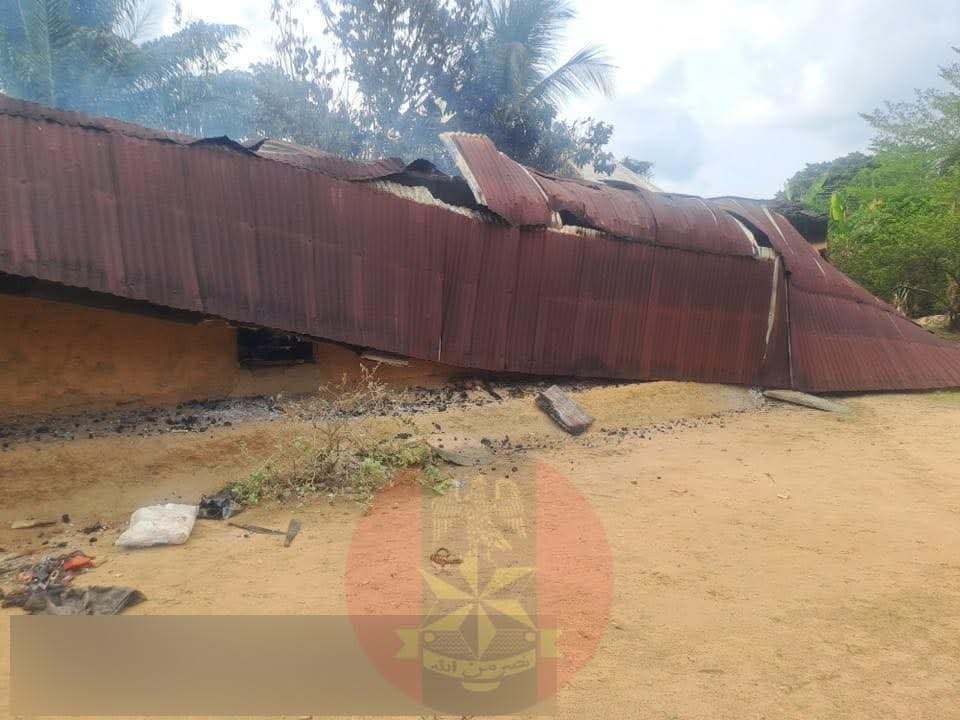
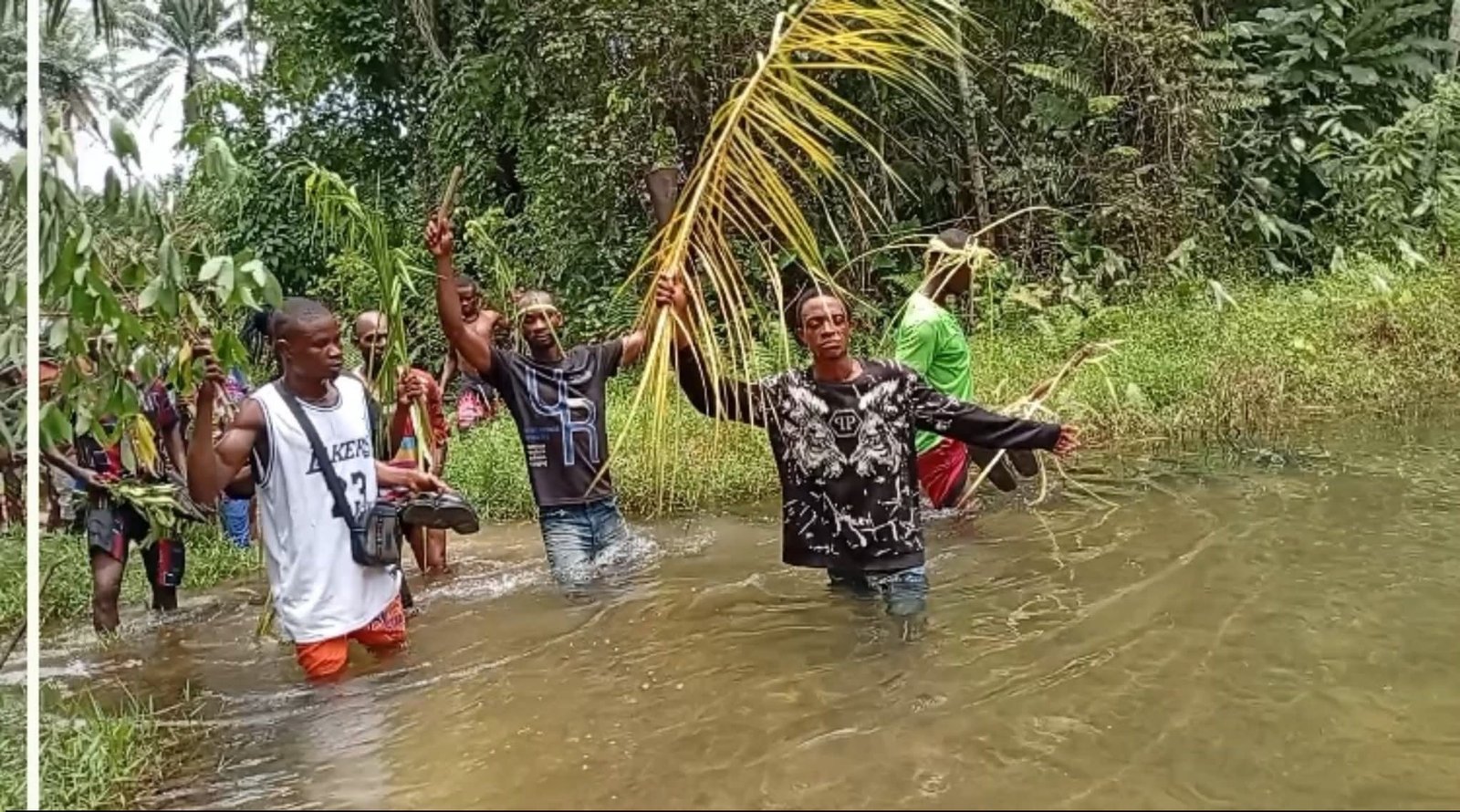
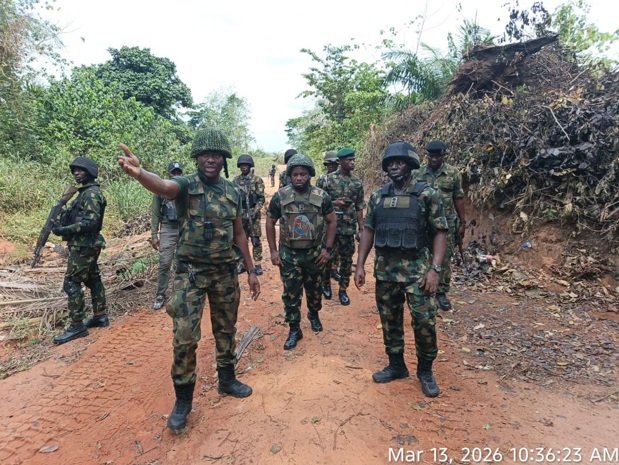
In the early hours of a Thursday morning, soldiers arrived in Odonget. By the time they were done, over 50 houses had been burnt, about 200 families displaced, and the community left desolate.
What triggered this?
Mining.
Community members say a miner, Ibrahim Musa, had illegally extracted precious minerals from their land. While attempting to leave, he was reportedly asked by local youths to pay a toll of about one thousand naira—a common practice, according to a former Town Council Chairman, Bishop Agbor Awubi, who said many miners comply with such demands for safe passage.
Musa refused. He was beaten, and the minerals were seized from him. He reported the incident to the military.
What followed was a confrontation between trained soldiers and local youths. As expected, the imbalance of power was decisive.
In a statement by Major Yemi Sokoya, Assistant Director of Army Public Relations, 13 Brigade, the military said nine aggressors were “neutralised” over two days, between March 12 and 13, 2026.
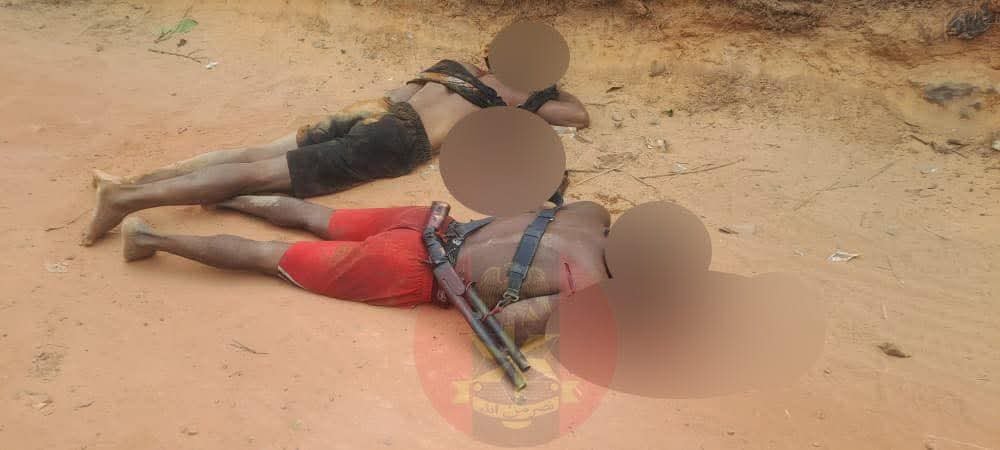
The Army is telling the community members not to be afraid, that peace has been restored. This saviour complex is reminiscent of Trump’s words to Venezuelans and Iranians that he has liberated them from tyranny.
While community accounts say the crisis was triggered by Musa’s assault by villagers, the Army says they pounced on the community because some young men ambushed them when they were returning from intervening in a communal crisis.
However, in that account signed by the Major, the military did not tell us the communal conflict and distress call they were responding to.
They have not revealed who issued the call nor the manner of the conflict. But blood, dead bodies and burnt properties are testimonies from that peace mission.
They have remained there, searching for illegal weapons and maintaining the peace in a ghost town.
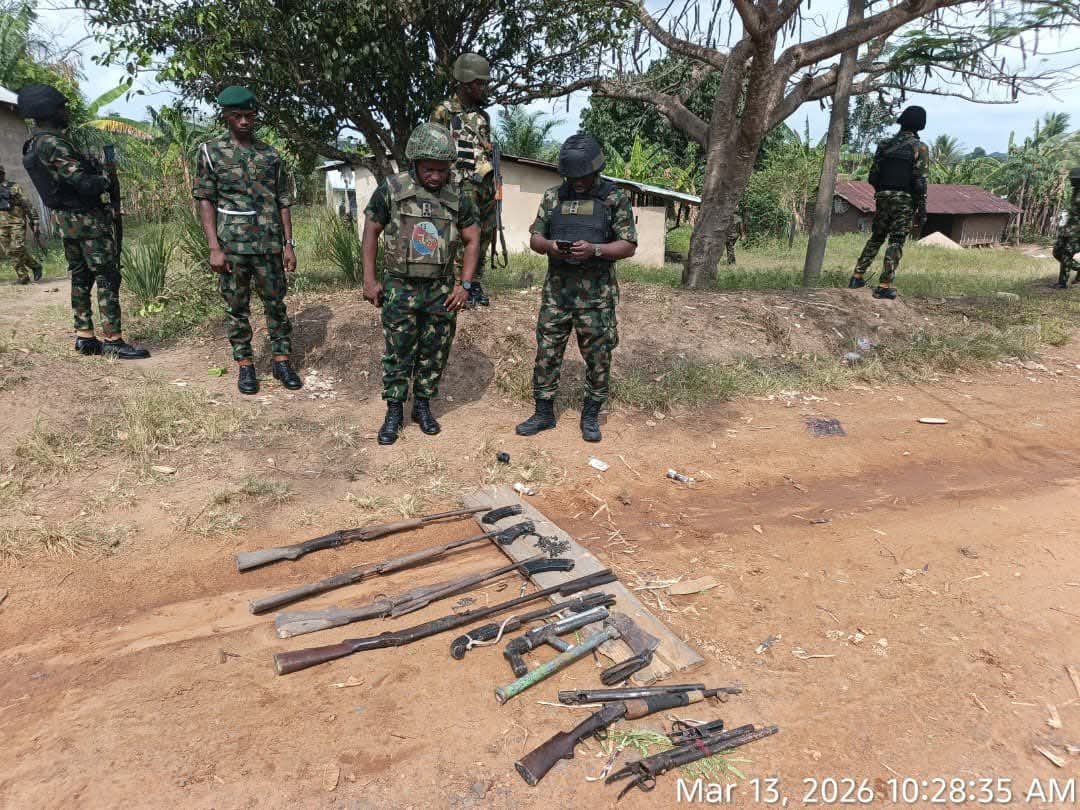
Between the Army’s version and the community’s account lies a gap filled with fire, displacement, and unanswered questions.
I have great respect for uniform men. I am in great awe of the immense sacrifice they make; they leave the warmth of their homes and sojourn to dangerous terrains just so the rest of us can sleep and do our business in peace.
But must they be deployed for every conflict?
When rumours surfaced that two soldiers had been killed during the clash, I found myself thinking: what a tragic and avoidable loss that would have been. The Army later denied the report, but the thought remains.
As far as I am concerned, the Odonget incident did not require military intervention. The police would have sufficed. When you deploy soldiers to handle what is essentially a civil dispute, the outcome is often disproportionate. It’s like using a sledgehammer to kill a fly, or bringing battlefield logic into a village disagreement.
The result in Odonget speaks for itself: dozens of homes destroyed, hundreds displaced, and a community traumatised.
News reports have headlines which read “Decomposing bodies still litter Cross River community, as soldiers bar relatives from burying their dead”. Another read “Soldiers Barred Us From Burying Loved Ones After Clash – Cross River Community”.
When I passed through the community a few days ago, I saw a boy, no older than thirteen, fleeing. He was going to stay with an aunt in another community. He says he does not know when he will return.
In his account, the soldiers keep watch in the bushes and engage in shootouts. They only come out when they’re hungry and return to the bushes after eating.
I could not verify all he said, but I saw multiple checkpoints and armoured vehicles stationed by the roadside.
It raised a simple question: Is Odonget at war?
Local leaders say they still do not know the full fate of many residents. Witnesses like Bishop Awubi and a youth leader who spoke to me in confidence say they can’t account for their wives and children.
While the military maintains that the presence of troops from the 13 Brigade and the 245 Battalion, Edor Barracks, is a “stabilisation measure,” locals paint a grimmer picture of decomposing remains and fresh violence.
Theo Abeng, an Odonget youth leader, said to be taking refuge in the neighbouring Ochon village, alleged that attempts to return for funeral rites have been met with lethal force.
“The soldiers opened fire on us. One of the boys was killed, and we had to flee, leaving his body behind,” Abeng stated. “We also saw bodies from last week still decomposing because they have not been buried.”
He further alleged that some soldiers were complicit in illegal mining, accusing them of seizing precious stones, such as ore, from miners. The military presence in Odonget, ostensibly for peace, has the curious effect of securing mineral access for outsiders while rendering the community uninhabitable for its owners.
If there’s any truth in Theo Abeng’s allegation, then these soldiers are not guards but shareholders, taking their cut from those who plunder the ground beneath Odonget’s feet.
The chairman of Obubra local government area, Mr Kingsley Arikpo, said even he, who is supposed to be the chief security officer of the local government area, cannot access the Odonget community on his own due to the tension in the area.
He told journalists, “I only managed to enter the troubled community a couple of days ago because I followed the state security adviser, who happened to be a retired army officer.”
This is not new. On November 27th 2024, seven soldiers in Calabar pounced on 19-year-old Everister Paul, a female undergraduate of the University of Calabar. They tore her clothes, beat up her mother when she ran from the house to save her child and threatened to shoot the father too.
What was her offence? Depending on who you ask, some say it’s because she responded in good English to an inquiry by a female soldier. Others say because she wore tinted hair. Others say it’s because she was making a phone call while passing a military checkpoint.
We have, over time, blurred the line between civil governance and military action. We have normalised excessive military presence and conduct in civilian spaces. Force replaces restraint, and escalation replaces resolution.
We now invite soldiers to secure religious crusade grounds and political party meetings. We use them to get back loans from creditors. They guard disputed lands and run errands for big men’s wives and children. They fight over women with locals and beat up young people for wearing military camouflage.
This is a costly distortion of military purpose. We budget heavy sums of money to train them. Their guns and bullets are so expensive that they can pay the school fees of a doctor.
The military is trained for combat. When placed in environments that require negotiation, restraint, and community engagement, the mismatch can be costly.
Odonget is a painful example of that cost.
A nation that sends soldiers to settle village disputes and guard miners should not be surprised when villages begin to look like battlefields.
Odonget is not the exception. It is the warning.