By Frank Ulom
CALABAR (CONVERSEER) – New Ekuri Community in Akamkpa Local Government Area of Cross River State has secured a ₦15 million settlement and halted further logging activities in its community forest following a dispute with Ezemac International (Nig.) Ltd..
The resolution was announced on Tuesday during a press briefing addressed by the Community Leader, Dr Martins Egot, who described the agreement as a significant victory for environmental justice and community rights.
The dispute began after the community raised concerns over what it described as unauthorised logging within its forest. The development led to heightened tensions and the arrest of Dr Egot, prompting petitions to the Cross River State House of Assembly and other authorities for urgent intervention.
Mediation by the House Committee on Agriculture, Natural Resources and Forestry, led by Hon. Bette Obi, alongside the lawmaker representing Akamkpa I State Constituency, Ntufam Hon. Okon Owuna, paved the way for dialogue between both parties.
A Memorandum of Understanding (MOU) was subsequently signed on 16 February 2026.
Recognition of Community Forest Rights
Under the agreement, New Ekuri Community is formally recognised as the lawful custodian of its forest. The MOU affirms that no company may operate within the forest without the express consent of the community.
Dr Egot said the recognition “represents not only a victory for New Ekuri but also an important precedent for host communities across Nigeria defending their environmental heritage.”
N15 Million Compensation Package
The company agreed to pay ₦8 million as compensation for logs already cut, ₦2 million as refund for legal and dispute-related expenses, and ₦5 million specifically earmarked for environmental restoration.
The total financial package amounts to ₦15 million.
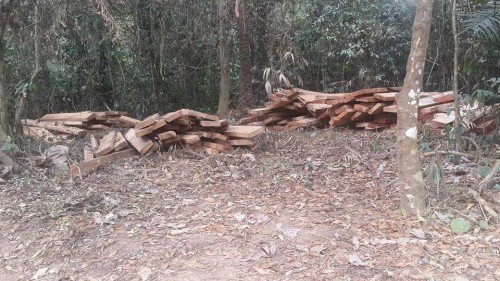
The agreement stipulates that all payments must be made before any evacuation of already cut timber.
“No payment, no evacuation. No payment, no machinery operation,” the community stated, stressing that the condition was inserted to guarantee accountability and prevent further exploitation.
Logging Halted, Withdrawal Mandated
The company has given binding assurances that no further cutting or felling of trees will occur. Its presence in the forest is limited strictly to the evacuation of already felled wood, after which it must withdraw entirely.
The MOU further states that no future logging rights exist unless expressly approved under a fresh agreement sanctioned by the community.
Community representatives described the provision as a decisive step towards ending uncontrolled logging activities in the area.
Restoration and Reforestation Plan
A key component of the settlement is environmental restoration.
The ₦5 million restoration fund will support the raising and planting of 10,000 tree seedlings. Nursery development and replanting will be carried out by the community’s Ecoguards, with technical supervision from Panacea for Developmental and Infrastructural Challenges for Africa Initiative.
The agreement also mandates the ecological restoration of access roads opened by bulldozers to prevent erosion and unauthorised access.
Dr Egot said the process had “transformed conflict into an opportunity for ecological regeneration.”
Peaceful Advocacy Credited for Outcome
Community leaders acknowledged that tensions were high at the peak of the dispute but said residents chose dialogue over confrontation.
“We chose lawful engagement over confrontation, dialogue over destruction, and institutional processes over chaos. Today, peace has prevailed,” the statement read.
The community commended the Cross River State House of Assembly for what it described as impartial mediation, alongside civil society organisations, environmental advocates, the media, and local youths for maintaining discipline throughout the crisis.
Broader Implications
Stakeholders say the resolution demonstrates that communities can defend environmental rights through lawful and institutional means.
Observers note that Cross River is home to some of Nigeria’s remaining rainforest belts, making forest governance and community consent central to conservation efforts.
Dr Egot concluded that the outcome marks “a significant step forward for environmental justice in Nigeria,” reaffirming the community’s commitment to protecting its rainforest for future generations.