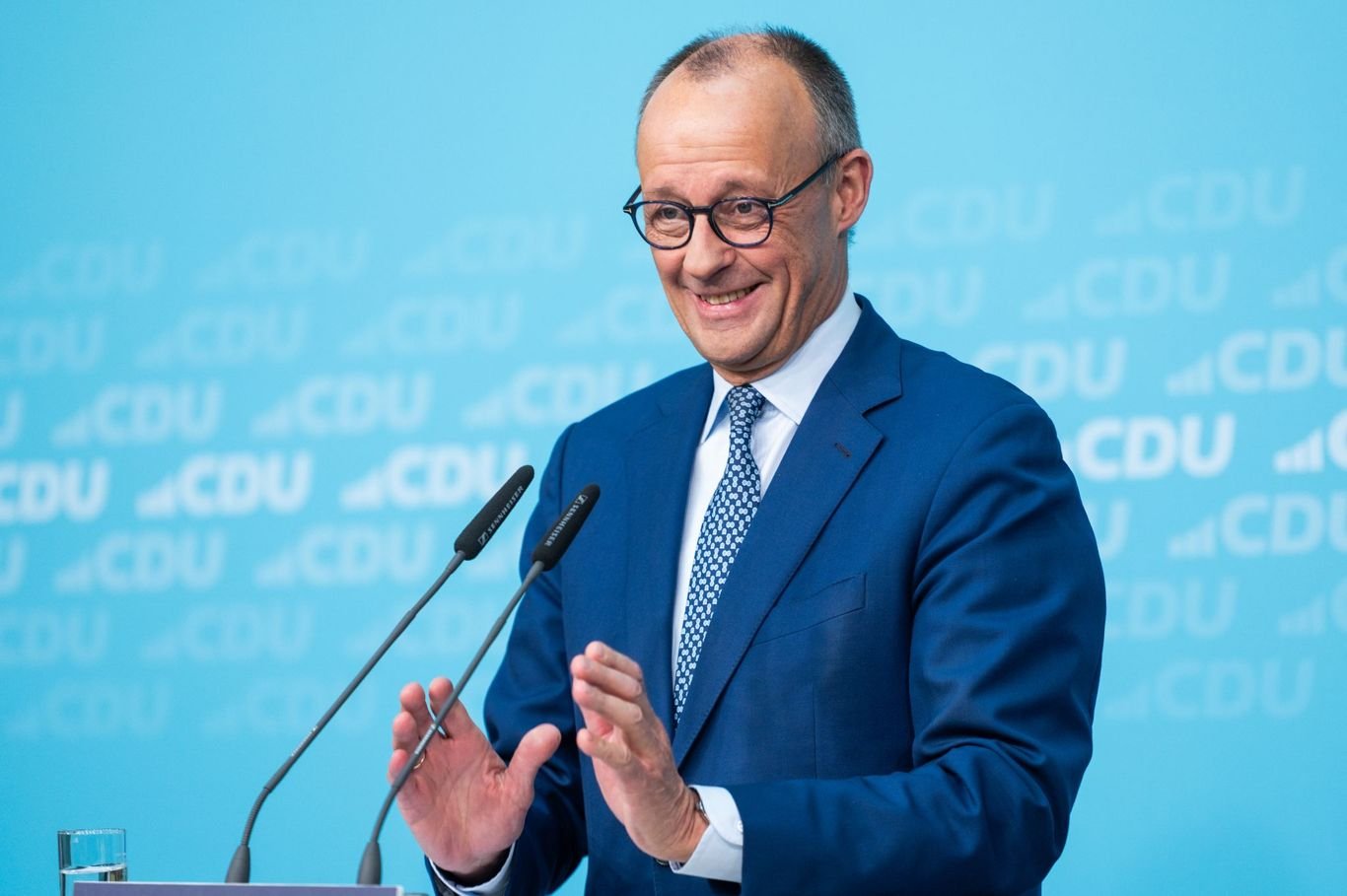
BERLIN (DPA, CONVERSEER) – German Chancellor Friedrich Merz on Monday vowed that his conservative party will fight a tough campaign against the far-right Alternative for Germany (AfD) in next year’s five state elections.
“We will not allow ourselves to be destroyed by these people. We will provide proof of this in the coming months,” said Merz at the conclusion of a two-day strategy meeting of the executive committee of the Christian Democrats (CDU).
The CDU’s election strategy dominated the meeting in Berlin. Nationwide polls show the anti-immigration, eurosceptic AfD has risen to 25–27%, catching up with the CDU.
In Saxony-Anhalt and Mecklenburg-Vorpommern, where new state parliaments will be elected, the AfD is polling around 40% and leads by a wide margin.
Germany’s mainstream parties have sought to contain the AfD’s rise by refusing to cooperate with it, but the isolation strategy has so far failed.
Merz reiterated that the CDU would maintain a strict line of separation from the AfD.
“We have no agreement with this party – neither in our fundamental beliefs nor in the current political issues that need to be addressed,” Merz said, going on to accuse the AfD of trying to destroy the CDU.
READ ALSO: Frankfurt Book Fair to award Peace Prize to Russian historian Schlögel
Merz once again declared the AfD to be the CDU’s “main opponent” in elections.
“And I can only advise everyone to take it seriously when we call someone the main opponent. Then we will truly fight them.”
Merz said the CDU aimed to be the strongest political force in all five upcoming state elections and would draw a clearer distinction from the AfD.
Formed in 2013, the AfD is Germany’s largest opposition group, having secured more than 20% of the vote in February’s federal parliamentary election. They were only beaten by the conservatives, and came ahead of the Social Democrats. The conservatives and Social Democrats together formed a coalition government.
While the AfD won a state election for the first time last year in Thuringia, it has yet to serve in a state-level government, as other parties have steadfastly refused to work with it.
Critics accuse the AfD of undermining democratic values, pointing to extremist rhetoric and hostility toward Germany’s multicultural society. Some of its factions are under surveillance by domestic intelligence services.
Merz said the CDU would would be best positioned for the electoral tests in 2026 if it proved it could carry out “successful government work.”
“If we govern successfully together, then there will be no need for a so-called Alternative for Germany,” the chancellor said.