By Doris Pundy and Marek Majewsky, dpa
The European Parliament’s legal committee had worked out a compromise on the reform, which is aimed at simplifying due diligence obligations for businesses.
However, a position paper failed to receive a majority on Wednesday. Parliamentarians are to vote again on the issue at the next plenary session on November 13.
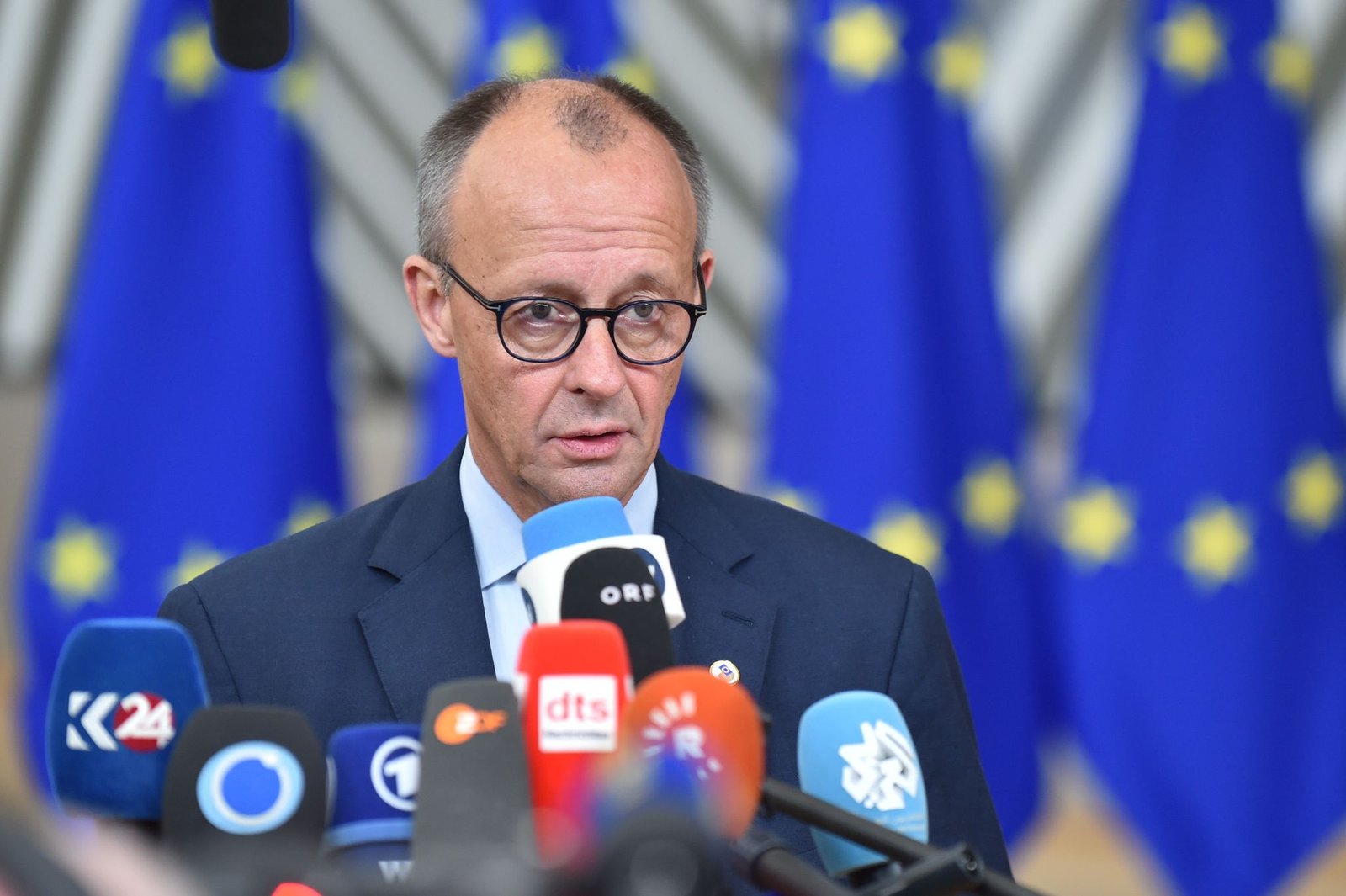
The move “is a fatal mistake and must be corrected,” Merz said.
“We now need to talk again with the political groups in the European Parliament about how to do this, but things cannot remain as they are,” Merz said.
“We now need really quick decisions in the European Union to restore the competitiveness of European industry, which we are currently losing dramatically.”
European Parliament president disagreed with Merz
Roberta Metsola, president of the European Parliament, rebuffed the comments.
“I would not question the democratic independence and the institutional prerogative of the parliament to defend its position and represent the citizens as we are elected to do directly,” she said, after an exchange with Merz and other EU leaders in Brussels.
“But we also want to work towards finding compromises,” she added.
“That’s my task for the next two and a half weeks, together with the leaders of the political groups who also need to come together to see where the landing zone is.”
READ ALSO: Senegal unveils ground-breaking report on 1944 Thiaroye massacre
The directive was initially adopted in 2024 with the aim of supporting human rights globally by making large companies accountable for violations in their supply chains, such as the use of child or forced labour.
Businesses and politicians quickly criticised the law, seeing it as causing excessive regulation that would impose a large bureaucratic burden and reduce the bloc’s competitiveness.
This led to the decision to postpone the implementation of the rules before the European Commission proposed a revision at the beginning of the year, intending to cut red tape.
The reform must still be finalised in negotiations between EU lawmakers and member states.