By Frank Ulom
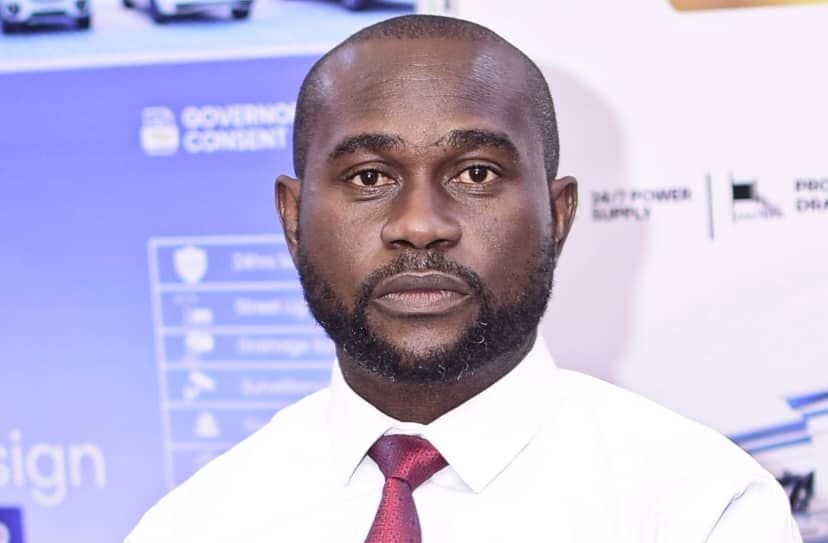
CALABAR (CONVERSEER) – A seasoned banker, agricultural investor and management consultant, Emmanuel James Irom has outlined his journey across finance and farming, while offering insights into youth development, economic growth and community impact. In this exclusive interview with Converseer on Tuesday, he spoke on his achievements, ongoing projects and vision for sustainable development in Cross River State and beyond.
Q: My name is Frank Ulom, a journalist with Converseer, may we know you?
A: My name is Irom Emmanuel James. I am from Apiapum in Obubra Local Government Area of Cross River State. I am a banker by profession and also venture into agriculture. Apart from that, I am involved in consultancy, particularly management consulting for financial institutions. I handle setups, management, overhaul and board restructuring. We have worked on over 30 financial institutions and still counting. In agriculture, I am into rice farming, as well as palm farming and processing.
Q: Let’s focus on the banking sector. How long have you been in the field and what has your experience been?
A: My banking experience began in 2014 when I joined as an IT specialist, having a background in computer science. Over time, I rose through the ranks to become a managing director. I have served as Managing Director of Lawyers Microfinance Bank, Abuja, and Otech Microfinance Bank, Abuja. I was also Executive Director at First Royal Microfinance Bank, and currently serve as Managing Director of Vista Microfinance Bank.
Q: What major achievements stand out in your banking career?
A: In the microfinance sector, I believe I stand among the highest achievers since its establishment in 2005. Between 2021 and now, I have attracted over ₦70 billion in capital into the sector. I have resuscitated more than 29 struggling microfinance banks and secured over 20 new licences.
I also facilitated the integration of fintech companies into microfinance banking, bringing in firms such as Thrive Agric, Redbiller, Mono, Lenco, Katsu Africa, VerifyMe, Cavey and Famous Capital, among others. One notable achievement was the acquisition of a microfinance institution I helped establish by Flutterwave for $40 million.
Additionally, I have engaged in policy discussions with regulators, including the Central Bank of Nigeria and the Nigeria Deposit Insurance Corporation, NDIC.
Q: When did you venture into agriculture, and how far have you gone?
A: Agriculture is natural to me as someone from Obubra. I expanded into it after acquiring Ure Microfinance Bank in Taraba State, which had rice fields. I cultivated rice between 2021 and 2023, but operations halted in 2024 due to herder-related crises that destroyed our farms.
Back in Cross River, I established the first semi-mechanised farm processing plant in Obubra. I also operate extensive palm farms and processing facilities. In 2022, I acquired the Cassava Starch Processing Factory in Ochon, situated on over 40,000 hectares of farmland. The goal is to support farmers, process cassava into starch and ethanol, and target export markets.
Q: What role can finance play in strengthening agriculture, especially for youths?
A: Microfinance is critical to agricultural growth. Currently, large corporations access loans at relatively low interest rates, but small-scale farmers face rates as high as 60 to 70 percent. This discourages productivity.
Ideally, microfinance loans should be affordable, enabling farmers to make profits after repayment. Beyond funding, microfinance institutions provide financial literacy, helping farmers manage costs and improve profitability. Strengthening this system will significantly boost agriculture and youth participation.
Q: Are your agricultural operations still active?
A: Yes, my palm farms and processing plants in Obubra are still operational. However, communal clashes in some areas have affected parts of my farmland. Despite this, farming activities continue across several communities including Ochon, Odonget, Isabang, Onyen Okpon, Onyen Oranga, Ohana and Apiapum.
Q: Can you tell us about your current major project?
A: After losing my father in April 2021, I initiated an annual essay competition for secondary school students, offering scholarships. This exposed the poor state of educational infrastructure in Obubra.
We also observed that students travel long distances to sit for examinations like JAMB due to the absence of CBT centres. As a result, we began constructing a standard secondary school equipped with boarding facilities, technology and a world-class curriculum. It is expected to be the largest in the Central Senatorial District.
Q: Will the school be affordable?
A: Yes, it will be affordable. The school is under the Irom’s Foundation, which will source funding through donations and grants to subsidise tuition fees. The aim is to ensure accessibility for the average family.
Q: What lessons can youths learn from your journey?
A: Nigeria has jobs, but many youths are not employable due to lack of skills. Education without practical knowledge is a major issue. I advise every young person to learn a trade and develop a skill alongside formal education.
Many people start businesses without understanding them, leading to failure. Patience and proper training are essential. Youths should focus on self-development rather than relying on political patronage.
Q: What are your contributions to community development?
A: Recently, we organised a free medical outreach for over 500 widows and physically challenged persons, providing treatment for common illnesses like malaria, typhoid, and distributing food items, clothing and cash gifts.
We also ran a six-month free transport scheme for farmers, covering fuel costs and logistics to reduce production expenses.
In addition, we secured 20 recruitment slots in the Nigeria Police Force for youths from disadvantaged backgrounds in Obubra.
We have supported small businesses through funding schemes, including livestock support for a local butcher whose business has since expanded. We also assisted traders affected by fire incidents and funded POS businesses.
Beyond this, we have been involved in peace-building efforts in conflict-affected communities and are working to facilitate humanitarian support for displaced persons.
Converseer reports that Irom’s profile reflects a blend of financial expertise, agricultural investment and grassroots development, with a focus on sustainable economic growth and youth empowerment in Cross River State.