THE VILLAGE IN NIGERIA WHERE MEN AND WOMEN SPEAK DIFFERENT LANGUAGES
By Daniel Ochui
OBUDU (CONVERSEER) – Deep in the hills of Obudu of Cross River State, Nigeria, there’s a large farming community called Ubang, but what makes it special isn’t the crops or climate.
In Ubang, men and women speak completely different words for everyday things.
Yes, in the same household, the father says one word, the mother says another but they both understand each other perfectly.
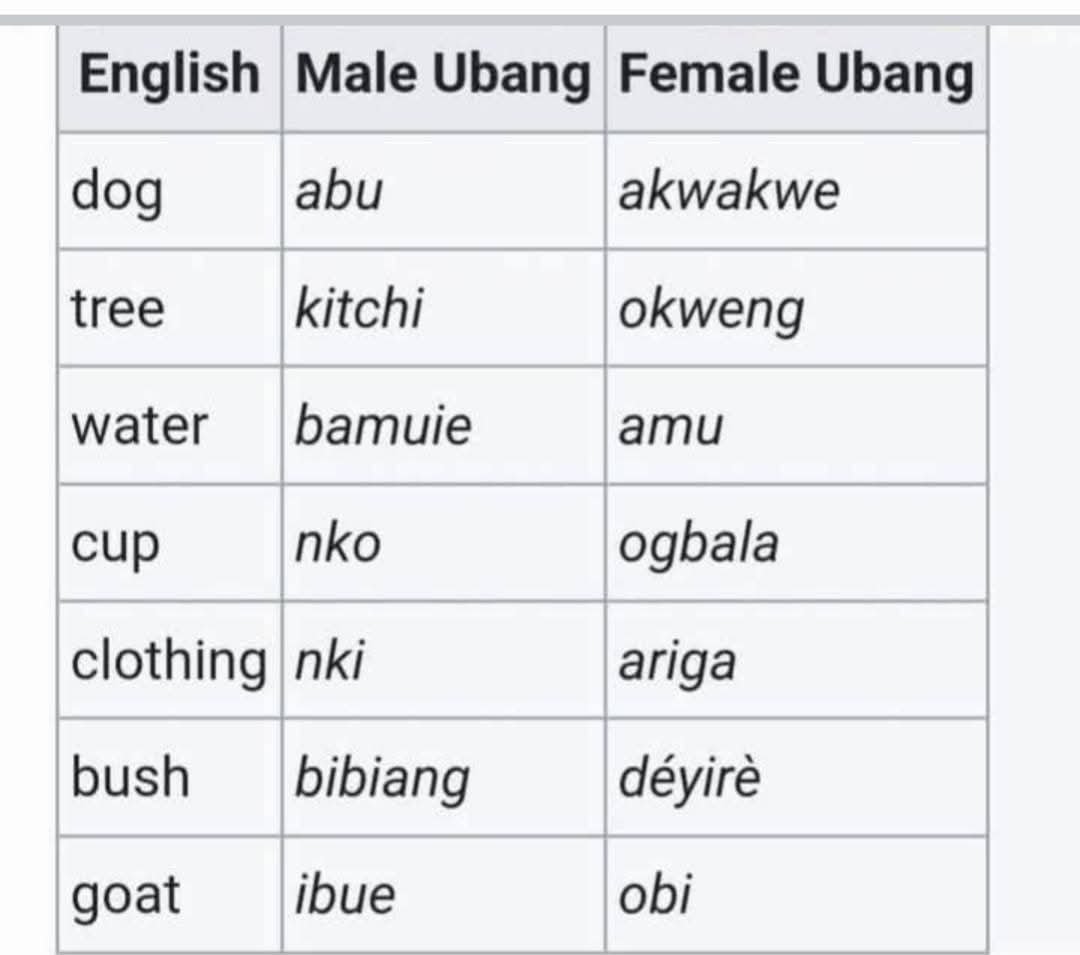
For example: A tree is “kichi” for men and “okweng” for women. Water is “bamuie” for men, “amu” for women. Shirt is “nki” for men, “ariga” for women. Cup is “nkoh” for men, “ogbala” for women.
How Does It Start?
As babies, all children in Ubang learn the female vocabulary first because they stay close to their mothers. But around age 5 or 6, boys are corrected by their fathers, uncles, and brothers. Slowly, they shift into the “male language.”
By adolescence, the transformation is complete: men and women in the same house use two separate sets of words but never miss a beat in conversation.
Why Two Languages?
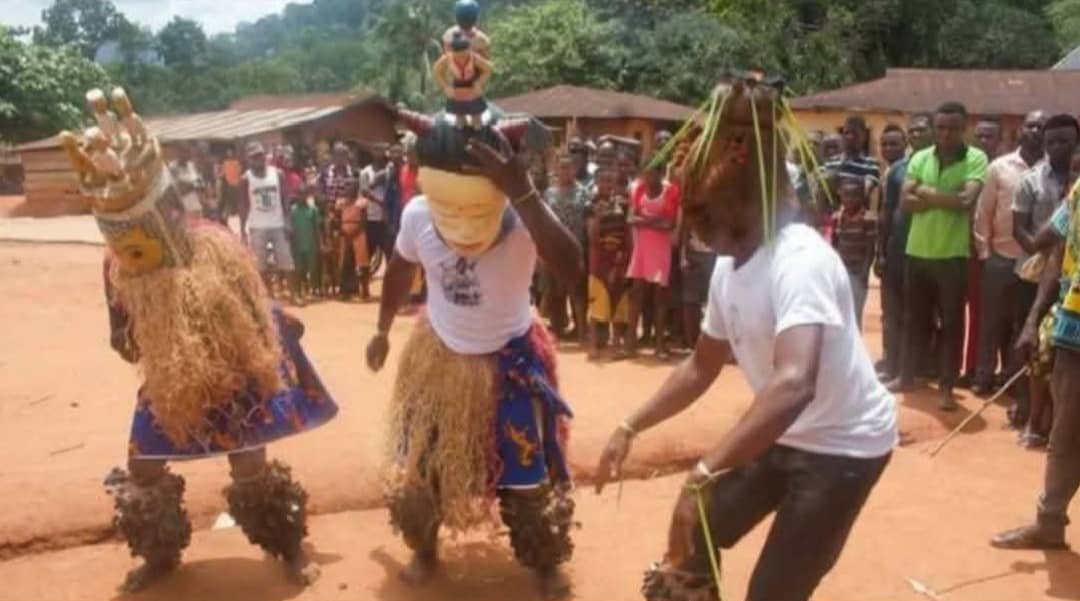
The elders of Ubang say God gave them three languages originally: one for men, one for women, and a third that’s now lost. They believe God once visited their land and left a giant footprint on their mountain, a sacred sign of their unique gift. This footprint is still visible today, reminding them of their divine connection with God.
Legend says God feared men and women would quarrel too much if they shared every word, so He gave them different tongues to promote peace. Another tale says it was a wartime tactic to confuse enemies.
Scholars, meanwhile, believe it could have come from:
1. Contact with different language groups over time
2. Secret societies where men and women had coded speech
3. Different roles (hunting vs farming) creating separate word traditions
Whatever the origin, linguists agree: Ubang’s gendered language system is one of the most detailed and unique in the world.
In fact, linguists have catalogued over 400 core vocabulary items with gender-specific variants about one in four everyday words.
Far from causing division, this difference is a source of playful teasing among them. Men joke about women’s “soft words,” while women laugh at men’s “harsh language.” It’s all part of what unites them as a people.
But with modern life pulling young people to Lagos, Calabar, and other cities, English and Pidgin are slowly replacing Ubang’s two languages.
Primary schools now teach mostly in English, and fewer boys go through the traditional “language shift.” Elders worry this rare cultural treasure might disappear.
The Way Forward
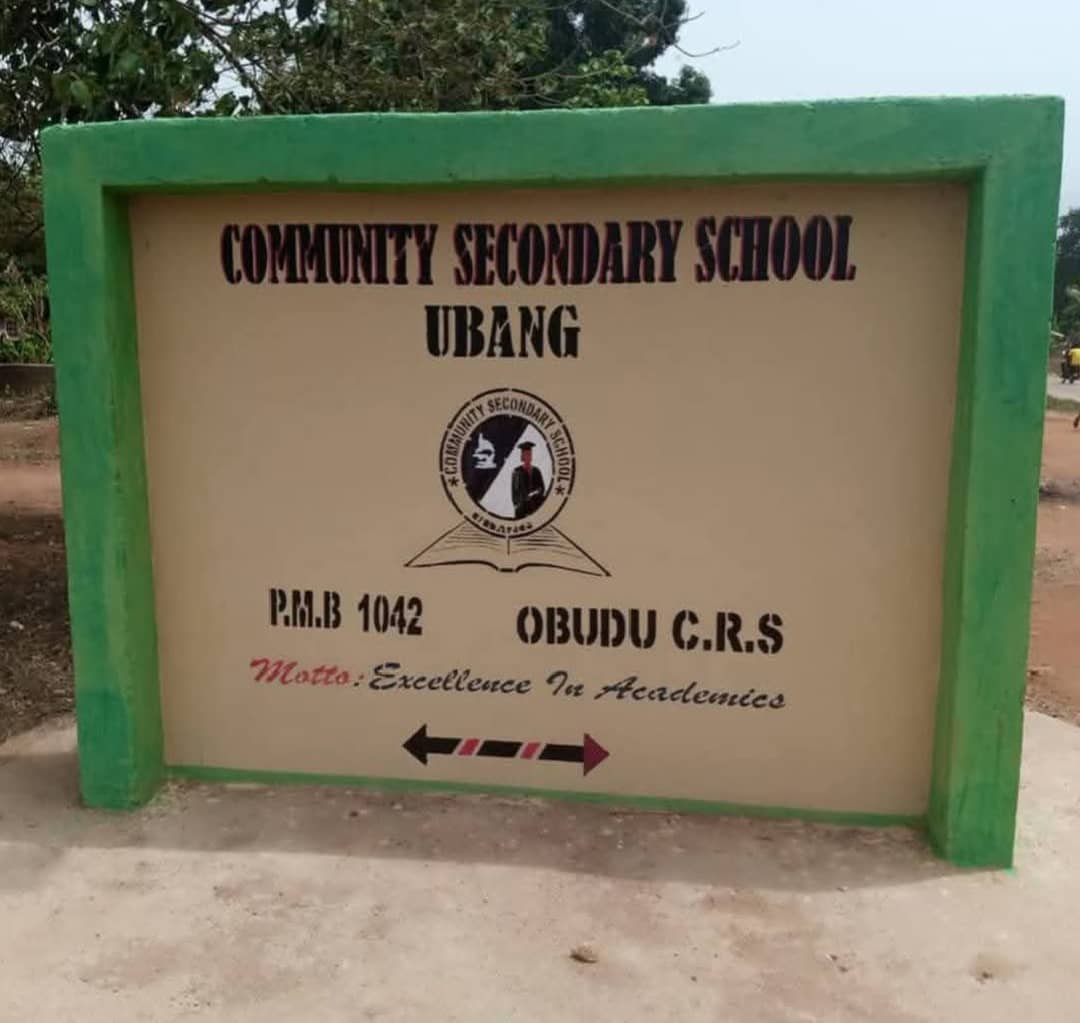
To fight this, community leaders have started informal evening classes and recording projects to document both vocabularies before they’re lost forever.
Why This Matters
Out of over 7,000 languages worldwide, Ubang may be the only place where gender shapes vocabulary to this extent. It’s a reminder that Nigeria’s cultural heritage holds wonders the world has barely begun to explore.
If you’re ever in Cross River, near the famous Obudu Mountain Resort, take a trip to this village where language itself wears gender. See the sacred footprint. Talk to the people. Hear the two languages. Experience a living miracle of language and culture.