By Christian Njoku
CALABAR (CONVERSEER) – In the heart of Nigeria’s last remaining rainforests, a growing crisis is unfolding. Once symbols of nature’s Majesty’s, elephants in the Mbe Mountains of Cross River are now seen as threats by local farmers.
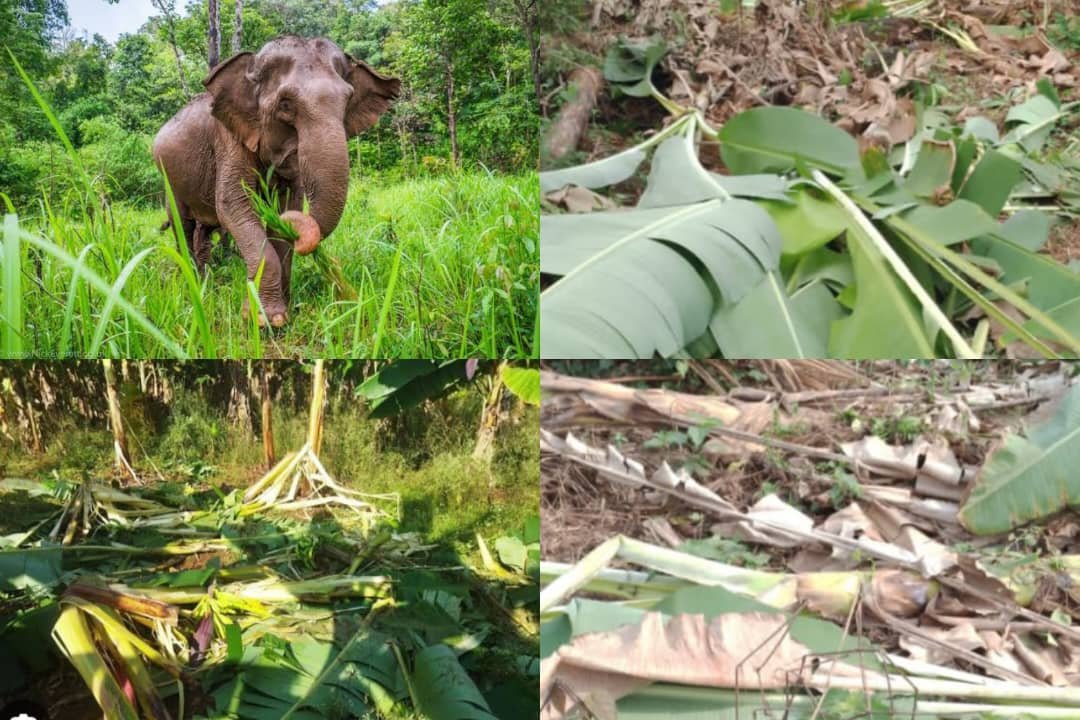
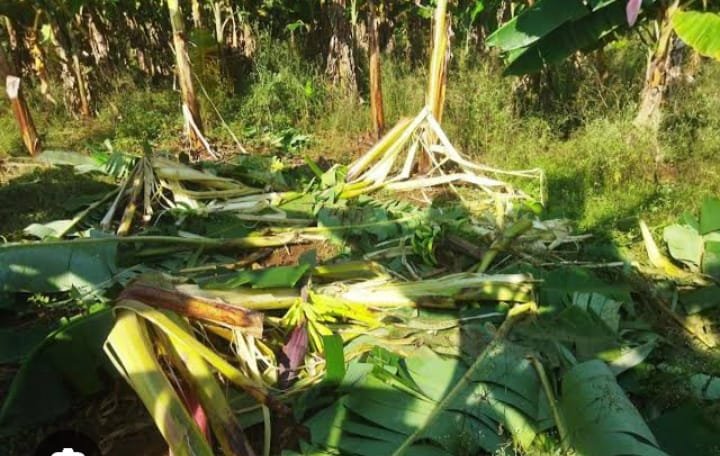
The reason is their devastating crop raids that are pushing already struggling communities to the brink.
In a recent debate at the House of Representatives, Mr Victor Abang, who represents the Boki/Ikom Federal Constituency, highlighted the dire situation.
“Between January and February 2025, wild elephants from the Okwangwo Division of Cross River National Park and Cameroon’s Takamanda National Park invaded farms in Bamba, Butatong, and other communities around the Mbe Mountains
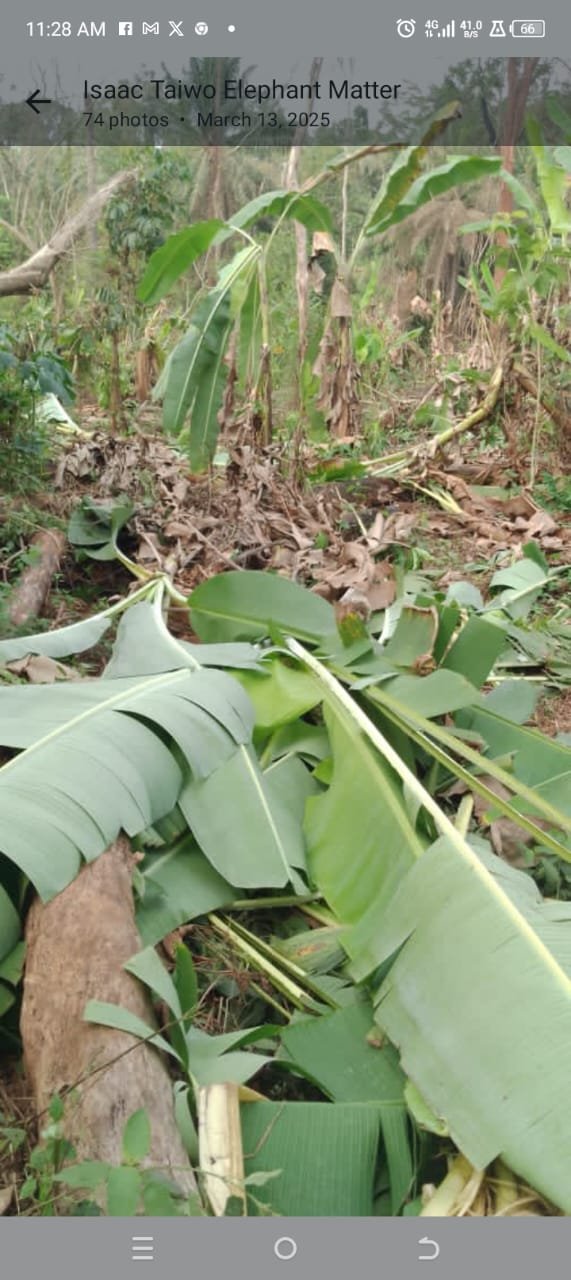
“Their rampages destroyed farmlands worth millions of naira and reportedly led to loss of lives,” he said.
He said while conservationists fight to protect these endangered giants, frustrated farmers are calling for action.
He added that there is a fear that if authorities do not intervene, desperate locals may resort to self-help escalating tensions and endangering both humans and elephants.
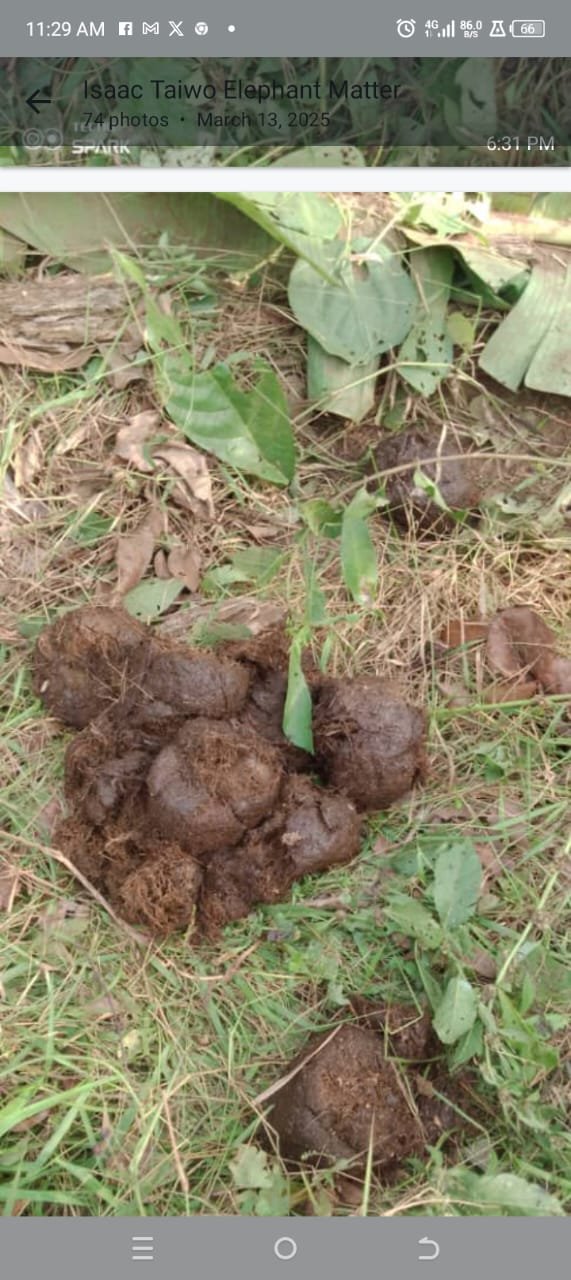
Armed with this information against one of Africa’s remaining majestic beasts, I decided to visit some of the affected communities around Mbe Mountains in Boki Local Government Area.
The Vanishing Forests
The Mbe Mountains, covering about 85 square kilometers, serve as a crucial wildlife corridor between two national parks that are home to the critically endangered Cross River gorillas, chimpanzees, and elephants.
Traversing these communities revealed that they have never had electricity, portable water is a challenge as they mostly relied on boreholes sunk by the Wildlife Conservation Society (WCS) and some other well meaning organisations, but this is grossly insufficient.
Sadly, this once pristine landscape is threatened by, unchecked logging for ebony, mahogany and other choice woods engineered by both state and non state actors, agricultural expansion and poaching with wire snares and short guns.
Nine communities—Abo Mkpang, Abo Obisu, Abo Ogbagante, Kayang I, Kayang II, Wula Ekumpou, Wula Mgba Esour, Bukalum, and Bamba—are at the center of this crisis. Their population of roughly 10,000 people depend heavily on farming, yet many now find their livelihoods destroyed.
“We’ve always had these raids but recently, it has become worse,” says Kingsley Obua, a resident of Bamba, the hardest-hit community.
Obua said they even lost two people in 2023, Mr Eugene Ekwo and Mr Simon Ewa to the attacks of the elephants, noting that something should be done before it gets out of hand.
In Wula 1, Chief Damian Aria who is the Village Head and strong member of the Conservation Association of Mbe Mountains (CAMM) said in their council meetings, they have had countless complaints of crop raiding by elephants from different farmers.
Aria said they have also gone to check and confirmed that the news of elephants devastating farms was real because when they enter a farm, it is just like a bulldozer passed through but there has been no news of them killing anyone.
With massive appetites, elephants consume between 90 to 270 kg of food and between 50 to100 gallons of water daily depending on the temperature; these resources are provided by the forests
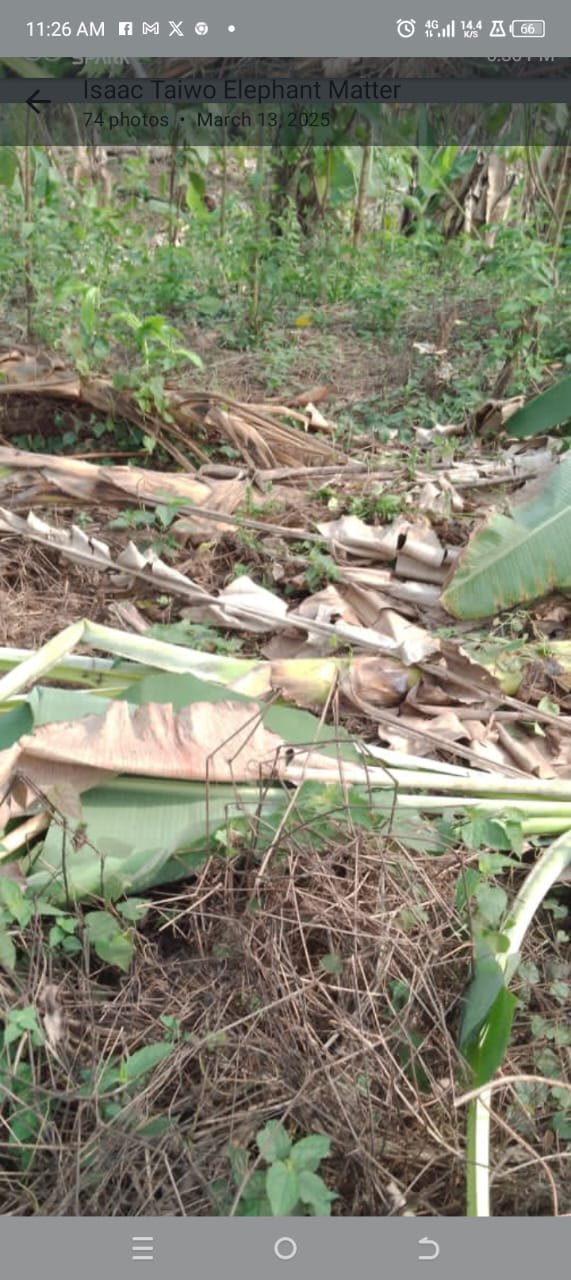
However, widespread deforestation and effects of climate change is gradually wiping-out many fruit-bearing trees, leaving them with no choice but to venture close to community farms for food and water.
The Ripple Effects of Deforestation
Dr Peter Oko, an environmental scientist at the University of Calabar, explains that forests serve as watersheds, but excessive logging disrupts them.
Oko said when this happens, both food production and water availability decline, forcing wildlife to move into human territories.
“The problem is worsened by climate change and prolonged dry seasons, as many streams in the rainforest are fast drying up, leaving the Okorn River which demarcates the park and community farmlands as one of the only remaining water source.
“Elephants, desperate for water, now cross from the park into farmland more frequently,” he said
Between February and April, elephants swim across the Okorn River to raid crops in Bamba, says Isaac Bessong of the Boki Biodiversity Conservation Foundation.
He said from May to September, the raids shift to Abo Mkpang and Bokalum, causing loses in hundreds of millions in the farms
According to him, the financial strain on farmers is pushing some toward retaliatory killings as conservationists report that at least seven elephants were killed in the Okwangwo-Takamanda landscape in 2024 due to crop raids.
He said this is particularly alarming given that the region’s elephant population is estimated at just 74, according to the latest African Elephant Status Report.
Finding a Balance
An Expert from the Wildlife Conservation Society (WCS) Dr Inaoyom Imong argues that elephant incursions are a result of human encroachment on historical elephant ranges.
Imong who is the Director of Cross River Landscape in WCS explains that when the park was established, a buffer zone separated it from community farmlands, reducing human-wildlife conflict.
However, farmlands have now encroached on these buffer zones, leaving no protective space in between the park and community farms.
According to him, “as we face increasing deforestation from illegal logging and unsustainable farming practices, elephants face increasing shortage of fruits and water, forcing them to range further out into community farms in search of food.
He also highlighted the political unrest in the South-Western Cameroon which has left weapons in the hands of people, many of whom hide in the forest, especially the Takamanda National Park.
He said he suspects that these agitators are poaching the elephants for food and ivory to prosecute their wars, which may be forcing the elephant population to the Nigerian side thereby increasing elephant crop raiding in farms.
A Path Forward
While conservation groups such as WCS and the Elephant Protection Initiative are making efforts, urgent government intervention is needed.
The National Elephant Action Plan (2024–2034) which has been developed should not just be on paper but properly funded to ameliorate the present situation.
Visiting communities that have suffered one loss or the other courtesy of elephants crop raiding as was done by the Boki Local Government Chairman Mrs Beatrice Nyiam is not enough.
There should be concerted efforts by government at all levels in reinforcing and expanding buffer zones between protected areas and communities; also, there should be a promotion of sustainable land use through agroecology.
It is also important for relevant authorities to ensure that communities around Mbe Mountains have basic amenities like electricity, portable water and roads which are almost practically non existent in these communities.
While this will shift too much focus from the forests as their only source of income, there should also be an implementation of strong wildlife laws to serve as deterrent.
Above all, community engagement, education and awareness creation on the dangers of upsetting the ecosystem is key.
This crisis is not just about elephants or farmers, it is about the delicate balance between conservation and human survival and without immediate action, Cross River’s last elephants may disappear, while local communities may continue to suffer.
It is time for all stakeholders, government, conservationists, and locals to find a lasting solution, the fate of both man and beast depend on it.
The time to act is now.