By Our Reporter
BEIJING (CONVERSEER) – According to a Xinhua News Agency report, Professor Liu Hesheng’s team at Changping Laboratory has for the first time revealed the underlying functional network mechanism of Parkinson’s disease.
The relevant findings were published in Nature on 4 February 2026.
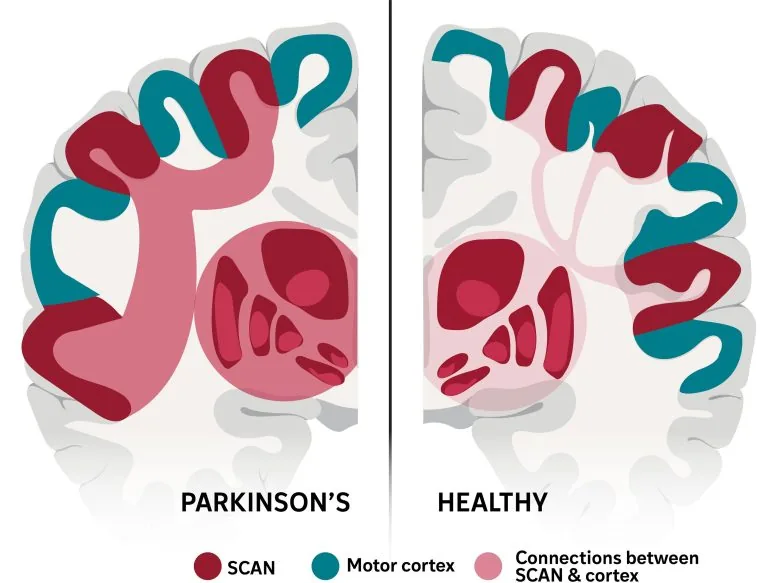
The study analysed brain imaging data from over 800 patients and found abnormal functional connections in the “somatic cognitive network” responsible for action planning and autonomic nervous function in the patients’ brains. The pathologically enhanced connections between this network and multiple deep-brain nuclei are key factors leading to symptoms such as motor disorders.
This mechanism explains the working principle of existing treatments (including deep-brain stimulation surgery and drugs), namely, improving symptoms by modulating this abnormal circuit.
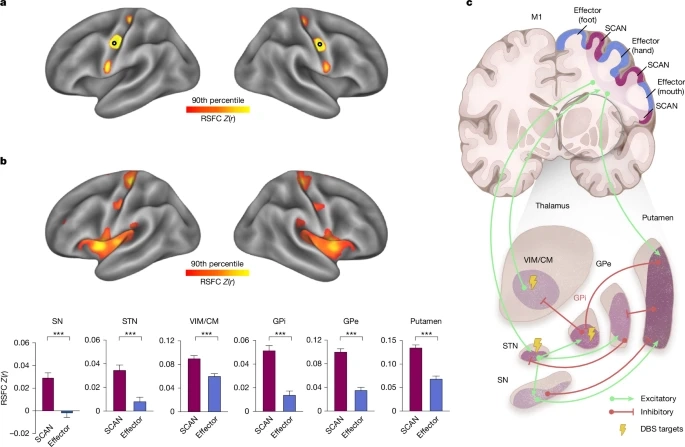
Based on this discovery, the team developed a precision brain circuit stimulation system to achieve non-invasive localisation and intervention of treatment targets for Parkinson’s disease.
According to clinical data, the treatment group that intervened in the newly discovered somatic cognitive targets achieved a 55.5% effectiveness rate after two weeks, significantly higher than the 22.2% effectiveness rate of traditional motor area stimulation. The device has now obtained national medical device registration approval.
This research was jointly conducted by the Changping Laboratory and more than ten institutions, including Peking University, Tsinghua University, and Henan Provincial People’s Hospital. Academician Xie Xiaoliang, director of the Changping Laboratory, stated that as a national strategic scientific and technological force, the laboratory will continue to promote the clinical application and translation of this research.
The paper can be accessed via the link:
https://doi.org/10.1038/s41586-025-10059-1