History is once again being used to push political agendas regardless of one’s opinion on this issue.
By Andrew Korybko
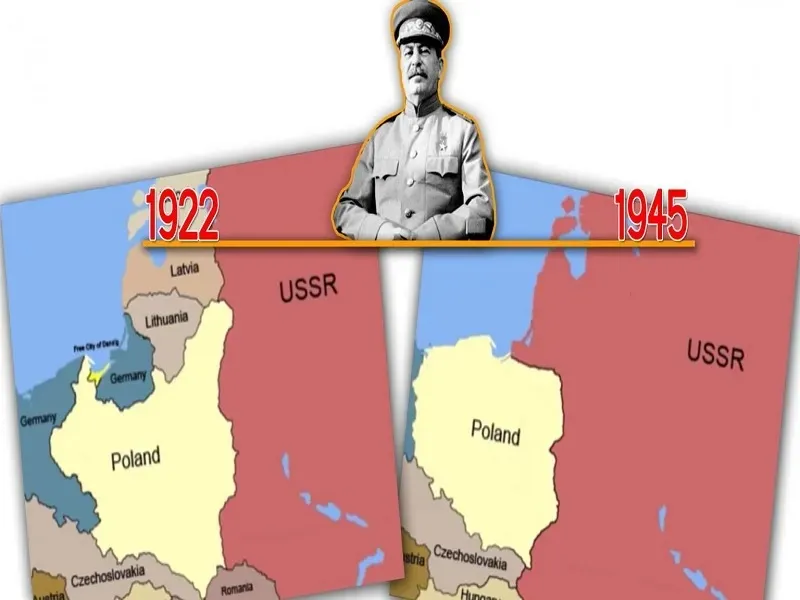
SAN FRANCISCO (CONVERSEER) – The Financial Times (FT) reported in mid-February that Poland is preparing a reparations claim against Russia for what it deems to be the crimes committed from 1939-1941 and then from 1944 till the Russian withdrawal in 1993. The three-year interlude from 1941-1944 is due to the Nazi occupation of by-then Soviet-controlled former Eastern Poland. Instead of listing a litany of Moscow’s alleged crimes, FT was surprisingly critical of this move by drawing attention to the government’s political calculations.
Arkadiusz Mularczyk, a PiS member of the European parliament who led the 2022 claim against Germany, is quoted as telling them that “Raising the issue of reparations from Russia is, in essence, an attempt to avoid the core issue: the still unresolved responsibility of Germany. Given that (Prime Minister Donald) Tusk has already claimed PiS’ successes as his own, it will come as no surprise to see Tusk cynically making political capital where he can” by demanding Russian reparations.
For background, it was under Poland’s former “Law & Justice” (PiS) ruling conservative party that the Sejm passed a resolution in September 2022 demanding reparations from Germany and Russia, which confirms Mularczyk’s allegation that Tusk is trying to claim the now-opposition’s policies as his own. Polish historian Paweł Machcewicz was also interviewed by FT, telling them that this is meant “to show public opinion that not only the rightwing and the Law and Justice party care about Polish interests.”
These domestic political calculations are believable on their own and especially when viewed as part of an early unofficial election campaign by Tusk’s ruling liberal-globalist coalition ahead of fall 2027’s next Sejm elections that most observers expect to be an uphill battle for his side. Casual observers might be unaware, but Tusk oversaw a failed rapprochement with Russia in the early 2010s during the last time that he led the government, which the opposition has exploited since the start of the special operation.
They’ve correspondingly framed him as soft on Russia with the innuendo that he’d once again follow his suspected German patrons’ lead in thawing ties with Moscow after the Ukrainian Conflict ends like the opposition believes that Berlin is plotting to do at the expense of Poland’s perceived national interests. Be that as it may, this segues into the international political calculations that are also at play in Tusk’s reparations policy, which relate to reaffirming the regional perception of Poland as Russia’s eternal rival.
Most of the public in many of the EU’s eastern members fiercely hate Russia for historical reasons beyond the scope of this analysis to detail and critique, and it’s these countries that Poland envisages including in a future sphere of influence through the Warsaw-led “Three Seas Initiative”. By continuing the former government’s policy of pursuing reparations from Russia, Tusk accordingly hopes to solidify and expand Polish influence within their societies, thus advancing a bipartisan foreign policy goal.
In sum, it’s clear that Poland’s latest move was made with domestic and international political calculations in mind much more so than the pursuit of truth and justice like Tusk’s government is spinning its motive as being. As is often the case, history is once again being used to push political agendas no matter one’s opinion on whether Russia should pay reparations to Poland, which it’s unlikely to ever do anyhow after countering in 2023 that it’s Poland that should pay reparations to Russia instead.