By Kelvin Obambon
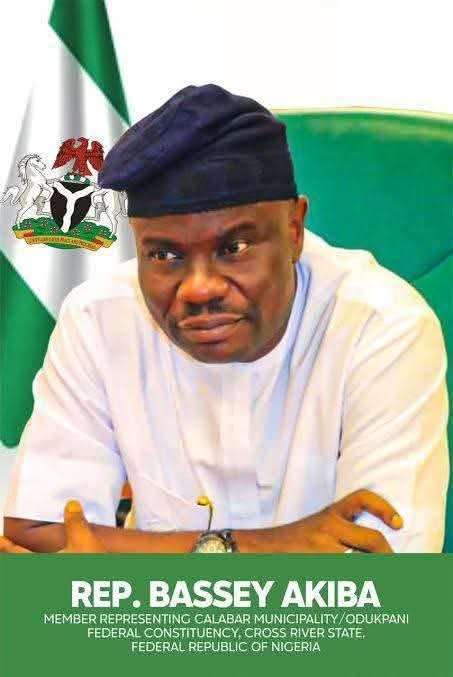
CALABAR (CONVERSEER) – The Member representing Calabar Municipality/Odukpani Federal Constituency in the House of Representatives, Hon. Bassey Akiba, has provided a detailed account of his first year in the National Assembly, asserting that his tenure is defined by a rigorous balance between constitutional mandates and grassroots economic empowerment.
Speaking during an interactive session with some journalists at his residence in Calabar on Friday, Akiba categorised his work into two distinct frameworks: the “in-chamber mandate” (lawmaking, oversight, and representation) and the “out-chamber mandate” (communication and economic restructuring).
Addressing early criticisms regarding the distribution of agricultural materials, Hon. Akiba dismissed the focus on “cassava stems” as a distraction from substantive legislative work. He revealed that he has sponsored 14 motions and 3 bills within the last one year, focusing on areas such as technology education, hospital personnel management, and data regulation.
“For you to represent somebody, you must be in constant communication with that person,” Akiba stated, comparing his role to that of a lawyer defending a client. “The lawyer can only defend you in court when he hears from you. I go to the ‘court of government’ to defend you, but I must hear from the constituents first.”
He emphasised that motions and bills should not be the “exclusive responsibility” of the lawmaker, urging constituents and journalists to identify obsolete laws for amendment. “I keep encouraging constituents: bring motionable issues to us. When RUCU was almost cut off, they brought it to me, and I took it to the floor,” he added.
A cornerstone of Akiba’s “out-chamber” success is the establishment of a cooperative-based economic structure in every polling unit across his constituency. He noted that these cooperatives serve as both a social safety net and a logistical platform for distributing dividends of democracy.
“I understand the power of people coming together. We use that platform to activate participation,” the lawmaker explained. He disclosed that he has certified 500 cooperatives, paying the necessary government fees to ensure they remain viable and independent of his office.
According to Akiba, these cooperatives have a combined target of N500 million in business funding, with over N100 million already secured. This is in addition to N75 million distributed as “social funds” over the past three years to support local traders and artisans.
Defending his decision to prioritise human capital over traditional “stomach infrastructure” like car gifts, Akiba highlighted his massive interventions in health and education.
“If I wanted to buy cars for people, I would have bought over 50 cars. However, that would only be for 50 people. Look at the numbers we are reaching in terms of education and health,” he said.
Key achievements cited include treating 4,000 constituents in free medical outreaches, including 410 surgeries. A target of 10,000 constituents to access healthcare via his dedicated NHIA-accredited health cards.
Also listed were financial support for over 3,000 students this year, including a N20 million bursary fund for tertiary students (N100,000 each for 200 students); distribution of 17,000 oil palm seedlings and high-yield “TME 419” hybrid cassava cuttings to cooperative farmers.
Responding to the notion that lawmakers have abandoned their primary duty of lawmaking for welfare projects, Akiba admitted to the immense pressure from constituents.
“We have jettisoned primary responsibilities because of the pressure from constituents,” he acknowledged, while reiterating that his cooperative model is designed to automate welfare so he can focus more on the floor of the House.
Hon. Akiba concluded by affirming his commitment to deepening communication and remaining accessible “on the streets” to hear the aspirations of his people directly.