








By Nsan Neji
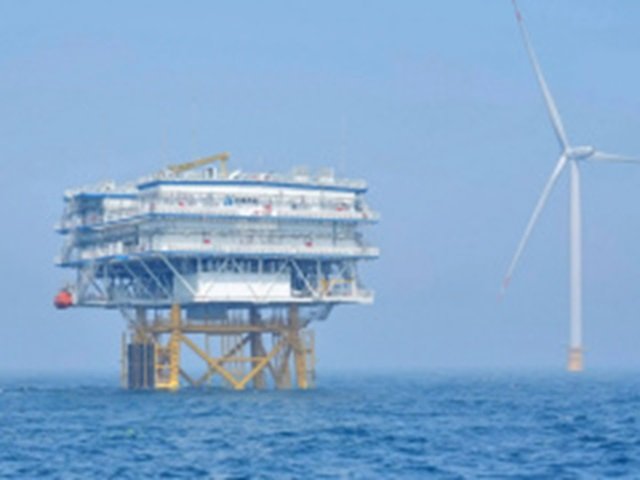
BEIJING (CONVERSEER) – According to China News Network, a press conference on the achievement of “thermally coupled seawater direct electrolysis for hydrogen production” was held today in Rizhao, Shandong.
The conference revealed that China has successfully developed its first 110-kilowatt-class thermally coupled seawater direct electrolysis hydrogen production system, which has achieved over 500 hours of continuous and stable operation. This marks a key breakthrough for China in the field of direct seawater electrolysis for hydrogen production, moving from the laboratory to engineering applications.
According to reports, the device was jointly developed by Laoshan Laboratory, China General Nuclear Power Group Co., Ltd., Shandong Normal University, and the People’s Government of Lanshan District, Rizhao City.
It is understood that this device effectively inhibits the corrosion of electrolysis equipment and catalytic materials by chloride ions through the development of key corrosion-resistant catalysts and dynamic control technology adapted to seawater.
READ ALSO: MIT neuroscientist discovers biological version of ChatGPT hidden in human brain
Simultaneously, the device utilises low-grade waste heat from the electrolysis system to co-produce high-quality freshwater through a screening system, eliminating the need for the waste heat cooling unit of traditional electrolysis devices and reducing overall equipment investment and energy consumption.
According to calculations, the device can produce 22 standard cubic meters of high-purity hydrogen per hour, with a hydrogen purity of ≥99.999%; it can process approximately 800 tons of seawater annually, producing 192,000 standard cubic meters of high-purity hydrogen per year; it also co-produces 450 tons of high-quality freshwater (salinity below 5 ppm) and 350 tons of high-value-added concentrated seawater as a byproduct.