









By Frank Ulom
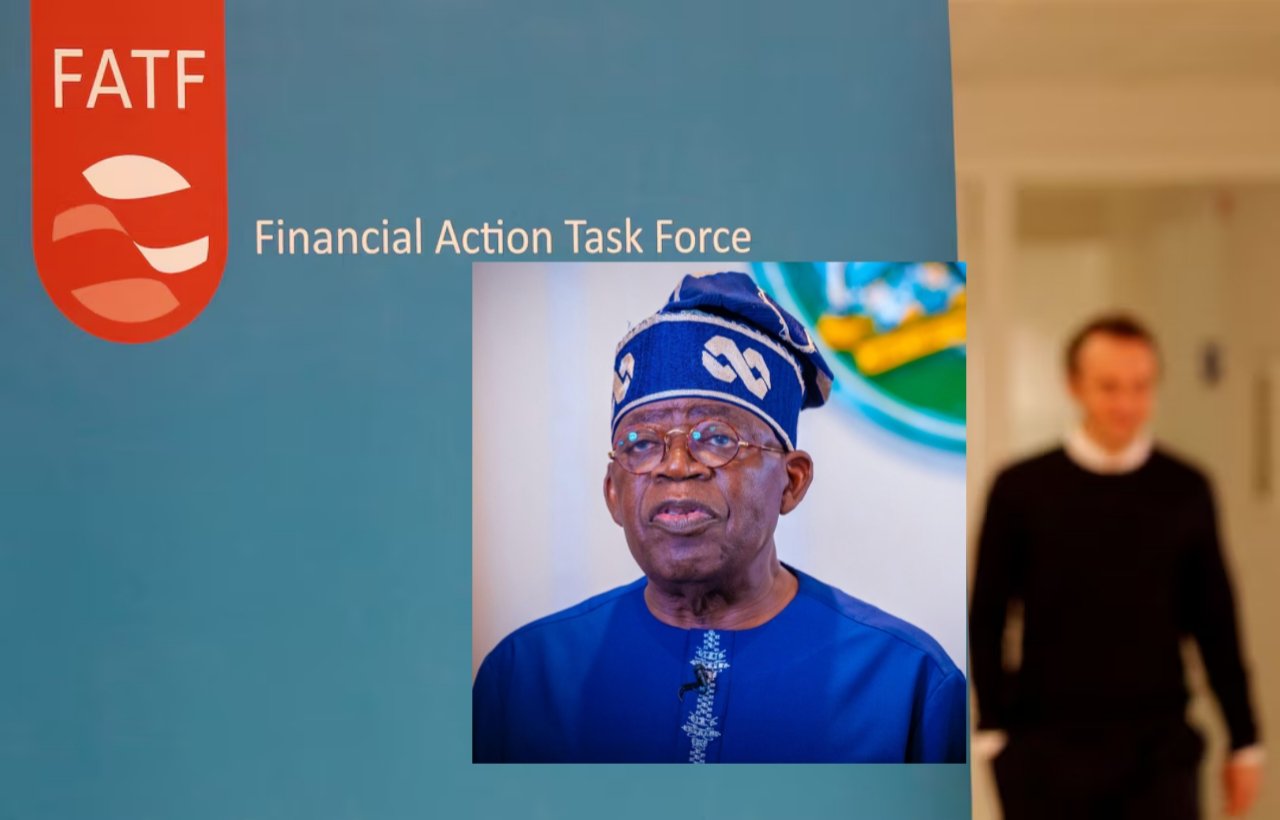
ABUJA (CONVERSEER) — The Financial Action Task Force (FATF) has formally delisted Nigeria from its grey list, a development that has received numerous comments across the board.
President Bola Ahmed Tinubu has officially welcomed Nigeria’s removal FATF grey list, describing the delisting as a “major milestone” for the country’s economic reform and institutional credibility.
The announcement, made today at the FATF Plenary in Paris, marks Nigeria’s exit from the list of jurisdictions under increased monitoring — often referred to as the “grey list” — following the country’s completion of a rigorous, multi-year action plan to strengthen its anti-money laundering and counter-terrorist financing (AML/CFT) framework.
“Nigeria’s removal from the FATF grey list is not just a technical accomplishment; it is a strategic victory for our economy,” President Tinubu stated in a statement issued by his spokesman on Information and Strategy, Bayo Onanuga, on Friday.
From Grey to Green: The Journey
In February 2023, the FATF placed Nigeria on its grey list, citing deficiencies in enforcement, inter-agency coordination and transparency in financial governance. The designation had been seen as a warning signal to global investors and correspondent banks.
Since then, Nigeria has undertaken broad legal, institutional and operational reforms. Under Tinubu’s administration, key agencies — including the Nigerian Financial Intelligence Unit (NFIU), the Economic and Financial Crimes Commission (EFCC), and various ministries — worked in concert to close gaps in compliance. The reforms included enhancements in beneficial ownership disclosures, risk-based supervision of financial institutions, increased financial intelligence sharing, and stronger prosecution of money laundering and terrorism financing cases.
The FATF plenary cited strong inter-agency coordination and enhanced oversight as among the principal grounds for delisting Nigeria.
What Delisting Means for Nigeria
The delisting is expected to yield several benefits:
- Improved investor confidence and greater ease in cross-border finance as correspondent banks reduce risk aversion toward Nigerian counterparties.
- Lower funding costs for private sector and government projects, given reduced “risk premium” in international capital markets.
- Better access to international financial systems, easing transactions, remittances, trade finance, and foreign direct investment flows.
- Reputational uplift, signalling to global regulators and stakeholders that Nigeria’s financial system has matured in compliance and transparency.
Challenges Ahead: Sustaining Momentum
While the delisting is a welcome turnaround, experts caution that the real test lies in sustaining progress. Institutional reforms must become entrenched, and anti-illicit finance measures must continuously adapt to evolving risks.
Stakeholders emphasise that the government must maintain:
- Ongoing monitoring and enforcement to prevent relapse into noncompliance
- Capacity building and resource support for law enforcement, regulatory agencies, and the judiciary
- Transparency and data integrity across government and private financial actors
- Vigilance against emerging threats in digital finance, virtual assets, and cross-border illicit flows
Analysts note that falling off the grey list removes one barrier but does not resolve deeper structural challenges in governance, corruption, and institutional resilience.
Outlook: A New Chapter
For President Tinubu, the delisting offers a strong narrative in his administration’s roadmap to economic transformation and global integration. The exit from the FATF grey list — aligned with Nigeria’s broader reform agenda — may catalyse greater foreign capital inflows, invigorate private sector confidence, and reinforce Nigeria’s standing in global financial governance.
As he put it, “the exit from the FATF grey list marks the beginning of a new chapter … as Nigeria will sustain the already institutionalised reforms, deepen institutional collaboration and continue to build a financial system that Nigerians and the world can trust.”
South Africa also exited the financial crime watch list.