







By Christian Njoku
BAKASSI (NAN, CONVERSEER) – A Non-Governmental Organisation (NGO), Health of Mother Earth Foundation (HOMEF) has disclosed that introducing Genetically Modified Organisms (GMOs) was no solution to Nigeria’s food insecurity.
This was disclosed by Ms Joyce Brown, HOMEF’s Director of Programmes, on Thursday during a one-day practical agroecology training for farmers, with the theme “Solving the Food and Climate Crisis.”
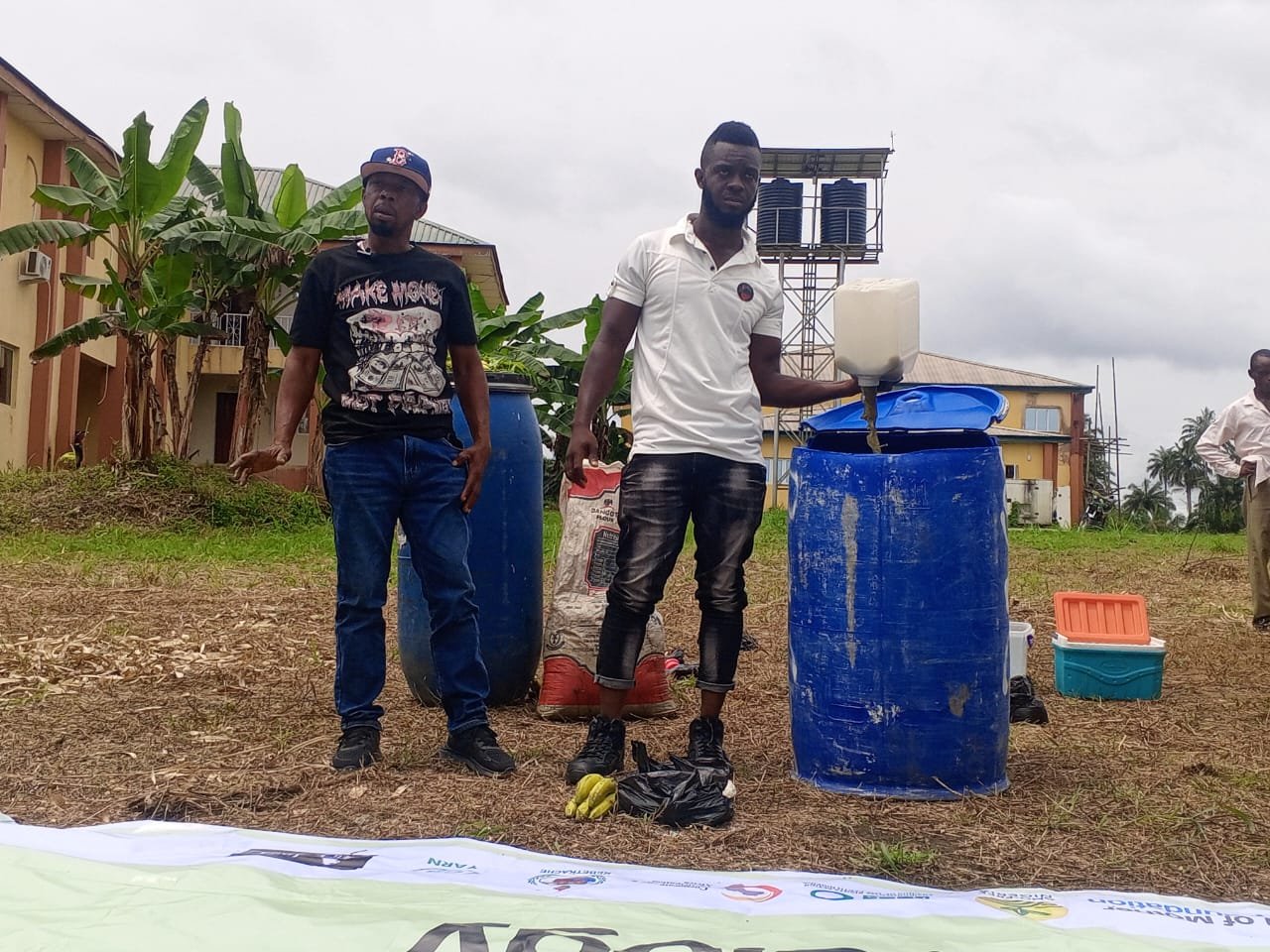
The News Agency of Nigeria (NAN) reports that the training exposed the farmers to the implications of GMOs and inorganic pesticides while teaching them how to produce effective and environmentally friendly organic fertiliser and herbicides.
According to Brown, the introduction of GMOs in the nation means a loss to Nigeria’s food sovereignty especially as farmers cannot replant GMO seeds and would have to depend on corporations and governments.
“This goes against the culture of farming in Nigeria where farmers are able to save, reuse and exchange seeds in a
sustainable way to produce food.
“With GMOs, we also risk destruction of our soils; in 2024, the Association of Cotton Farmers reported that after three years of planting the GMO cotton, their soils had become unproductive for the local varieties.
“They also added that there is no substantial difference in the yield performance of the GMO crop over the local varieties,” she said.
READ ALSO: Ebinyang: Ofem Ebri Eteng emerges new Ugep Chief Priest
She added that the challenge of food insecurity in Nigeria can only be resolved by providing extension services, solving the farmer-herder clashes, and providing proper storage facilities, among others and not the introduction of GMOs.
On his part, Umo Isua-Ikoh, Coordinator, Peace Point Development Foundation (PPDF), partnering with HOMEF, noted that the training was necessary because there was a lot of ignorance on the issue of GMOs among Nigerians.
Isua-Ikoh said a few years ago, the National Agency for Food and Drug Administration and Control (NAFDAC) declared that GMOs were not safe, but in 2025, they returned to tell Nigerians that they were safe for consumption.
“We have done a lot of research and tests and have come to the conclusion that GMOs are not safe for human consumption
“My direct message to NAFDAC is to join the campaign to ban GMO products all over the nooks and crannies of Nigeria, they do not benefit the nation, economically, culturally, nor health-wise,” he said.
Similarly, Ms Grace Bassey, Leader of the Bakassi Legislative Council, who commended HOMEF for coming to Bakassi, said she would follow up on the petition against GMOs to ensure that Bakassi was free of them.
One of the farmers, Mr Asuquo Okon, who was undergoing the training and sensitisation, appealed to the Federal Government to ban GMOs as it was altering their farming system, making them overly reliant on corporations for seeds.
He said the excessive use of chemicals like inorganic fertilisers, herbicides, pesticides and the introduction of GMOs may be some of the things increasing the prevalence of some unexplainable illnesses in the nation.