








By Julian Weber, dpa
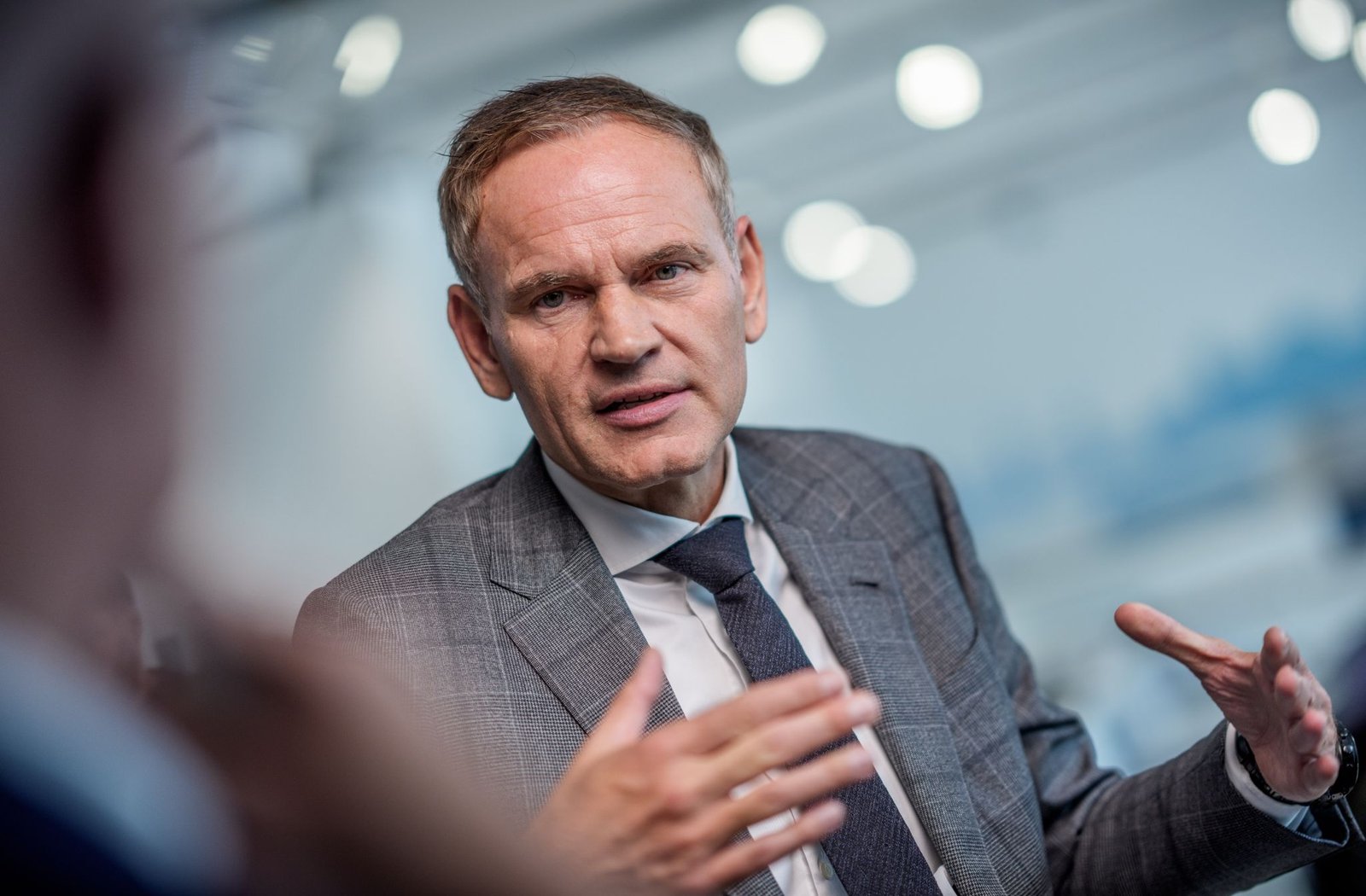
Blume also serves as chief executive of Porsche’s parent company, the Volkswagen Group, a dual position that has attracted significant criticism amid years of struggles for the German car industry.
The executive committee of Porsche’s supervisory board has instructed the board’s chairman to hold talks with Blume about an amicable early departure, the manufacturer said, although it’s unclear when exactly he will step down.
Blume has been chief executive of Porsche since 2015 and has served in the dual role since 2022. He is set to retain his position at the Volkswagen Group.
Speculation has swirled around Blume’s double position for months, with shareholders and investors calling on the manager to step down from one of his roles due to the huge workload and possible conflicts of interest.
Porsche and VW were the only companies in Germany with a “part-time chief executive,” said Hendrik Schmidt from major asset management firm DWS.
Blume rejected the criticism, arguing that the dual role offered advantages, while counting on support from the billionaire Porsche and Piëch families, who control the majority of voting rights in the Volkswagen Group.
However, in an interview with dpa earlier this week, Blume hinted that he could step down at Porsche.
“I have always said that my dual role is not intended to be permanent,” he said. “We have quite deliberately begun the generational change on the Porsche executive board.”
Mixed record at Porsche
Blume’s record at Porsche is decidedly mixed.
The company was surging when he took the helm in 2015, and the trend continued in his early years, with sales, turnover and profit all up.
Between 2015 and 2023, sales rose from 225,000 vehicles per year to 320,000, while profit after taxes more than doubled.
The company’s initial public offering in September 2022 was Germany’s largest since Telekom in 1996, raising €9.4 billion ($11 billion).
READ ALSO: Polish court rejects Nord Stream suspect’s extradition to Germany
The share price subsequently boomed from €82.50 to almost €120 in early 2023.
But a collapse in sales in the key Chinese and US markets, as well as domestic concerns over high production costs, have seen Porsche’s share price plunge in the past two years, now hovering around €41.
The manufacturer is battling the effects of US President Donald Trump’s tariff policies and a downturn in China, where “the luxury market has completely collapsed,” Blume told dpa.
Adding to the troubling picture, the company fell out of Germany’s top stock market index, the DAX, in September.
U-turn on electric vehicles
A key plank of Blume’s leadership of Porsche was his focus on electric vehicles, setting a goal for 80% of the company’s new sports cars to be fully electric by 2030.
With take-up for electric models having slowed considerably in recent years, the ambitious target is far from being met, with only 23.5% of Porsche vehicles being electric in the first half of 2025.
High investments in the transformation to electric mobility are an added burden, as is the fact that electric vehicle (EV) sales have so far been worse than expected. Profit margins tend to be slimmer on EVs.
Blume has signalled a policy change, telling dpa that “all political forecasts about the growth of electric mobility have been too optimistic.”
Porsche’s future is set to rest in a new pair of hands, with former McLaren boss Michael Leiters being touted as a possible successor.
Negotiations are currently underway with Leiters, who holds a doctorate in mechanical engineering and previously had a 13-year stint at Porsche.
Germany’s automotive industry is a crucial sector in Europe’s largest economy, accounting for 770,000 jobs in 2024 and an annual revenue of more than €540 billion ($628 billion).