
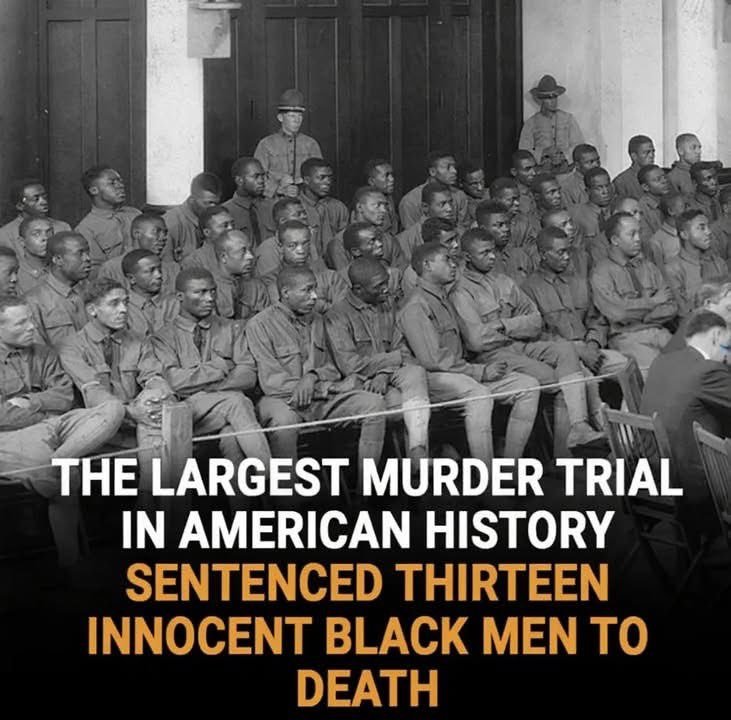
- They fought for America overseas…but were sentenced to die on American soil
By Joe Bassey
Houston, Texas — August 1917.
In the blistering summer heat, white police officers stormed a Black neighborhood and dragged a Black woman from her home, claiming she was drunk in public.
A Black soldier from the 24th Infantry — one of the few Black regiments in the U.S. Army — stepped in to help her. For defending a Black woman, he was beaten, arrested, and humiliated.
Word spread quickly through the Black unit stationed nearby. These soldiers had enlisted to defend the United States during World War I — only to find the same country wouldn’t defend their basic humanity.
White mobs threatened the soldiers. Police harassed them daily. Rumors flew that the arrested soldier had been murdered.
The tension snapped.
Fearing a violent attack on their camp, over 100 Black soldiers marched into Houston to protect themselves and their community. Gunfire erupted. When it ended, 15 white police officers and civilians were dead.
The city didn’t ask why or what pushed those Black soldiers to a breaking point. They wanted someone to blame.
So they blamed all of them.
The U.S. Army launched the largest murder trial in American history. A trial with:
¶ No legal defense for the soldiers
¶ All-white officers deciding their fate
¶ Confessions beaten out of terrified men
¶ Zero evidence of who fired which shots
Within hours—not days, not weeks—the verdict was sealed:
• 13 Black soldiers sentenced to death
• 41 sent to life in prison
• 0 white officers or police held accountable
At dawn on December 11, 1917—in secrecy, before appeals could be filed—the U.S. Army hanged the 13 men together on gallows built overnight.
Their names were:
√ Sgt. Videll Carter
√ Cpl. Jesse Moore
√ Pvt. James Wheatley
√ Pvt. Walter Johnson
√ Pvt. William Nesbit
√ Pvt. James Divins
√ Pvt. Charles W. Baltimore
√ Pvt. Harry W. Bolden
√ Pvt. Carlos Snodgrass
√ Pvt. William C. Brackenridge
√ Pvt. Thomas Hawkins
√ Pvt. John C. Singleton
√ Pvt. Frank Johnson
Their crime wasn’t murder. It was fighting back in a world designed to break them.
These men weren’t rebels. They were soldiers—trained to defend freedom they were never allowed to have.
For over 100 years, their names were buried in silence.
But we remember them now.
We speak their names now.
We honor the truth now—not the lie history tried to hide.
Because justice delayed is NOT justice denied… as long as we refuse to forget.